
European pine marten
Martes martes
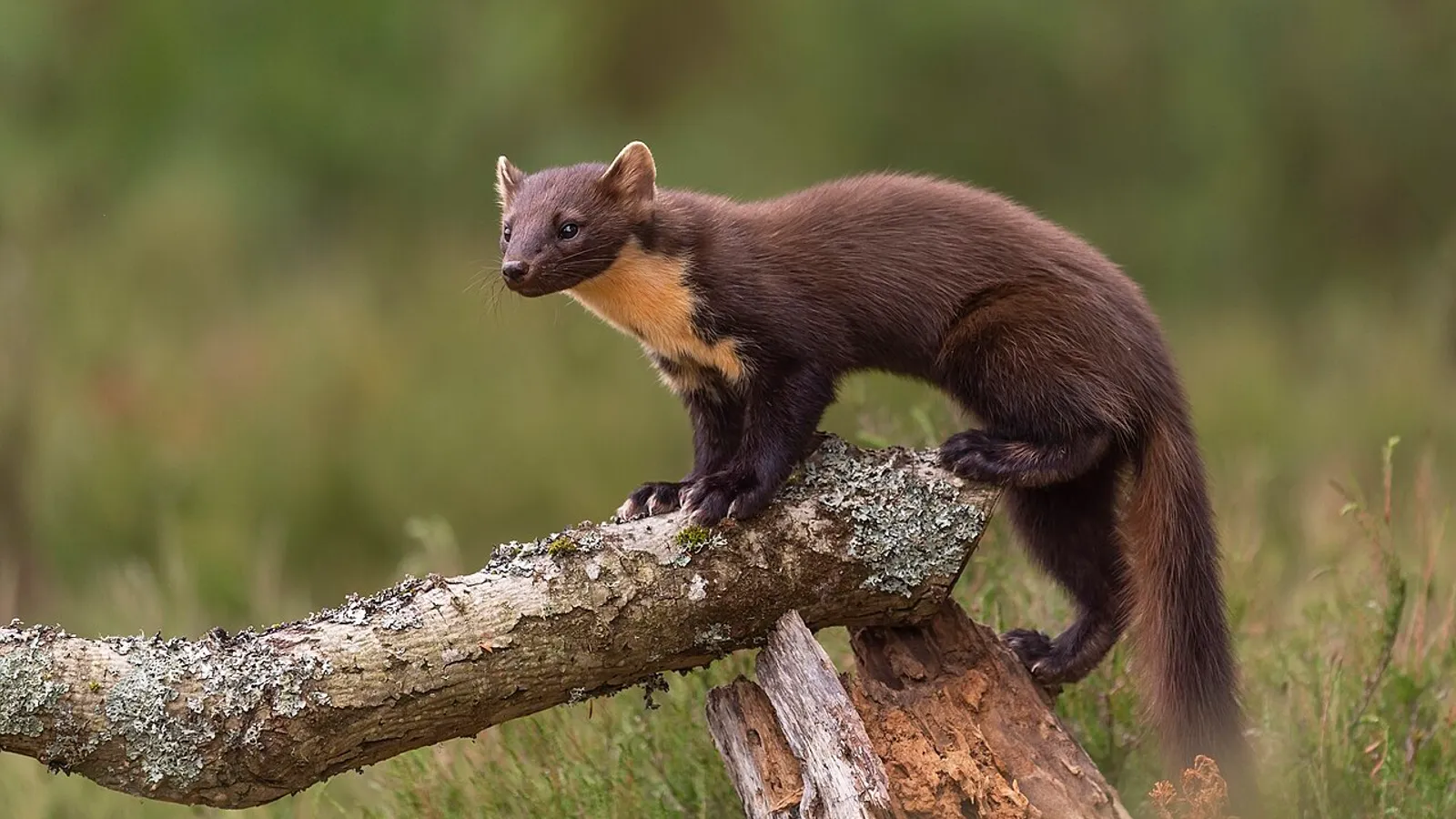
— Where the name comes from
Martes is late Latin, a loan from the Germanic *marthuz, the same root as the English marten and the German Marder. Earlier still, in those languages, the word also served as a unit of exchange: marten fur was currency in medieval Europe, and in Croatia the national money was called the kuna, that is marten, until 2023. An animal that gave its name to money.
— Facts
- Group
- Mammals · Mammalia
- Order
- Carnivores
- Habitat
- Mature coniferous and broadleaf forest with hollow trees
- Range
- Europe and western Asia, from Ireland to the Urals; in Italy in the Alps, Apennines, Sardinia and Corsica
- Size
- 45–58 cm long plus 25 of tail, 0.8–1.8 kg
- Diet
- Omnivore — voles, squirrels, birds, berries, honey
- Lifespan
- 8–10 years in the wild
— Characteristics
- 01
It is told from the beech marten by its yellow-orange throat patch, against its cousin’s pure white.
- 02
It chases squirrels through the branches, rotating its ankles to come down trunks head first.
- 03
It crosses open ground with leaps of up to four metres from tree to tree.
— What sets it apart
In Ireland and Scotland the return of the pine marten is doing what decades of trapping could not: cutting back the American grey squirrel and bringing the red one home. The red squirrel, which has lived alongside the marten for millennia, recognises the predator’s scent and stays alert; the grey, arrived from a continent where that predator does not exist, does not recognise it and gets caught. The defence of the native species was not a barrier but a piece of information: knowing whom to fear.
