
Himalayan marmot
Marmota himalayana
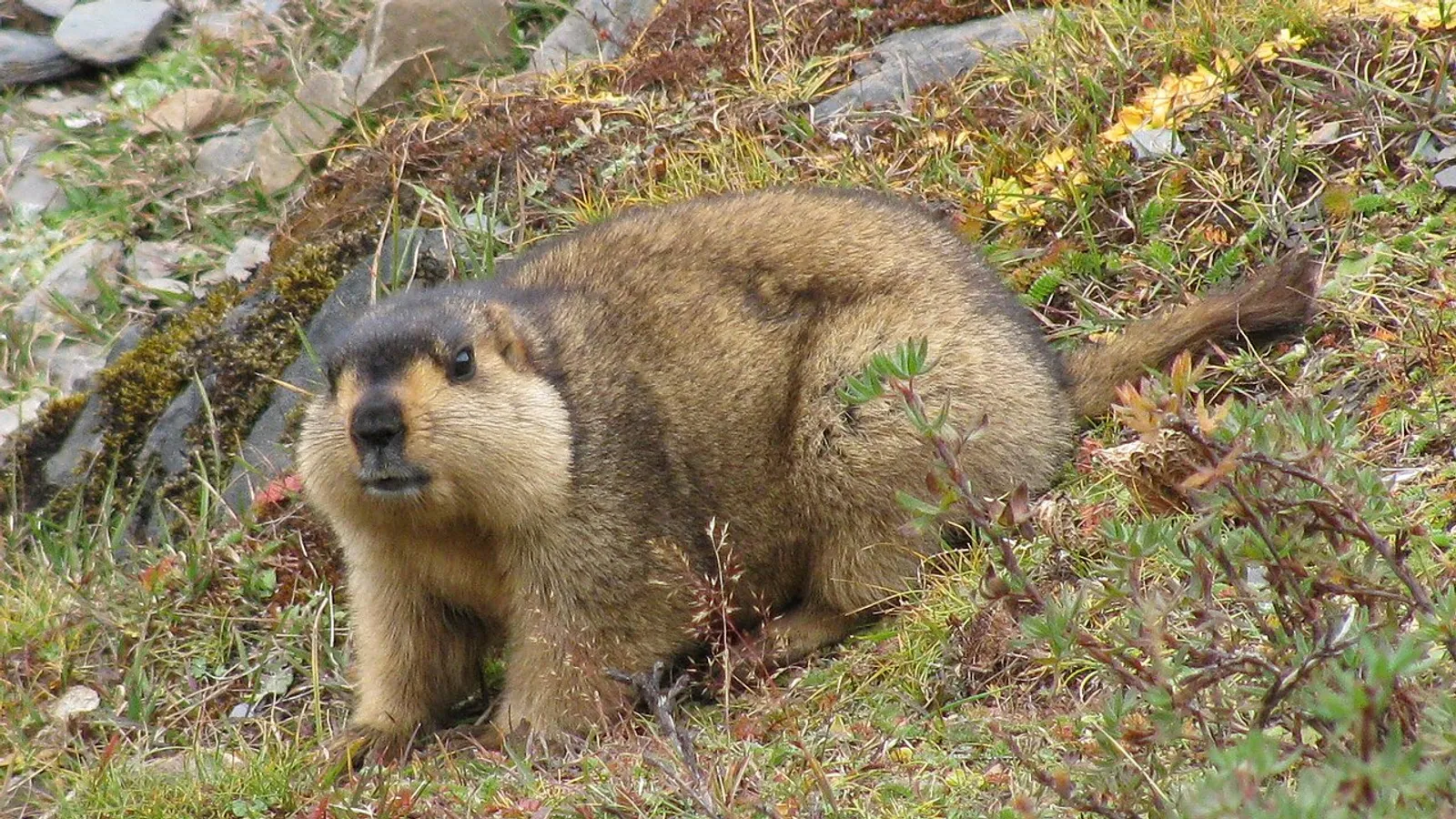
— Where the name comes from
Himalaya is Sanskrit and means “abode of snow”, from hima, snow, and ālaya, abode — the same hima found in the name of the Indian winter. The marmot that bears it lives higher than almost any other mammal: on the Tibetan plateau it is met at five thousand metres, where the air holds half the oxygen it has at sea level.
— Facts
- Group
- Mammals · Mammalia
- Order
- Rodents
- Habitat
- High grassland, alpine steppe between 3,000 and 5,500 m
- Range
- The Himalaya and the Tibetan plateau: Nepal, northern India, western China
- Size
- 45–67 cm, 4–9 kg
- Diet
- Herbivore — alpine grasses, roots, flowers
- Lifespan
- 15 years
— Characteristics
- 01
Its blood carries oxygen with an efficiency that at those altitudes is indispensable.
- 02
The colonies dig tunnel systems used by successive generations.
- 03
Hibernation lasts as long as seven months, sealed underground with the whole family.
— What sets it apart
Herodotus tells of “ants as large as foxes” that in India brought up gold-bearing sand as they dug, and for two thousand years the story passed for fantasy. In 1996 the French ethnologist Michel Peissel proposed a simple explanation: on the Dansar plateau, in Kashmir, marmots digging bring auriferous earth to the surface, and the Minaro have always sieved it. The Persian word for marmot resembles the one for mountain ant: the error would have arisen in translation, not in observation.
