
Bobak marmot
Marmota bobak
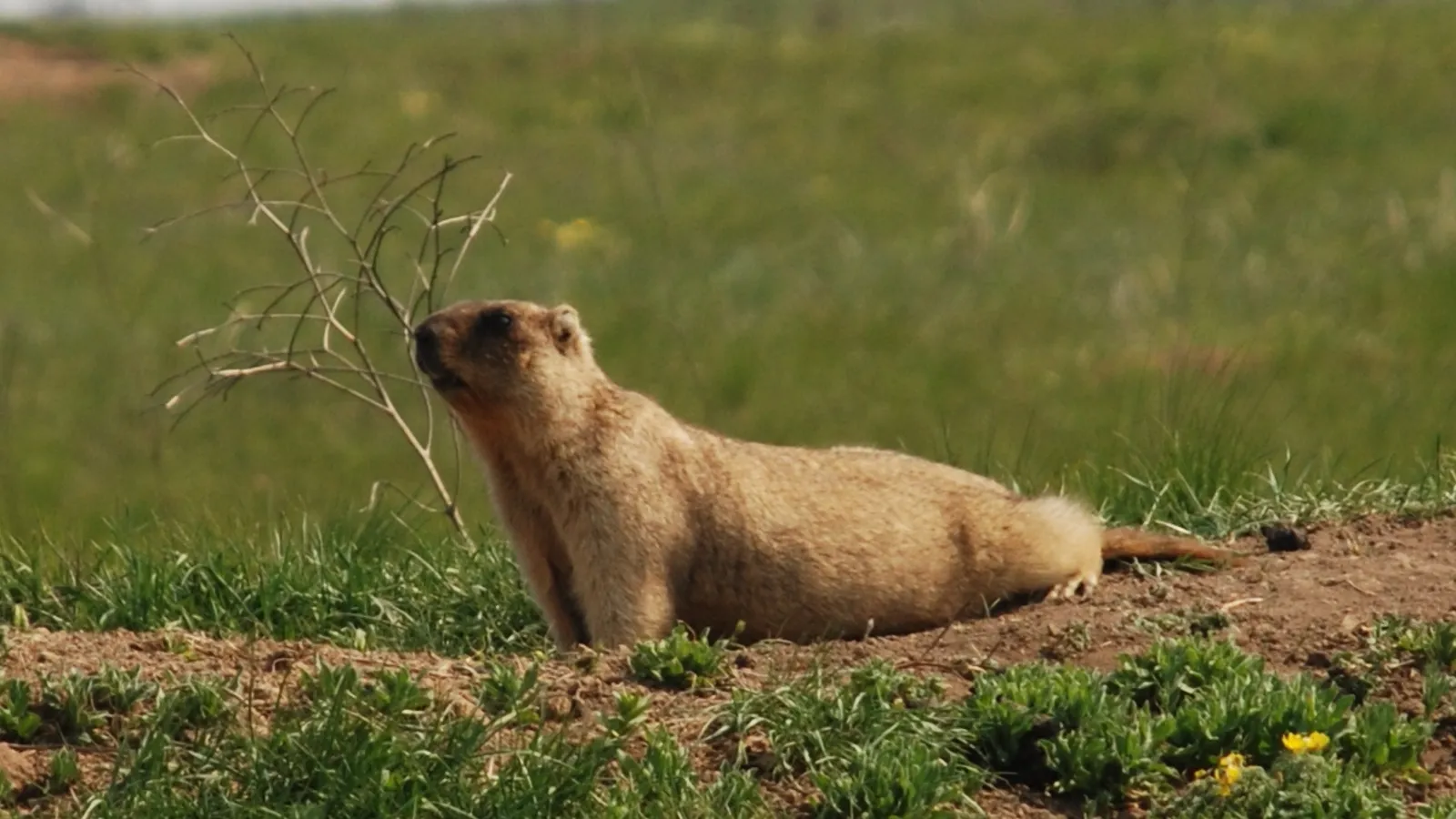
— Where the name comes from
Bobak is neither Latin nor Greek: it is the word the peasants of the Russian and Ukrainian steppes use for this animal, which entered the scientific name exactly as it was. It is one of the rare cases in which nomenclature, instead of translating into a dead language, simply recorded what local people say.
— Facts
- Group
- Mammals · Mammalia
- Order
- Rodents
- Habitat
- Unploughed grassy steppe, hill slopes
- Range
- Ukraine, southern Russia, northern Kazakhstan
- Size
- 49–58 cm, 4–7 kg
- Diet
- Herbivore — grasses and legumes of the steppe
- Lifespan
- 15 years
— Characteristics
- 01
Hibernation begins as early as late August and lasts until March.
- 02
Family colonies hold several generations in the same network of burrows.
- 03
It fattens until it has doubled its weight in the last weeks of summer.
— What sets it apart
Its history is the history of the plough. When the Soviet Union brought the virgin steppe under cultivation, in the 1950s, the bobak marmot vanished from whole regions and in Ukraine fell to a few thousand. Then, paradoxically, the abandonment of farmland after 1991 gave it space back: today it is common again. Few animals measure changes of agricultural regime as precisely, with their own numbers.
