
Hoary marmot
Marmota caligata
— Where the name comes from
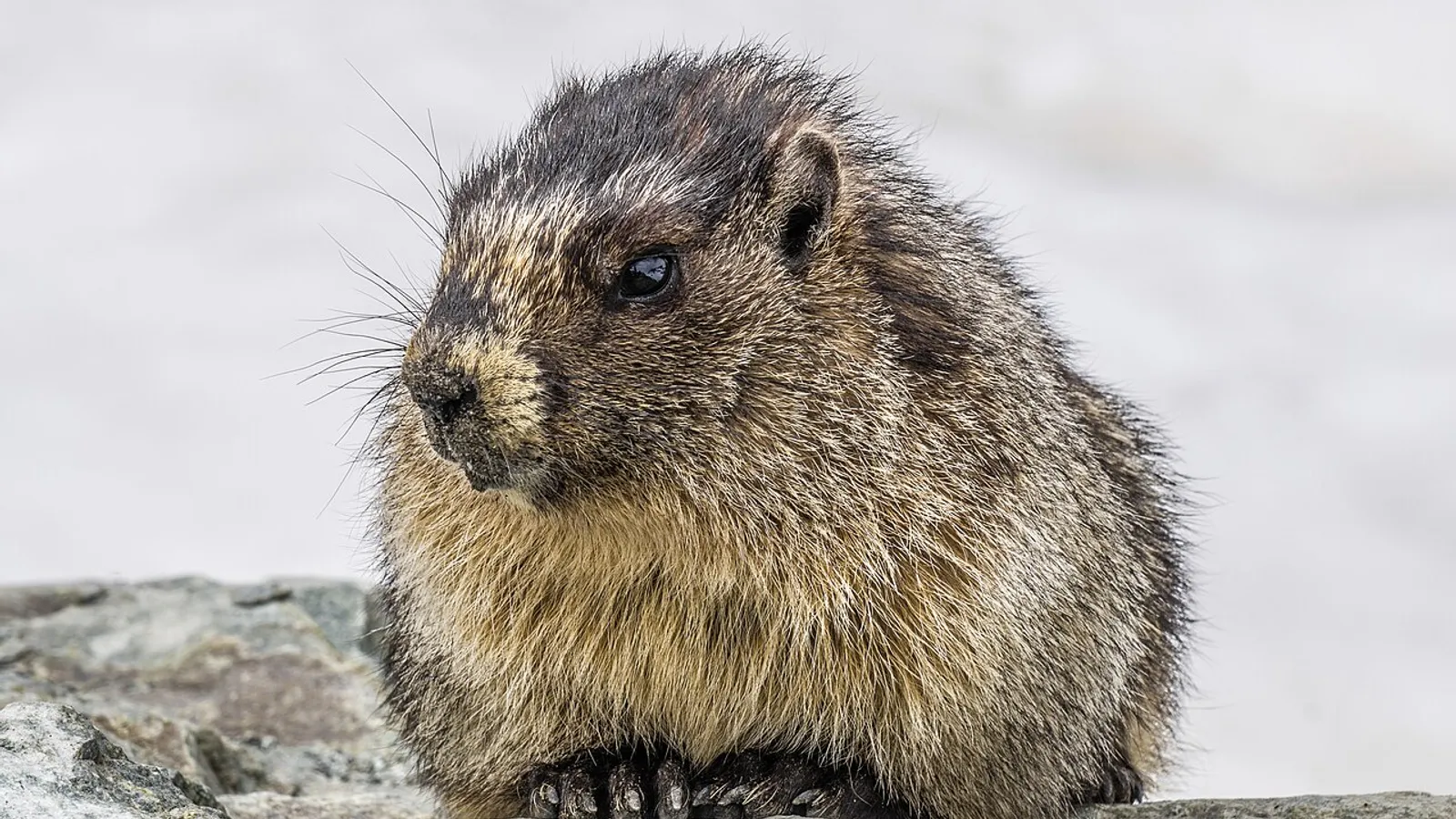
Caligata means “wearing boots”, from caliga, the hobnailed boot of the Roman legionary — the same word that gave the emperor Caligula his nickname, brought up in the camps in miniature military footwear. The marmot earned it for its black feet, which against the grey coat look like boots. “Hoary” describes the frosted, silvery grey of the shoulders.
— Facts
- Group
- Mammals · Mammalia
- Order
- Rodents
- Habitat
- Alpine pasture, scree above the treeline
- Range
- Alaska, western Canada, the northern Rocky Mountains
- Size
- 62–82 cm, 3.7–13.5 kg
- Diet
- Herbivore — alpine grasses, mosses, lichens, roots
- Lifespan
- 12 years
— Characteristics
- 01
It is the largest marmot in North America.
- 02
Its very high alarm whistle earned it the name whistler.
- 03
It hibernates for seven or eight months, often in groups sharing a burrow.
— What sets it apart
The mountain and the ski town of Whistler, in British Columbia, are named after its whistle. Miners working those valleys in the 19th century heard the marmots’ alarm bouncing off the walls and called the peak Whistler Mountain; the village at its foot took the name in 1965, and from there it reached the 2010 Winter Olympics. An entire toponymy born from the call of a rodent.
