
Groundhog
Marmota monax
— Where the name comes from
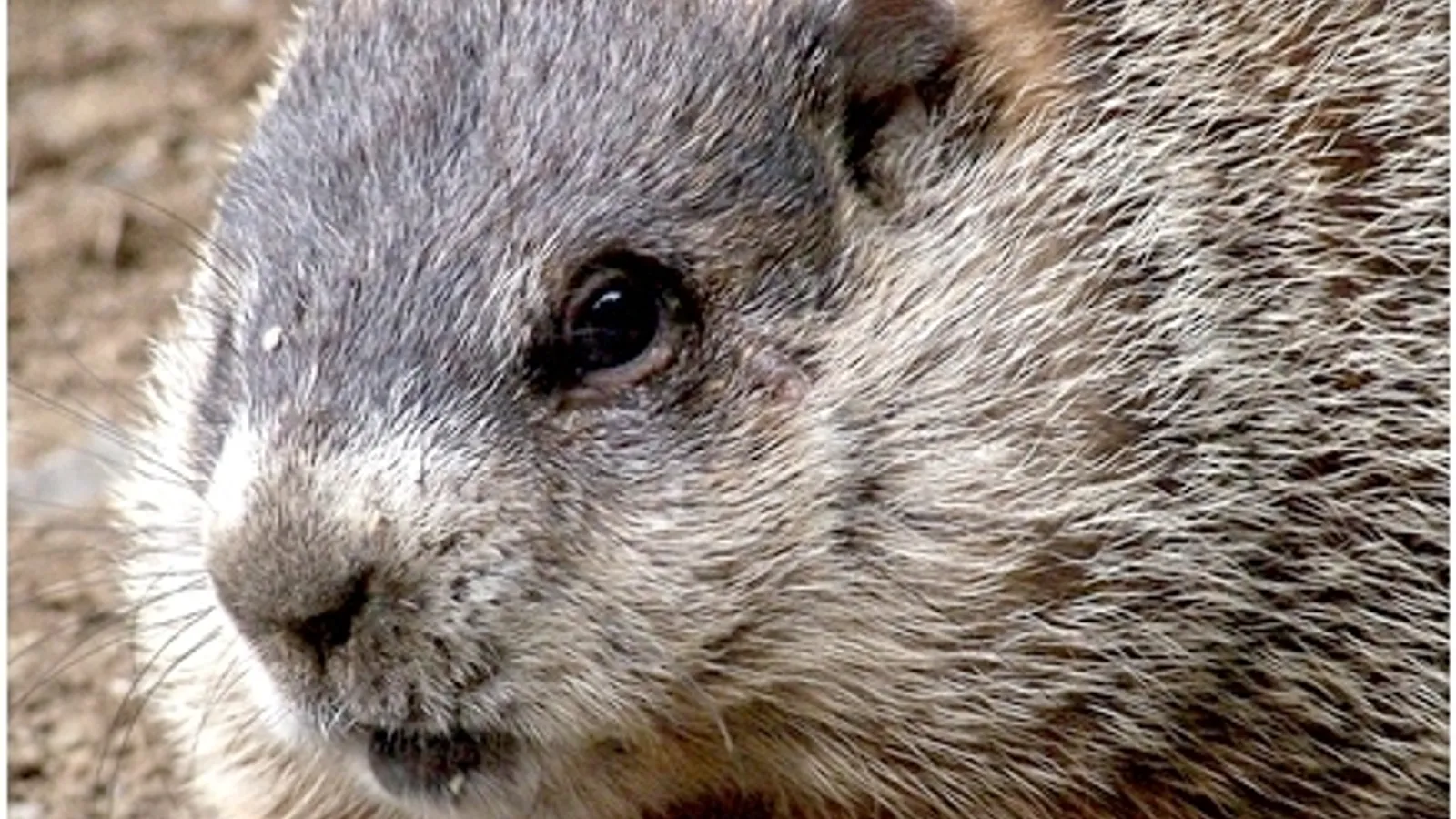
Marmota comes from the medieval Latin mus montanus, “mountain mouse”, by way of the French marmotte. Monax, however, is not Latin at all: it is an Algonquian word meaning “the digger”, taken up by the colonists and slipped into a scientific name untranslated. In English the species is the groundhog, and it is the star of 2 February: if it comes out of its burrow and sees its own shadow, winter will last another six weeks.
— Facts
- Group
- Mammals · Mammalia
- Order
- Rodents
- Habitat
- Woodland edges, clearings, farmland, road embankments
- Range
- Eastern and central North America, from Alaska to Georgia
- Size
- 40–65 cm, tail 10–15 cm, 2–6 kg
- Diet
- Herbivore — grass, clover, bark, garden vegetables
- Lifespan
- 6 years in the wild
— Characteristics
- 01
It digs tunnels with several exits, a sleeping chamber and a separate latrine.
- 02
It goes into true hibernation: the heart drops from 80 to 5 beats a minute.
- 03
Unlike the other marmots it is solitary: every adult has its own burrow.
— What sets it apart
Its abandoned burrows are social housing for half the wildlife of America. Foxes, rabbits, opossums, raccoons, snakes and salamanders occupy the tunnels the groundhog has stopped using, and since each animal digs more than one and changes them often, a single individual leaves behind a network of shelters that lasts for decades. Ecologists call it an engineer species: it alters the physical environment and others live inside the result.
