
Giant oceanic manta ray
Mobula birostris
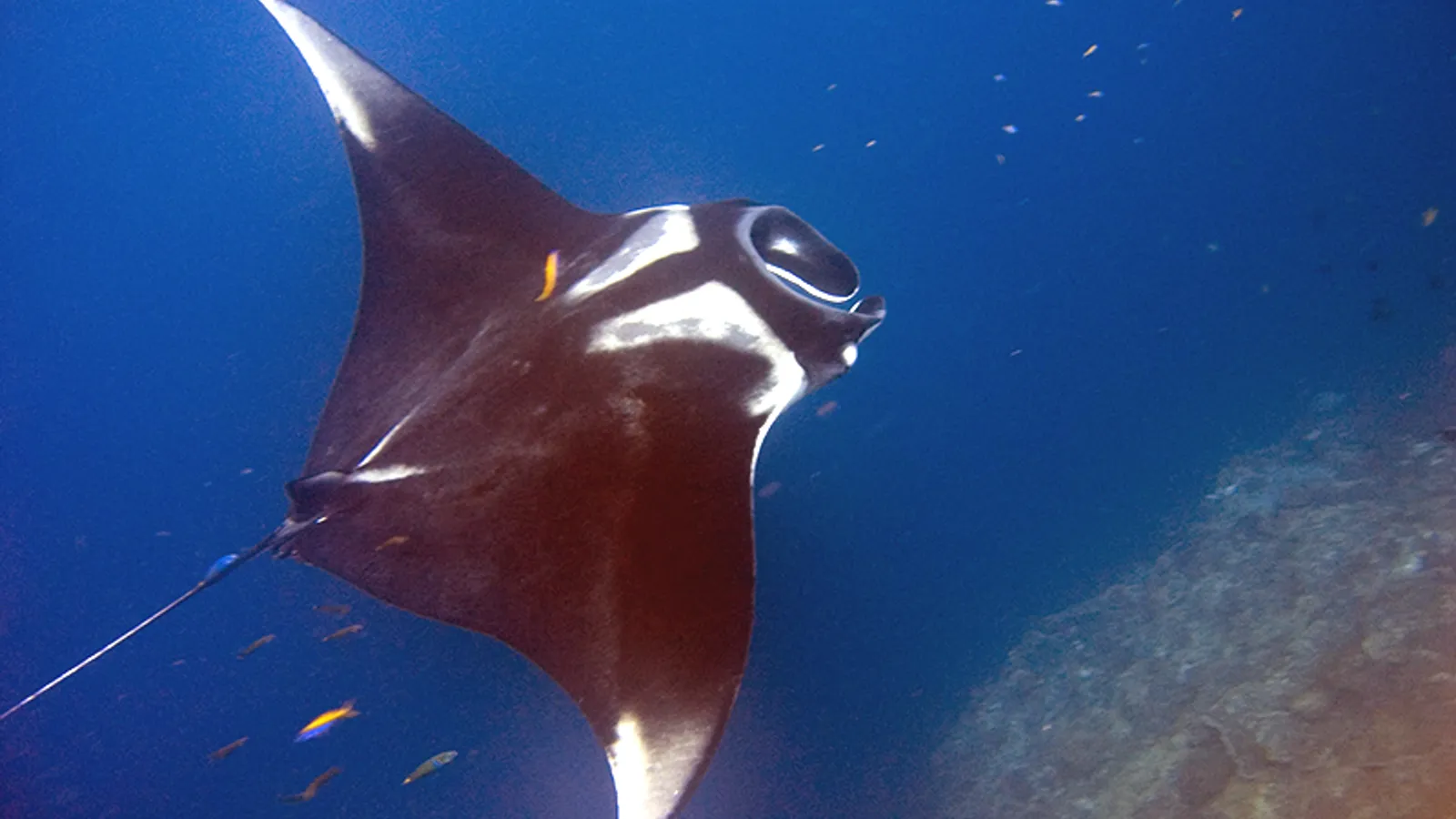
— Where the name comes from
The name manta comes from the Spanish manta, blanket or cloak: the flat, broad body that wraps the water like a sheet. The epithet birostris joins the Latin bis (two) and rostrum (snout): the two cephalic fins beside the mouth, which when rolled up look like horns — and which earned the animal its wholly undeserved reputation as a “devil fish”.
— Facts
- Group
- Fish · Actinopterygii · Chondrichthyes
- Order
- Stingrays
- Habitat
- Open sea and tropical reefs, often at cleaning stations
- Range
- Tropical and temperate waters worldwide
- Size
- Up to 7 m across, over 2 tonnes
- Diet
- Filter feeder — zooplankton
- Lifespan
- Up to 40 years
— Characteristics
- 01
The largest ray in the world, its pectoral fins spread into “wings”.
- 02
It “flies” through the water on wingbeats rather than undulating like other rays.
- 03
The cephalic fins funnel plankton towards the open mouth.
— What sets it apart
The manta has the largest brain relative to body size of any fish, and it passes the mirror test: faced with its own reflection it behaves in ways that suggest self-recognition, a threshold crossed by very few species. Despite the name devil fish, it is a mild giant that eats nothing but plankton and seems, at times, to seek out the company of divers.
