
Cockchafer
Melolontha melolontha
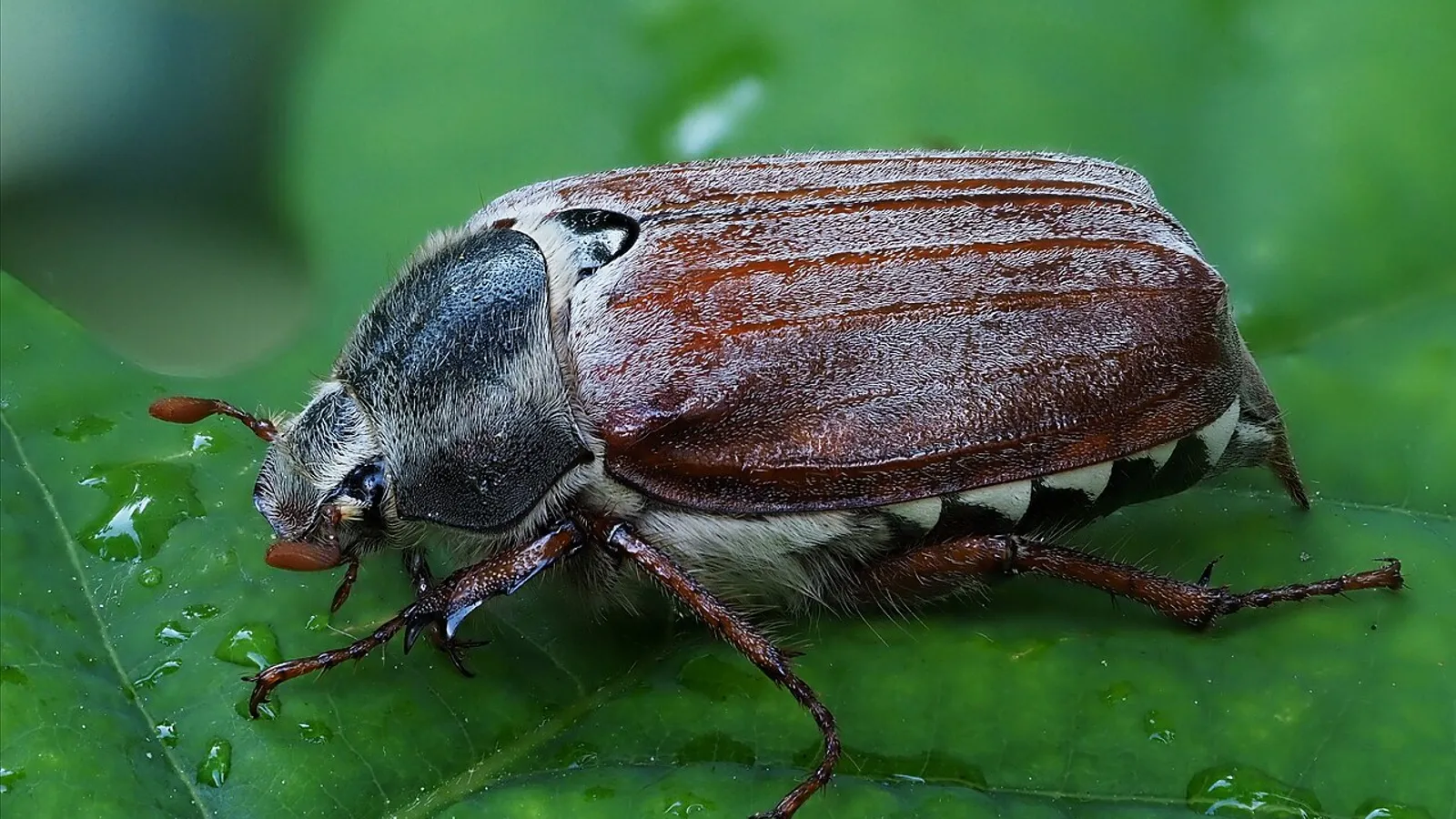
— Where the name comes from
Melolónthē is the word with which the Greeks named this beetle, and it is very old: it appears in Aristophanes, where the boys of Athens tie a thread to a cockchafer’s leg and make it fly in circles for sport. Twenty-four centuries later European children were doing exactly the same. The Italian name comes instead from the month it appears in, May, and its disappearance from the Mays of the 1960s is one of the recurring memories of those who were children then.
— Facts
- Group
- Insects · Insecta
- Order
- Beetles
- Habitat
- Broadleaf woodland, orchards, tree-lined avenues
- Range
- Europe, from France to Ukraine
- Size
- 25–30 mm
- Diet
- Leaves as an adult; roots as a larva
- Lifespan
- 3–4 years, nearly all of them underground
— Characteristics
- 01
The male’s antennae end in a fan of seven plates.
- 02
The larva, the fat white grub, lives three years in the soil.
- 03
It flies at dusk with a heavy drone and bumps into windows.
— What sets it apart
It used to come in waves. Because the cycle lasts three or four years, in a given area almost all individuals are synchronised and the insect appears in numbers only one year in three or four: chronicles of past centuries record “cockchafer years” in which the woods were stripped bare and farmers collected the beetles by the sackful. The great years ended with the insecticides of the 1950s and 1960s, which all but erased the species from half of Europe; since those products were banned it has slowly been returning, and some regions have again seen swarms worthy of the old accounts.
