
Colorado potato beetle
Leptinotarsa decemlineata
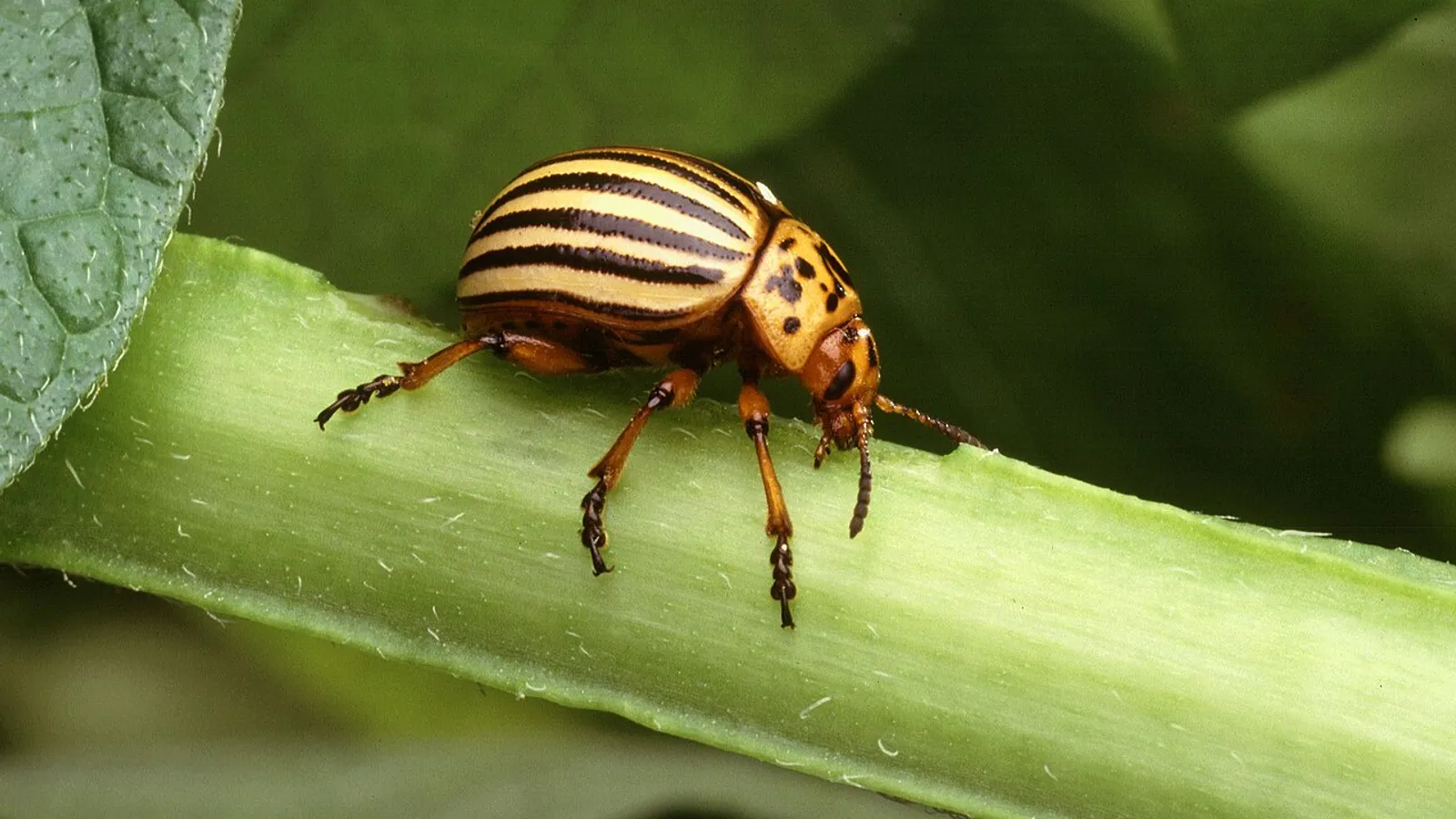
— Where the name comes from
Decemlineata is the most honest description available: “ten-lined”, five to each wing case. Leptinotarsa means “slender-tarsused”, from leptós and tarsós. The Italian name, dorifora, comes instead from the Greek doryphóros, “spear-bearer”, which was the title of the bodyguards of the Persian kings — and of Polykleitos’s most famous statue.
— Facts
- Group
- Insects · Insecta
- Order
- Beetles
- Habitat
- Fields of potatoes, aubergines, tomatoes
- Range
- North American in origin; today Europe, Asia, North Africa
- Size
- 10 mm
- Diet
- Leaves of nightshades
- Lifespan
- 1 year; the adult overwinters underground
— Characteristics
- 01
A female lays up to eight hundred eggs in a season.
- 02
Larvae and adults eat the same leaf, which is uncommon.
- 03
It has evolved resistance to more than fifty active ingredients.
— What sets it apart
Before 1859 it did not eat potatoes: it lived on the wild nightshades of the Rocky Mountains and troubled nobody. When settlers carried potato growing westwards the insect met it, found it to its taste, and began travelling east at some hundred kilometres a year, reaching the Atlantic in twenty years and Europe with the supplies of the First World War. It has become the textbook case of insecticide resistance: it has rendered more than fifty active ingredients useless, one after another, and often within very few seasons.
