
Common flying dragon
Draco volans
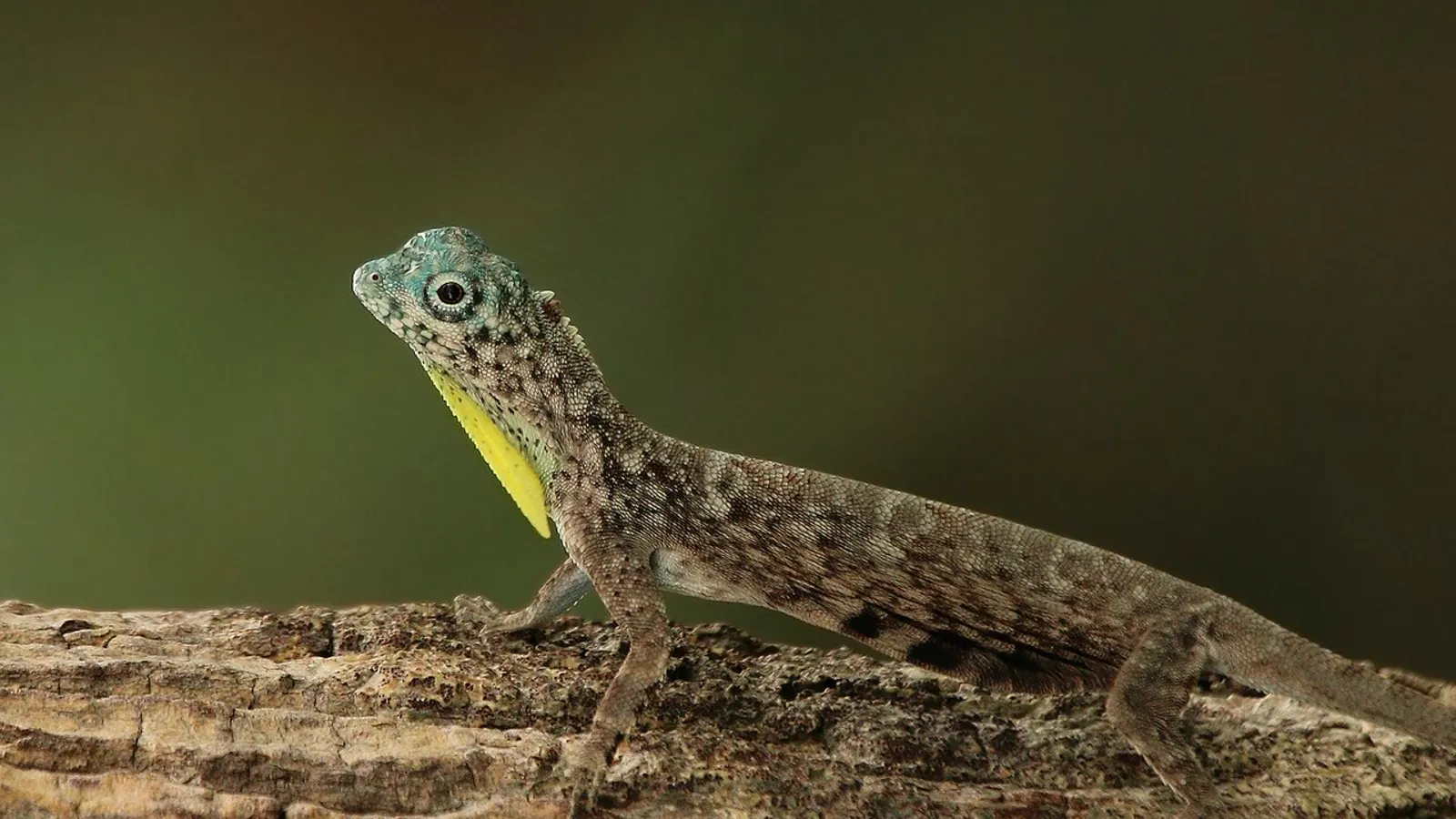
— Where the name comes from
Draco volans simply means “flying dragon”, and it is one of the rare cases in which a grandiose scientific name describes a twenty-centimetre animal exactly. Draco in Latin is the dragon but also the serpent, and the word comes from the Greek drákōn, related to “to look fixedly”: the dragon was, originally, the creature whose stare holds you still.
— Facts
- Group
- Reptiles · Reptilia
- Order
- Squamates
- Habitat
- Tropical forest, coconut and teak plantations
- Range
- South-East Asia: Indonesia, Malaysia, the Philippines
- Size
- 19–22 cm including the tail, 20 g
- Diet
- Ants and termites, almost exclusively
- Lifespan
- 8 years
— Characteristics
- 01
It glides as far as thirty metres from trunk to trunk.
- 02
Its wings are membranes held out by greatly elongated, movable ribs.
- 03
The male has a yellow flag under the throat that he unfurls to be seen.
— What sets it apart
No other vertebrate flies like this. Bats, flying squirrels, colugos and birds all use the forelimbs or a membrane stretched between the limbs; this lizard instead elongated five or six pairs of ribs and swings them out sideways like the sticks of a fan, leaving its legs free. It is a solution invented only once, and with it the Draco spends its life in the trees, coming down only to lay its eggs.
