
Common wall lizard
Podarcis muralis
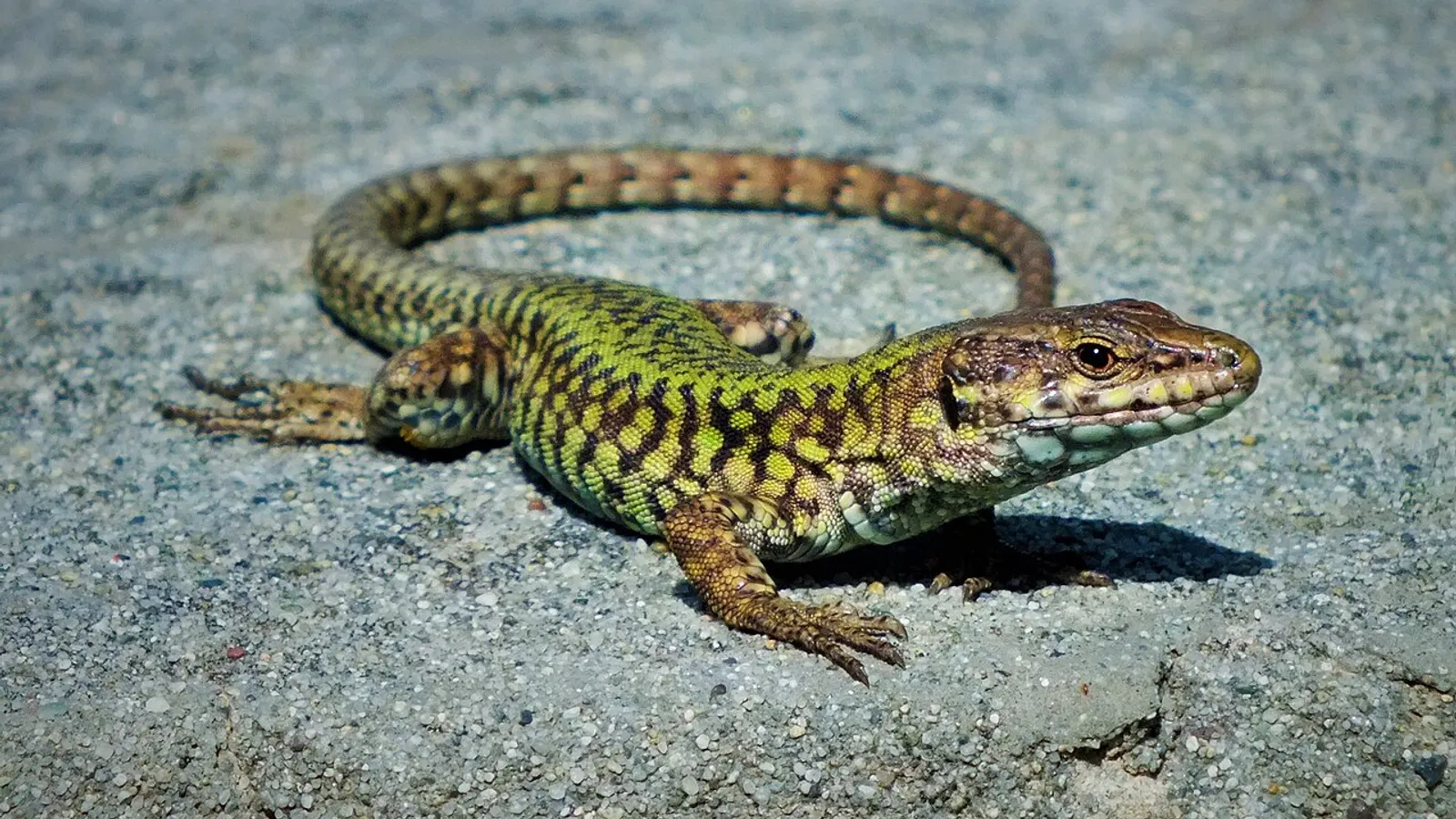
— Where the name comes from
Podarcis comes from the Greek podárkēs, “swift-footed”, which in Homer is the epithet of Achilles: the commonest lizard in Italy carries the nickname of the fastest hero of the Iliad. Muralis says the rest — it lives on walls, and it is the wild animal Italians see most often without noticing.
— Facts
- Group
- Reptiles · Reptilia
- Order
- Squamates
- Habitat
- Dry-stone walls, ruins, embankments, gardens, rocks
- Range
- Southern and central Europe; introduced to North America
- Size
- 18–22 cm including the tail, 4–8 g
- Diet
- Insects, spiders, small invertebrates
- Lifespan
- 6 years
— Characteristics
- 01
It warms in the morning sun before it can hunt at all.
- 02
It sheds its tail if seized and regrows it without vertebrae, on cartilage.
- 03
Males turn territorial in spring and fight each other with bites.
— What sets it apart
In 1971 ten lizards of this species were moved from one Croatian islet to another close by, and then the war made everyone forget the experiment. Found again thirty years later, they had bigger, stronger heads, they were eating mostly leaves instead of insects, and their guts had developed caecal valves for fermenting cellulose — structures the source population does not have. In thirty-six generations, that is within a human lifetime, a new digestive system had formed.
