
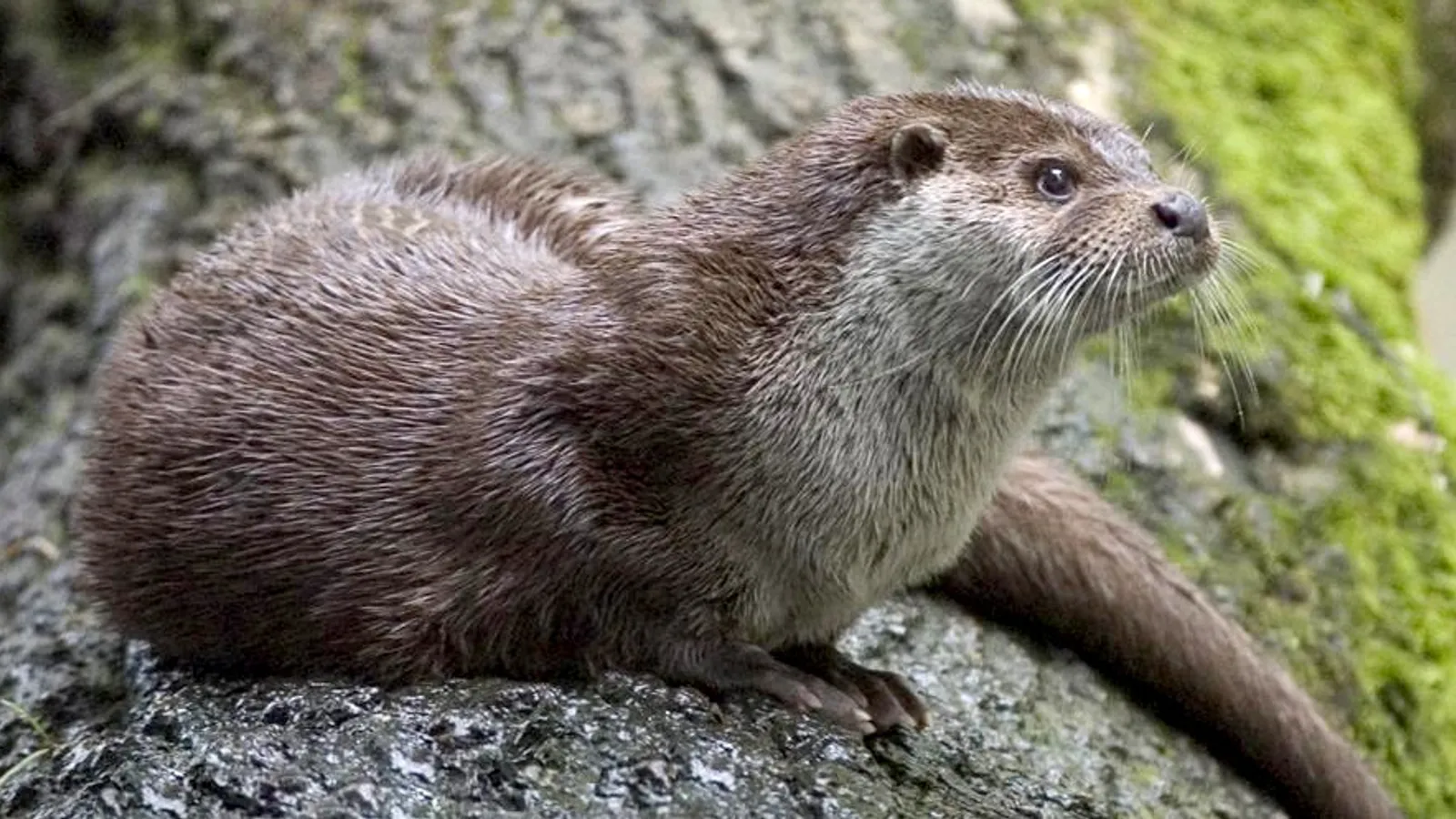
Eurasian otter
Lutra lutra
— Where the name comes from
From the Latin lutra, from the Indo-European root *wódr̥ — the same word that gives “water” in dozens of languages, and behind the English water and the Greek hýdōr. The otter is, quite literally, “the one of the water”.
— Facts
- Group
- Mammals · Mammalia
- Order
- Carnivores
- Habitat
- Rivers, lakes and coasts with clean water
- Range
- Eurasia and North Africa; in Italy mostly in the south
- Size
- 60–90 cm plus the tail, 7–12 kg
- Diet
- Carnivore — fish, amphibians, crustaceans
- Lifespan
- about 10 years
— Characteristics
- 01
The fur, up to 70,000 hairs per cm², traps air and does the work of insulating fat.
- 02
Closes its nostrils and ears underwater.
- 03
The whiskers pick up the wake fish leave behind in murky water.
— What sets it apart
The otter is a sentinel species: sitting at the top of a freshwater food chain, it accumulates in its own body everything that flows down the river. Its collapse across half of Europe in the 1960s and 1970s was the first legible sign of PCBs and organochlorine pesticides in inland waters. Where the otter comes back, the river has healed.
