
Migratory locust
Locusta migratoria
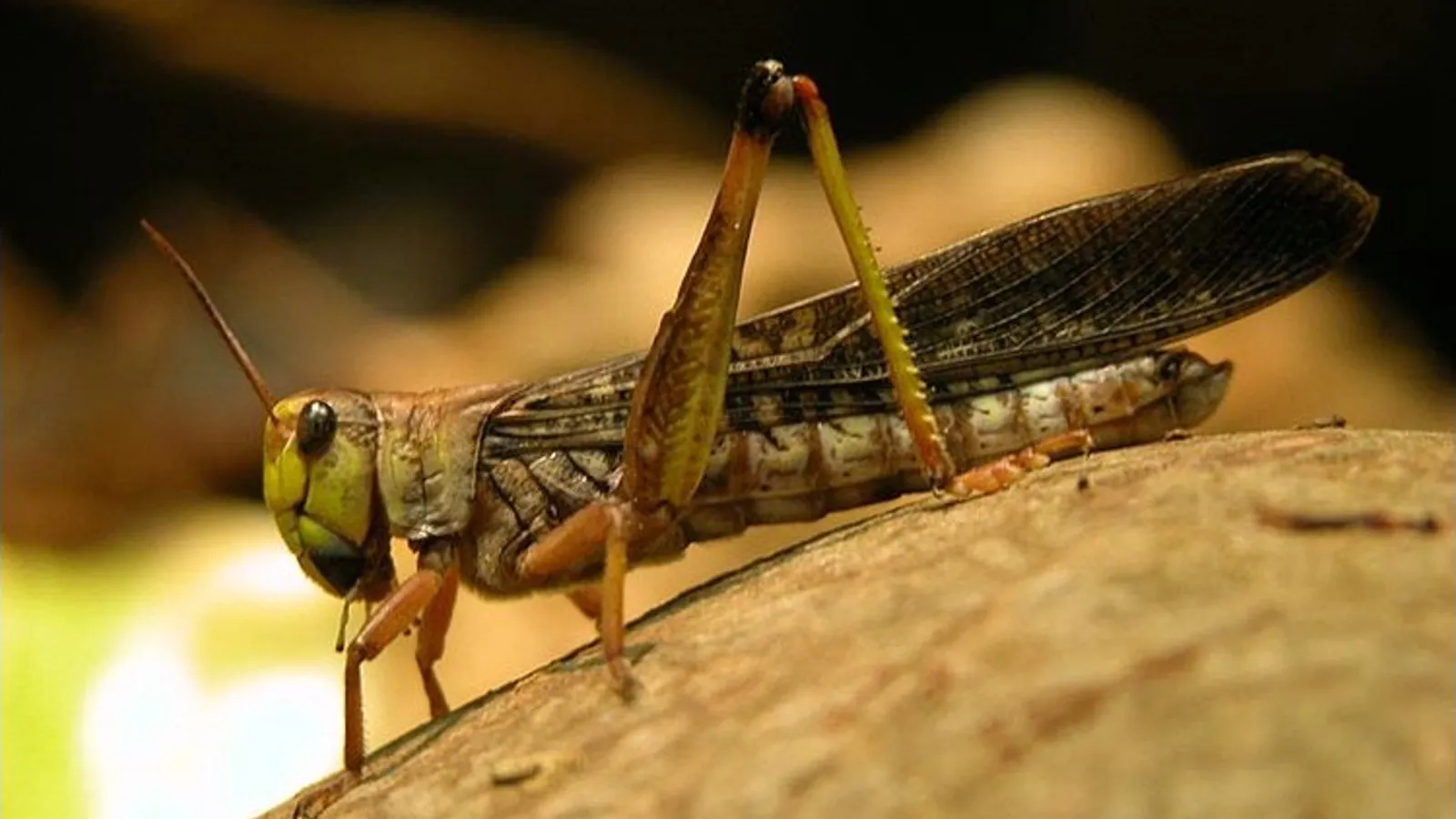
— Where the name comes from
Locusta is the Latin name for both grasshopper and locust, perhaps related to lacerta, lizard, for the long body. Migratoria, migrating. The name carries what makes this insect memorable and feared: it never stays put.
— Facts
- Group
- Insects · Insecta
- Order
- Grasshoppers and crickets
- Habitat
- Grassland, savannah and cropland of hot regions
- Range
- Africa, southern Asia, Australia, southern Europe
- Size
- 3.5–5.5 cm
- Diet
- Herbivore — leaves, grasses, crops
- Lifespan
- A few months
— Characteristics
- 01
In normal conditions it lives alone, green and retiring, like any grasshopper.
- 02
Under crowding it changes colour, shape and behaviour and turns gregarious.
- 03
A swarm can number billions of individuals and travel hundreds of kilometres.
— What sets it apart
The locust is two animals in one. When the population thickens and the hind legs of individuals brush constantly against one another, a nervous trigger sets off a metamorphosis: the solitary form, cryptic and harmless, turns within days into the gregarious form, dark and voracious, gathering into swarms that can eat in a day the food of tens of thousands of people. It is the same insect, the same species — but physical contact with its own kind rewrites its body and its instincts. The biblical plagues of locusts came from exactly this switch.
