
Brachypelma hamorii
Brachypelma hamorii
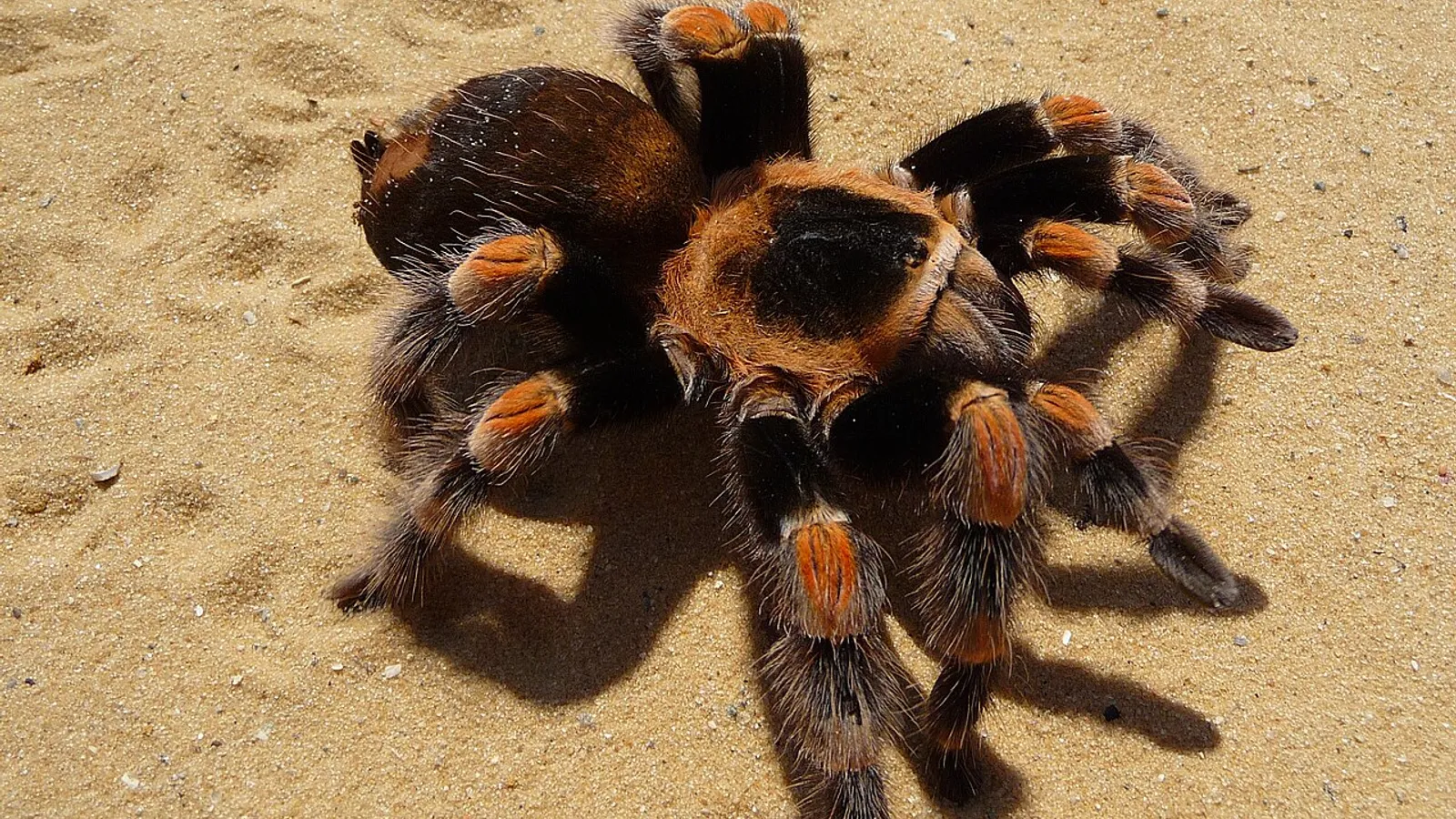
— Where the name comes from
Tarantula comes from Taranto: the Apulian spider whose bite was cured, so the belief went, by dancing the tarantella. The spider of that legend, though, is not this one, and is nearly harmless. Brachypelma is Greek, “short sole”; hamorii honours the arachnologist Andrew Hamori.
— Facts
- Group
- Arachnids · Arachnida
- Order
- Spiders
- Habitat
- Burrows dug into dry slopes
- Range
- The Pacific side of Mexico
- Size
- 12–14 cm with legs outstretched
- Diet
- Carnivore — insects, small vertebrates
- Lifespan
- 25–30 years for the female
— Characteristics
- 01
The venom is weak: to a human, less dangerous than a bee sting.
- 02
It defends itself by flicking urticating hairs off its abdomen.
- 03
The male lives a few years, the female decades.
— What sets it apart
A spider has no extensor muscles in its legs. It bends them with muscle and straightens them with the pressure of its haemolymph, driven from the prosoma: a hydraulic system. That is why a dead spider curls up — with the pressure gone, only the flexors remain. And why a spider that has lost haemolymph through a wound can no longer walk.
