
Atlantic horseshoe crab
Limulus polyphemus
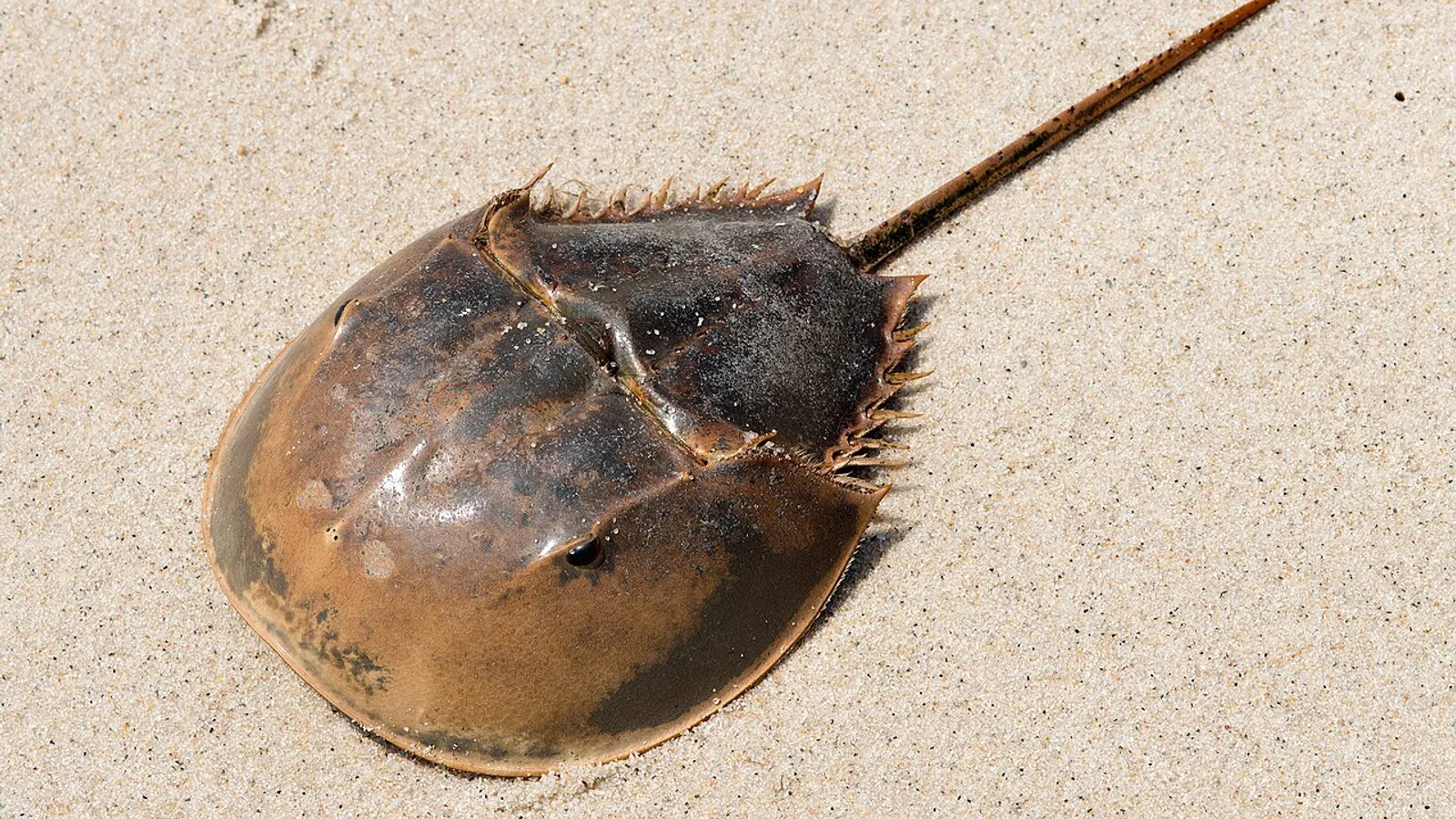
— Where the name comes from
Polyphemus is the Cyclops of the Odyssey, the one with a single eye, and the name comes from an error: whoever christened it saw the two close-set median eyes and thought of one central eye. It actually has ten. Limulus is the diminutive of the Latin limus, “oblique”, for its sidelong gait. And “horseshoe crab”, as English calls it, is wrong a third time: it is not a crab, and is more closely related to spiders and scorpions than to any crustacean.
— Facts
- Group
- Arachnids · Arachnida
- Order
- Horseshoe crabs
- Habitat
- Sandy coastal bottoms; comes ashore on beaches to spawn
- Range
- Atlantic coast of North America, from Maine to the Yucatán
- Size
- Up to 60 cm including the tail
- Diet
- Molluscs, worms and detritus gathered from the bottom
- Lifespan
- 20–25 years
— Characteristics
- 01
Its lineage is recognisable in fossils 445 million years old.
- 02
The tail does not sting: it serves to right itself when a wave rolls it over.
- 03
Its blood is blue, because it carries oxygen with copper.
— What sets it apart
Its blood underpins drug safety worldwide. It contains cells that clot instantly on contact with even a trace of bacterial endotoxin, and from that reaction comes the LAL test, used to check that vaccines, implants and injectable fluids are free of contamination: every year hundreds of thousands of horseshoe crabs are collected, bled in part and returned to the sea, with a mortality estimated at between ten and thirty per cent. A synthetic alternative has existed since 2003 and is at last replacing the test, but slowly. Meanwhile the eggs these animals lay on the beaches of Delaware are the fuel for an entire migration of shorebirds.
