
Leopard slug
Limax maximus
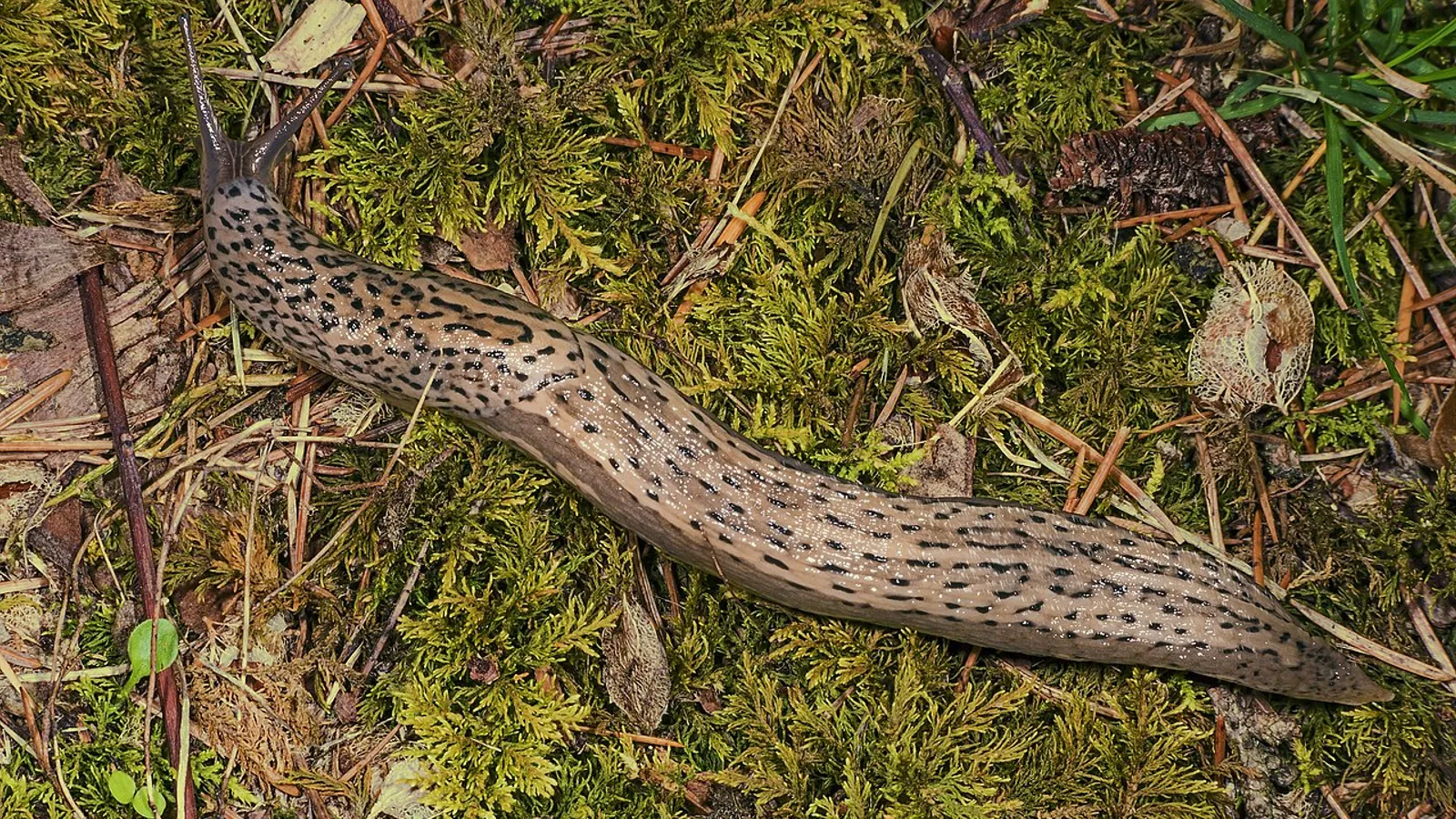
— Where the name comes from
Limax is the Latin name for the shell-less slug, and comes from limus, mud, slime: it is the same root as “slime” and the Italian limaccioso, said of a turbid river. Maximus gives the size. The name is therefore, literally, “the very great slimy one”.
— Facts
- Group
- Molluscs · Mollusca
- Order
- Land snails
- Habitat
- Cellars, gardens, damp woodland, log piles
- Range
- European in origin; introduced to North America and Australia
- Size
- 10–20 cm extended
- Diet
- Fungi, dead leaves, other slugs, droppings
- Lifespan
- 2–3 years
— Characteristics
- 01
It does have a shell, but internal and reduced to a small calcareous plate.
- 02
It follows its own mucus trails to find the way home.
- 03
It chases and eats other slugs, fast by its own standards.
— What sets it apart
It mates hanging in mid-air. Two individuals climb a branch or a wall, wind around one another, then drop and hang from a cord of mucus as much as half a metre long; there they evert blue translucent copulatory organs as long as their whole bodies, which twine into a flower in the void to exchange sperm. It is one of the most spectacular matings in the animal kingdom, lasts hours, and has rarely been filmed because it happens at night. It is also a predator: it hunts other slugs by following their mucus trails.
