
Mediterranean mussel
Mytilus galloprovincialis
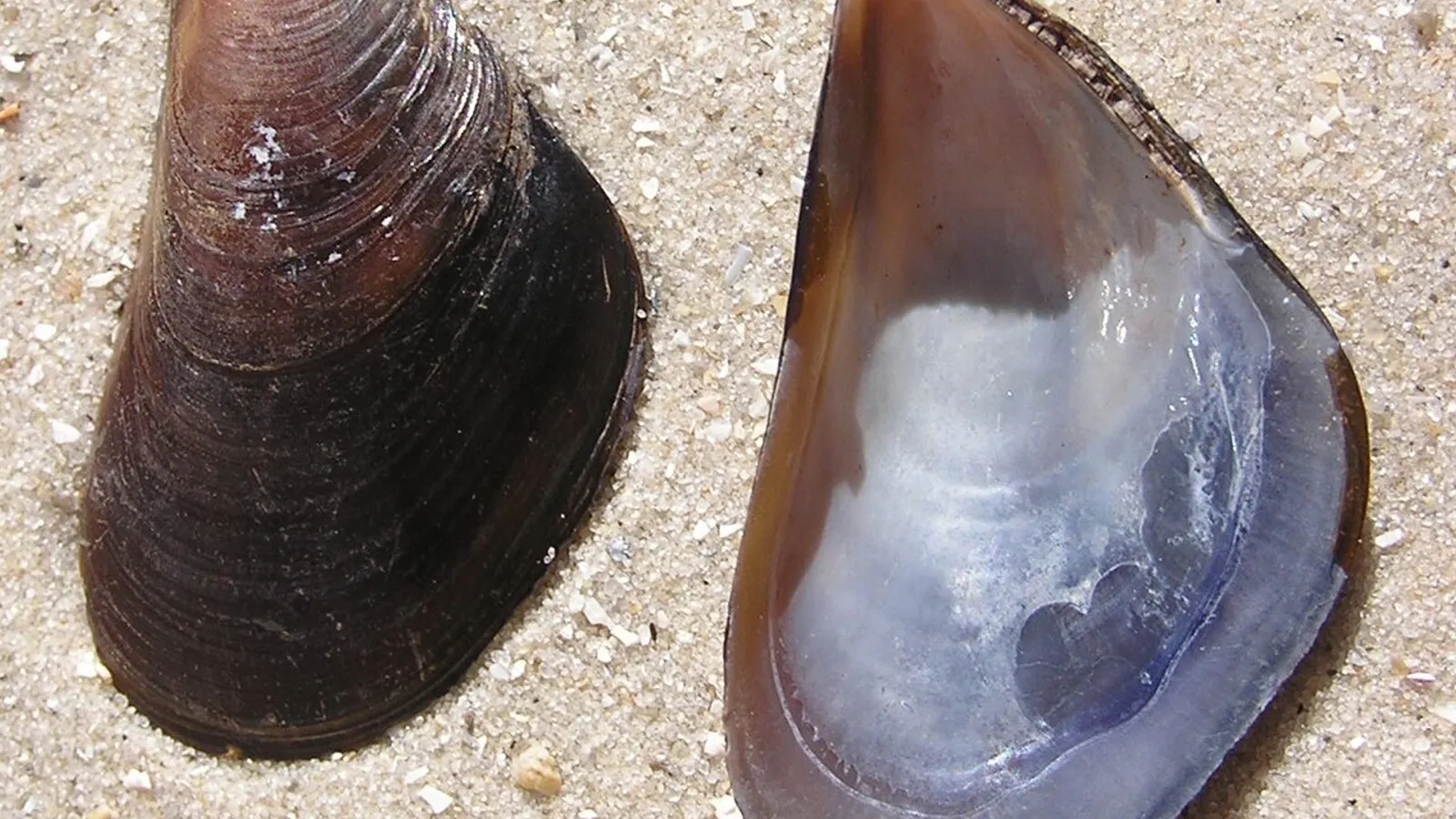
— Where the name comes from
Mytilus is the Greek mytílos, the mussel, and it is the word behind the scientific name of the whole family. Galloprovincialis means “of Gallia Narbonensis”, that is, of Provence, where the species was described. In Italian it has a collection of regional names no other species matches: cozza in the south, muscolo in Liguria, peocio in Venice, mitilo in books.
— Facts
- Group
- Molluscs · Mollusca
- Order
- Mussels
- Habitat
- Intertidal rocks and structures, in dense beds
- Range
- Mediterranean and eastern Atlantic; invasive in South Africa and California
- Size
- 5–14 cm
- Diet
- Phytoplankton and particles filtered from the water
- Lifespan
- Up to 20 years
— Characteristics
- 01
It anchors to the rock with the byssus, a tuft of protein threads.
- 02
It filters up to five litres of water an hour.
- 03
It lives in beds where every individual is attached to its neighbours.
— What sets it apart
The byssus that holds it to the rock is a glue that works underwater, where no human adhesive does: the mussel extrudes a liquid filament and hardens it within minutes, using a rare amino acid, DOPA, that drives water off the surface and bonds to the stone. Laboratories developing surgical adhesives — glues that must stick to tissues wet with blood — have been copying this molecule for twenty years. And because it filters everything the water carries, the mussel is also a sentinel: marine monitoring programmes measure the pollutants accumulated in its tissues to learn what is in the sea.
