
African wild dog
Lycaon pictus
— Where the name comes from
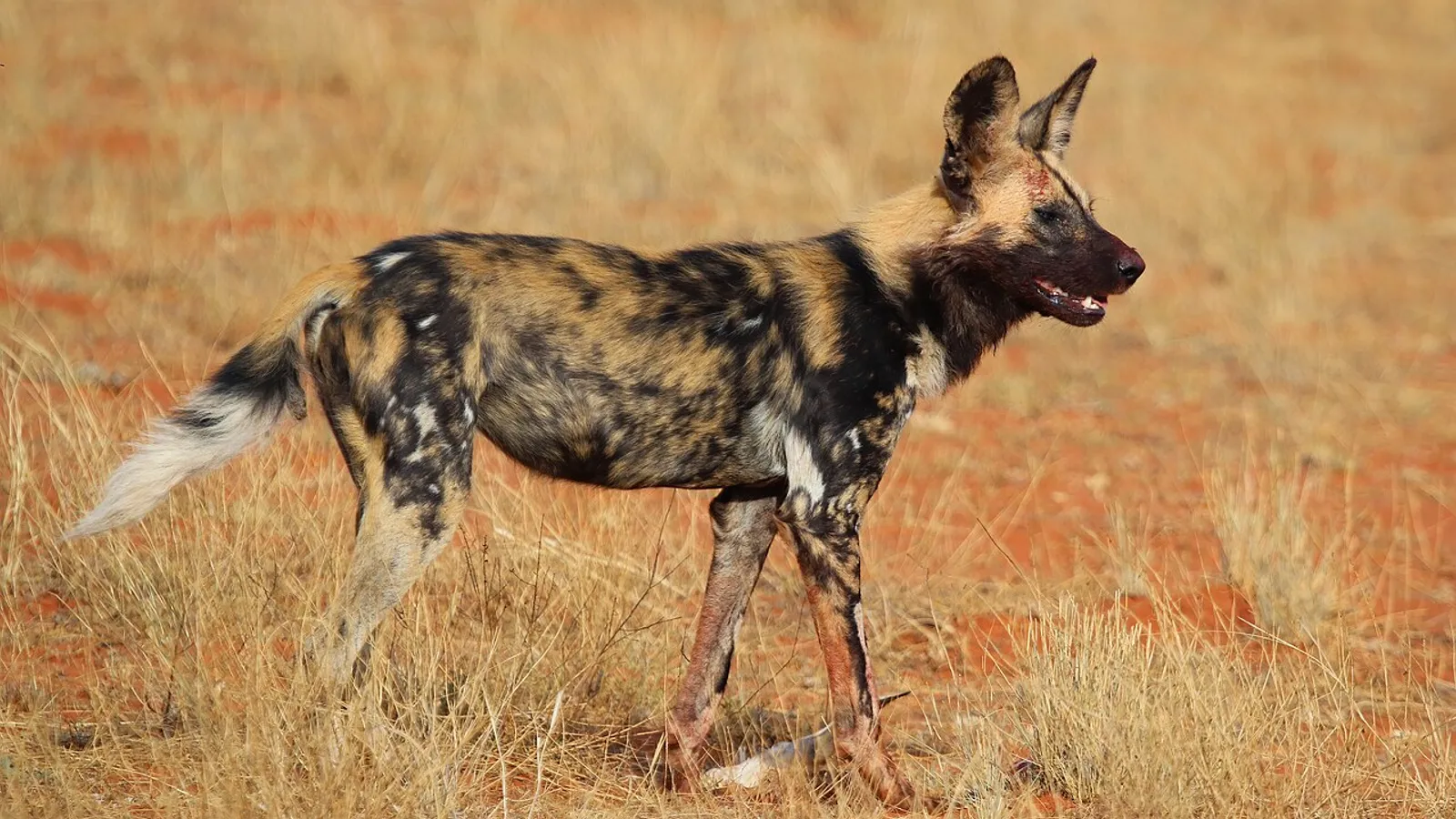
Lycaon is the Greek lýkos, “wolf”, but it comes by way of myth: Lycaon, king of Arcadia, served human flesh to Zeus to test him and was turned into a wolf. Pictus is Latin, “painted”, and it is no exaggeration — every individual carries an unrepeatable pattern of black, ochre and white blotches, so much so that researchers identify packs by sight. The English name, painted wolf, holds the two halves together.
— Facts
- Group
- Mammals · Mammalia
- Order
- Carnivores
- Habitat
- Open savannah, bushland, short-grass plains
- Range
- Sub-Saharan Africa, in fragmented populations; strongholds in Botswana, Zimbabwe and Tanzania
- Size
- 75–110 cm long, 18–36 kg
- Diet
- Carnivore — medium-sized antelope, impala, gazelle
- Lifespan
- 10–12 years
— Characteristics
- 01
It has four toes per foot, not five: no other canid in the world shares this.
- 02
It hunts by running prey down at 60 km/h for kilometres, with a success rate of 60 to 80 per cent — the highest of any large African predator.
- 03
It regurgitates food for the pups, for injured adults and for the old: no member of the pack is left behind.
— What sets it apart
Before setting off to hunt, the pack votes. The animals exchange a quick audible sneeze, and the more sneezes accumulate the more likely the group is to move; if a dominant animal proposes departure three sneezes suffice, if a subordinate does at least ten are needed. It was documented in Botswana in 2017 by recording dozens of these rallies: it is a genuine quorum, with votes weighted by rank. Africa’s most efficient carnivore decides democratically, and does it by sneezing.
