
Steller sea lion
Eumetopias jubatus
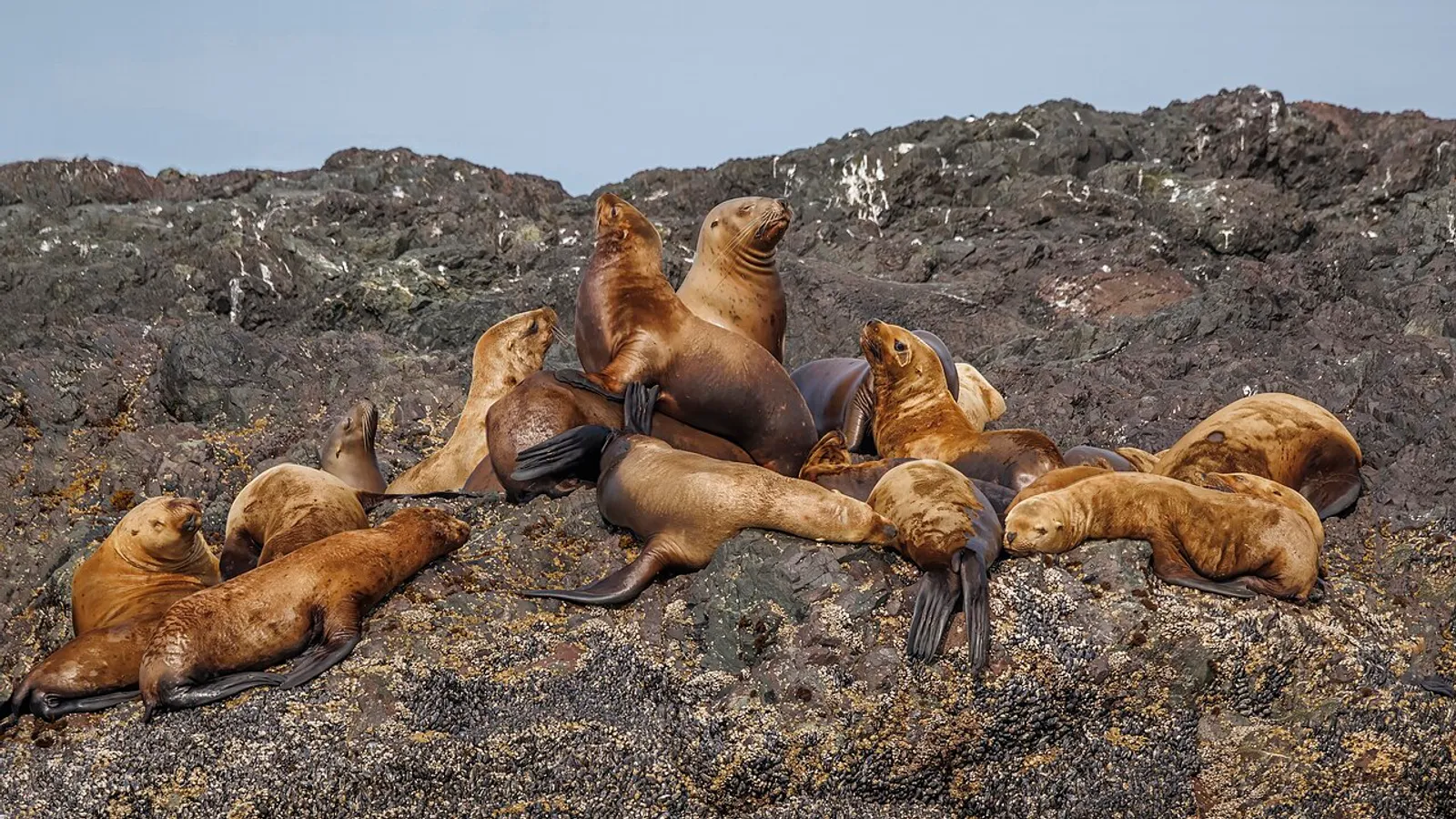
— Where the name comes from
Eumetopias is “fine-browed”, from the Greek eu- and metōpon, for the broad head and high forehead of the male. Jubatus is Latin for “maned”, from the thick neck that earned it the name of lion. Steller is Georg Wilhelm Steller, the German naturalist of Bering’s expedition who in 1741 described this and other species of the North Pacific — among them the sea cow, wiped out in twenty-seven years.
— Facts
- Group
- Mammals · Mammalia
- Order
- Carnivores
- Habitat
- Rocky coasts, islands and stacks of the North Pacific
- Range
- From northern Japan to Alaska and down to California
- Size
- 2.3–3.3 m, 240–1,120 kg for the male
- Diet
- Carnivore — shoaling fish, cephalopods, occasionally other pinnipeds
- Lifespan
- 18 years for the male, 30 for the female
— Characteristics
- 01
It is the largest eared seal in the world: a male can weigh more than a tonne.
- 02
The male is up to three times heavier than the female.
- 03
The western population collapsed by 80% between the 1970s and the 1990s.
— What sets it apart
Its collapse in Alaska is one of the most argued-over mysteries in marine ecology. In twenty years the western population all but vanished, and no single explanation holds: industrial fishing has been blamed, along with an ocean regime shift that replaced fatty fish with lean ones — the “junk food” hypothesis — and killer whales, which, deprived of the great whales, are said to have turned to pinnipeds. Thirty years of study have not closed the question, and meanwhile the eastern population, with nobody doing anything different, has recovered on its own.
