
Northern collared lemming
Dicrostonyx groenlandicus
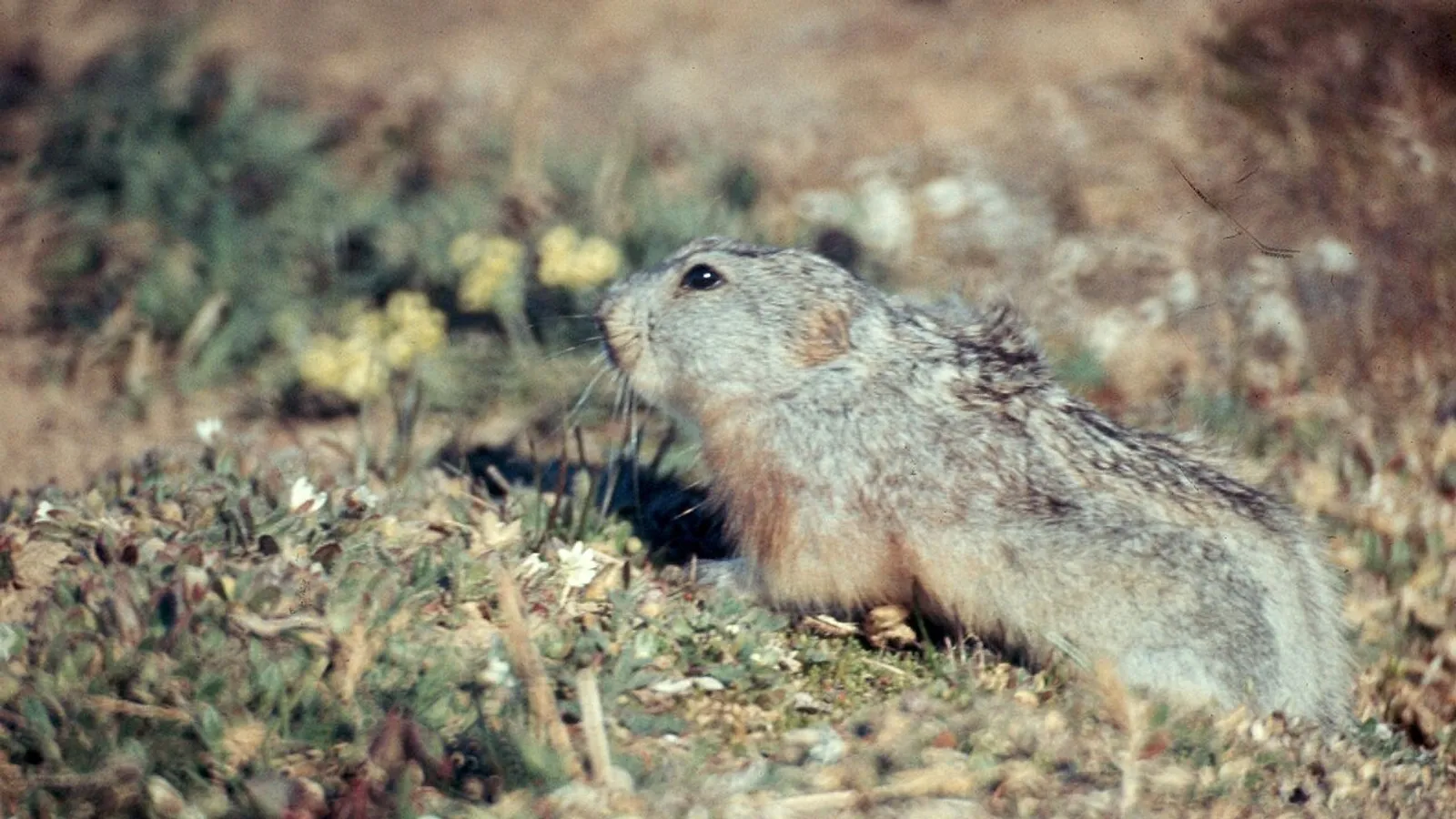
— Where the name comes from
Dicrostonyx is “forked claw”, from the Greek díkroos, forked, and ónyx, the claw — a name describing something that exists only in winter. Groenlandicus names Greenland, whence the first specimens came. The “collar” of the Italian name is the pale band around the neck, visible in the summer coat.
— Facts
- Group
- Mammals · Mammalia
- Order
- Rodents
- Habitat
- Arctic tundra, dry stony slopes
- Range
- The North American Arctic and Greenland
- Size
- 10–15 cm of body, tail 1–2 cm, 30–110 g
- Diet
- Dwarf willow, grasses, buds, lichens
- Lifespan
- 1–2 years
— Characteristics
- 01
It is the only rodent that turns white in winter.
- 02
In winter two large forked claws grow on its front toes, for digging snow.
- 03
It spends the whole cold season in tunnels dug between the snow and the ground.
— What sets it apart
The claws that give it its name regrow and are reabsorbed every year. In autumn the third and fourth toes of the forefeet develop a huge double claw, used to dig hardened snow; in spring it wears down and returns to normal. No other mammal changes the shape of a claw with the seasons, and it is the adaptation that lets it spend the winter under the snow rather than on it — where the Arctic fox hears it anyway, and dives in head first.
