
West Indian manatee
Trichechus manatus
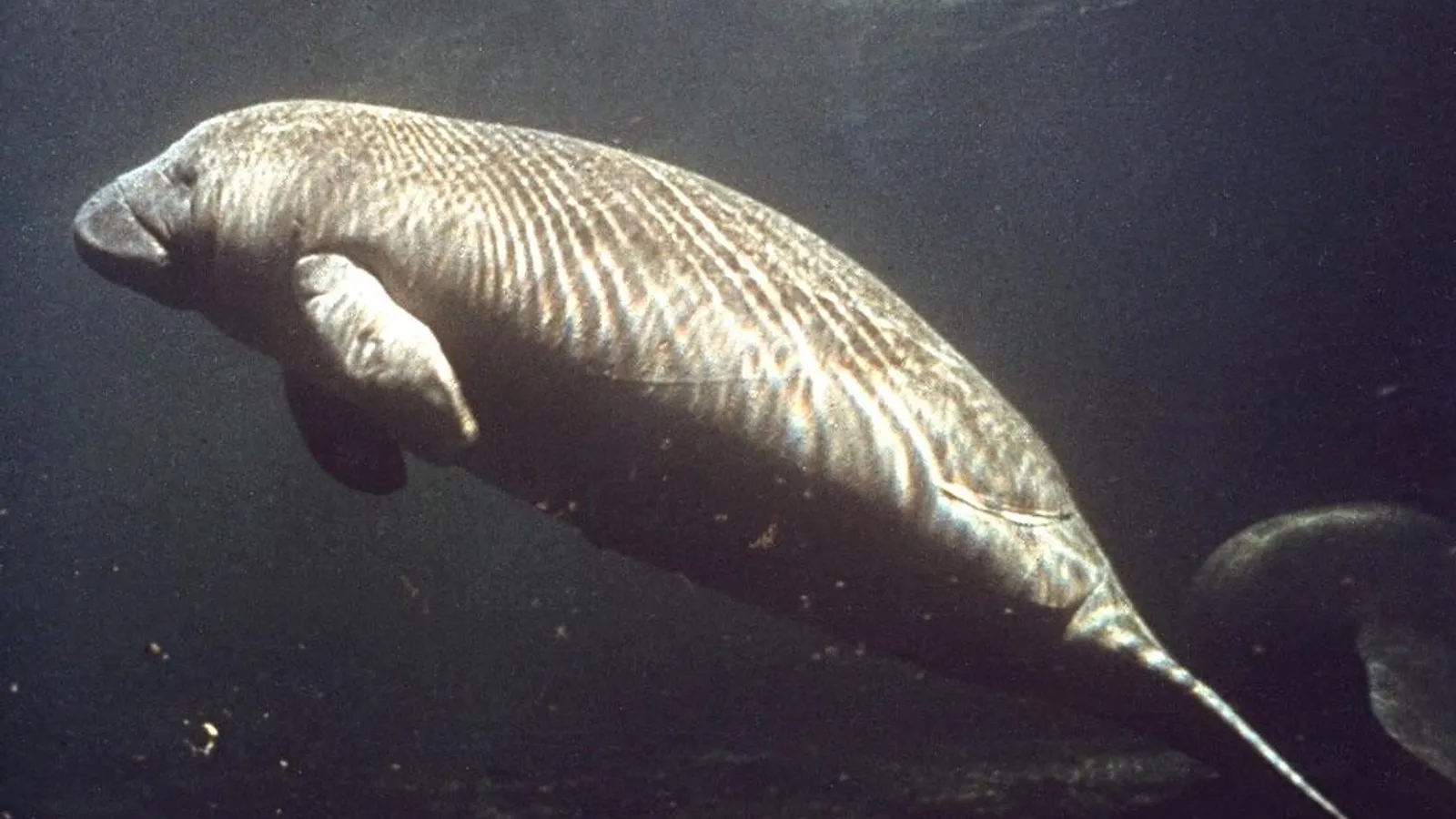
— Where the name comes from
The genus Trichechus was coined by Linnaeus from the Greek thríx, trichós, “hair, bristle”, referring to the stiff whiskers that bristle from the muzzle. The epithet manatus latinises the vernacular name the Spanish gave the animal, manatí, a word of Carib-Taíno origin that some translate as “breast” and others tie to the Latin manus, for the hand-like flippers. The Italian lamantino arrives through the French lamantin, where the resemblance to lamenter suggested an animal with a mournful call.
— Facts
- Group
- Mammals · Mammalia
- Order
- Sirenians
- Habitat
- Shallow coastal waters, estuaries and slow rivers.
- Range
- The tropical and subtropical Atlantic coasts of the Americas, from Florida through the Gulf of Mexico and the Caribbean to north-eastern Brazil.
- Size
- 2.7–3.5 m, 200–600 kg (exceptionally over 1,500 kg)
- Diet
- Herbivore — water plants and algae, up to a tenth of its own weight a day
- Lifespan
- Up to 50–60 years in the wild
— Characteristics
- 01
Unlike almost all mammals it has only six neck vertebrae: to look about it must turn its whole body.
- 02
Its molars are replaced throughout life, moving slowly forward from the back of the jaw as on a conveyor belt.
- 03
The split, prehensile upper lips work like hands to grasp and tear submerged vegetation.
— What sets it apart
In January 1493 Christopher Columbus noted in his journal that he had sighted three “mermaids” off Hispaniola, judging them far less beautiful than the legend paints them: they were almost certainly manatees. It is to such sailors’ misreadings that the whole order owes its name, the Sirenia. For all its ungainly look, the manatee is a close relative of the elephant, with which it shares an ancient African origin and flat nails on its flippers.
