
Dugong
Dugong dugon
— Where the name comes from
Both the common name and the binomial Dugong dugon derive from the Malay duyung, “lady of the sea”, the term with which the seafarers of the archipelago named this retiring creature. It was Lacépède, in 1799, who fixed the scientific name by repeating the indigenous word almost unchanged. It is no accident that the term evokes a lady: like the manatee, the dugong fed the mermaid legends for centuries, and it is to those mythical figures that the order Sirenia owes its name.
— Facts
- Group
- Mammals · Mammalia
- Order
- Sirenians
- Habitat
- Seagrass meadows in warm coastal waters.
- Range
- The coastal belt of the Indo-Pacific, from the Red Sea and East Africa to northern Australia and the western Pacific.
- Size
- 2.4–3 m, 230–400 kg
- Diet
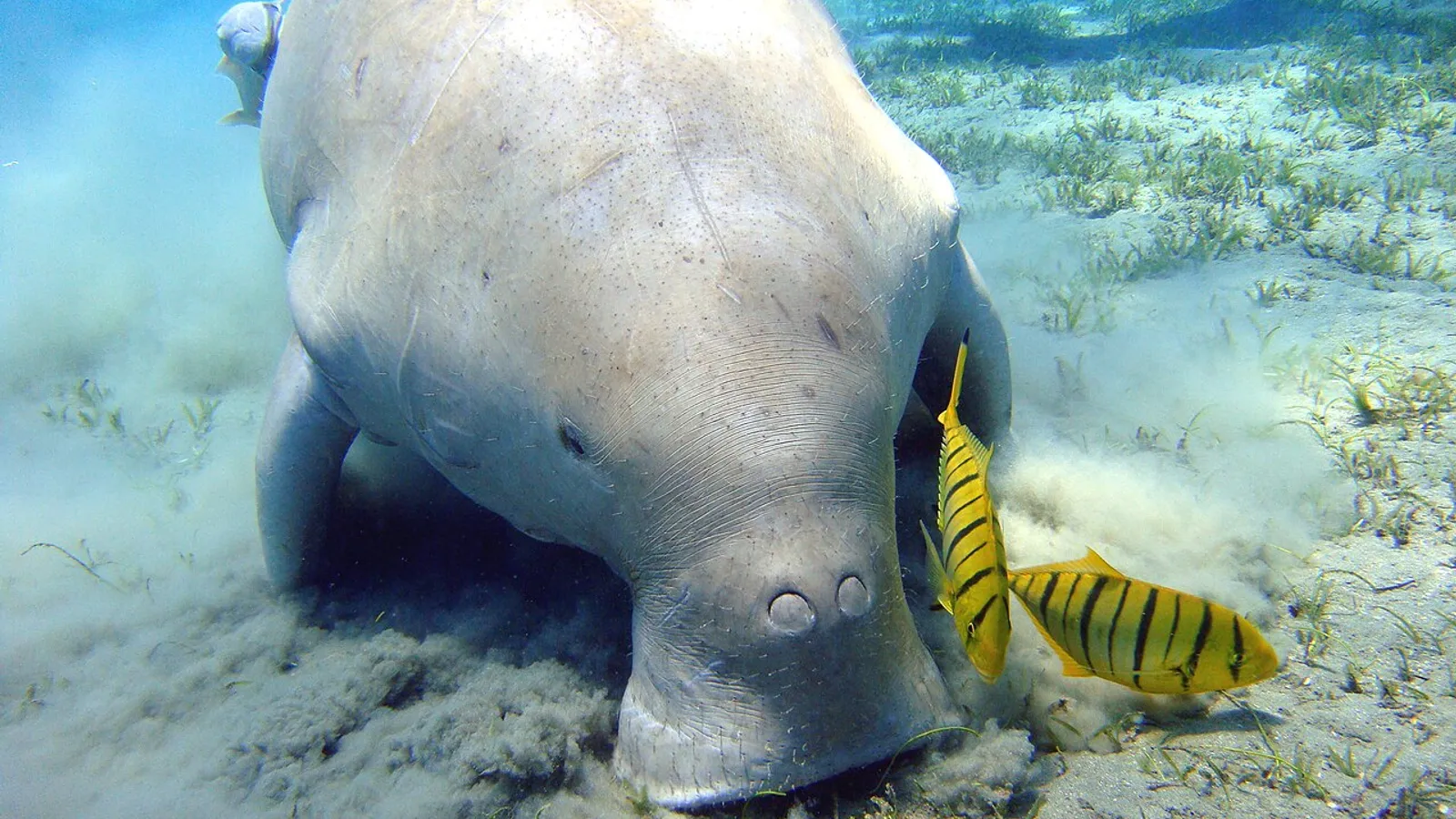
- Herbivore — seagrasses, which it grazes leaving furrows on the seabed
- Lifespan
- Up to 70 years
— Characteristics
- 01
It is the only exclusively marine sirenian: unlike manatees it never goes up freshwater rivers.
- 02
The tail is two-lobed like a dolphin’s, not a rounded paddle.
- 03
Adult males develop two small tusks, incisors that emerge from the upper lip.
— What sets it apart
The dugong’s closest relative in historical times was Steller’s sea cow, an eight-metre colossus discovered in 1741 in the Bering Sea and wiped out by hunters in just twenty-seven years: one of the fastest extinctions ever documented. The dugong shares with that vanished creature an extremely slow biology — females bear a single calf every three to seven years — which leaves it fragile under human pressure. The males’ tusks, like the trunks of trees, lay down growth rings that allow their age to be read.
