
Laughing kookaburra
Dacelo novaeguineae
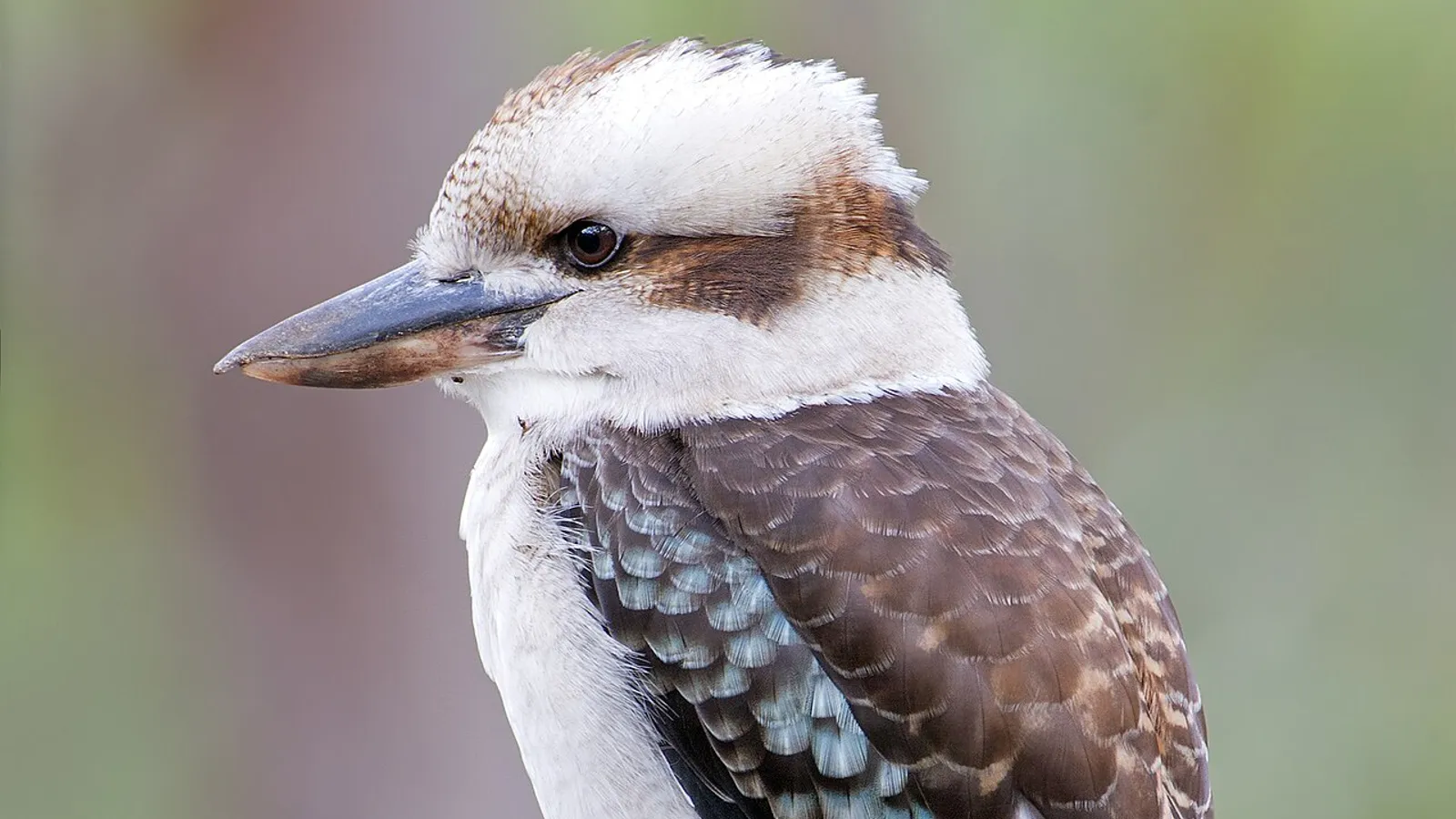
— Where the name comes from
Dacelo is an anagram of Alcedo, the genus of the kingfisher: an English naturalist in 1815 separated these birds from the European kingfishers by shuffling the letters of the name, exactly as would later happen to the house martin. Novaeguineae is a plain mistake: the man who described the species believed it came from New Guinea, and it comes from Australia. Kookaburra is a word from the Wiradjuri language, and it reproduces the laugh.
— Facts
- Group
- Birds · Aves
- Order
- Rollers and kingfishers
- Habitat
- Eucalypt woodland, parks, gardens, wooded farmland
- Range
- Eastern Australia; introduced in the west and in Tasmania
- Size
- 39–42 cm, 200–500 g
- Diet
- Snakes, lizards, rodents, insects, nestlings
- Lifespan
- 20 years in the wild
— Characteristics
- 01
It is the largest kingfisher in the world and hardly ever fishes.
- 02
It kills snakes by seizing them behind the head and beating them against a branch.
- 03
The young stay with their parents for years, helping to raise their siblings.
— What sets it apart
The laughter at dawn and dusk is a family chorus, and it is not merriment: it is a boundary. The group lines up on a branch and sings all together to declare to the neighbours how far the territory runs, and the neighbours answer; the result, in an Australian wood, is a chain of laughter passing from valley to valley. That sound has ended up in the soundtrack of every film set in a jungle — in Africa, in Amazonia, in Asia — usually in places where a kookaburra has never been.
