
European roller
Coracias garrulus
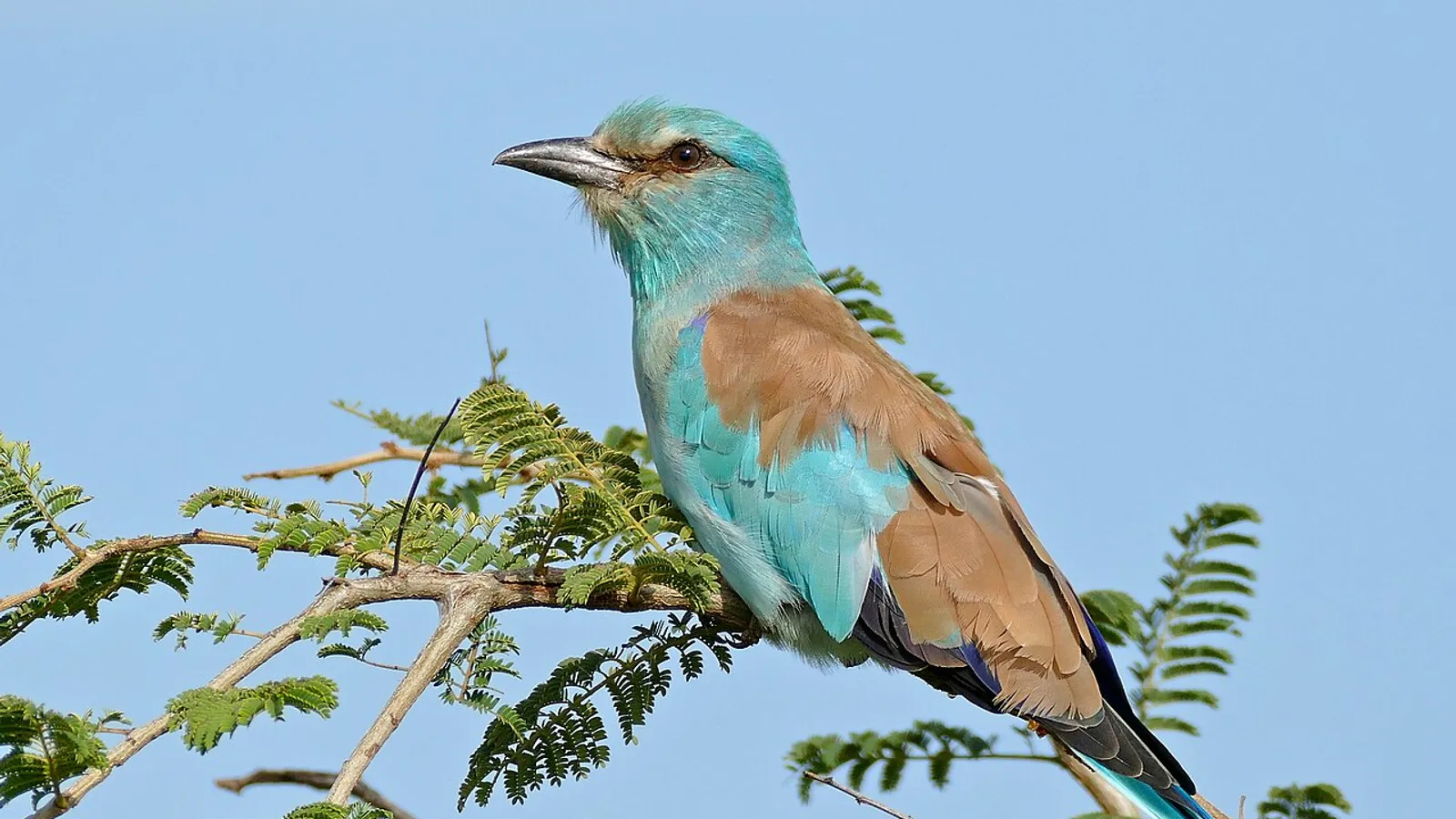
— Where the name comes from
Coracias comes from the Greek korakías, “raven-like”, from kórax: a name that could hardly be more wrong for a turquoise animal. Garrulus is “chatterer”. The Italian name is equally misleading — it is no jay and has nothing to do with the sea — while the English roller and the German Racke get the point: the displaying male climbs high and drops, rolling over on himself.
— Facts
- Group
- Birds · Aves
- Order
- Rollers and kingfishers
- Habitat
- Open country with old trees, steppe, olive groves, pasture
- Range
- Southern and eastern Europe, western Asia; winters in southern Africa
- Size
- 29–32 cm, wingspan 52–58 cm, 110–160 g
- Diet
- Large insects, lizards, frogs, small rodents
- Lifespan
- 9 years in the wild
— Characteristics
- 01
It hunts from a wire or a post, dropping onto prey on the ground.
- 02
It nests in cavities: woodpecker holes, wall crevices, nest boxes.
- 03
Disturbed nestlings vomit an orange liquid of unbearable smell.
— What sets it apart
It is the most colourful bird in Europe and for most of the year nobody sees it: it spends the African months in silence, arrives in May and leaves in August. In Italy it had gone from whole regions when the hollow trees and the pastures went, and the strategy that brought it back is the simplest in the repertoire — hanging nest boxes on the electricity poles along country roads. In Puglia and Basilicata, where this has been done systematically, pairs have gone from a few dozen to several hundred.
