
North Island brown kiwi
Apteryx mantelli
— Where the name comes from
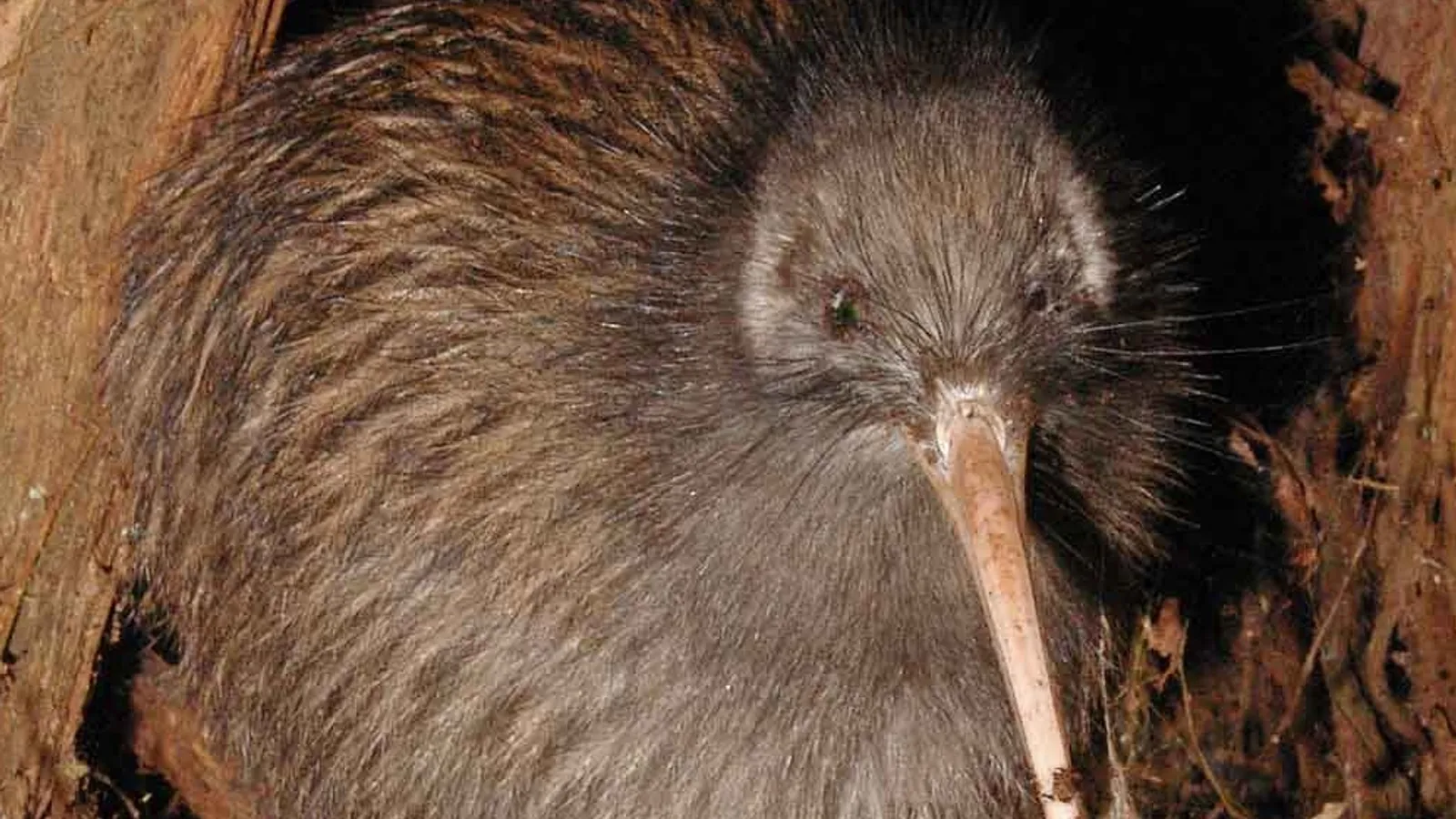
Apteryx is “wingless”, from the privative a- and ptéryx: the wings are there, but three centimetres long and buried in a plumage that is more like hair than feathers. Mantelli recalls Walter Mantell, who took specimens to England. Kiwi is the Māori word for the animal, and it is perhaps the only case in the world of a bird giving its name to the people of a country.
— Facts
- Group
- Birds · Aves
- Order
- Kiwi
- Habitat
- Forest, scrub, pasture with hedges on the North Island
- Range
- New Zealand, North Island
- Size
- 50–65 cm, 1.4–3.8 kg
- Diet
- Earthworms, grubs, soil insects, fallen berries
- Lifespan
- 25 years in the wild
— Characteristics
- 01
It is the only bird with nostrils at the tip of the bill: it smells the ground.
- 02
Its bones are filled with marrow, not air-filled as in other birds.
- 03
Its body temperature is 38 degrees, lower than any other bird’s.
— What sets it apart
It lays the largest egg in the world relative to the mother: up to a fifth of her weight, the equivalent of a woman giving birth to a fifteen-kilo child. Inside there is twice the usual yolk, and the chick hatches already in adult plumage, able to walk and find its own food within days. For a century it was thought to be related to New Zealand’s moa; comparing the DNA with the remains of Madagascar’s elephant birds showed instead that its closest relatives were those, on the far side of the Indian Ocean.
