
Brazilian porcupine
Coendou prehensilis
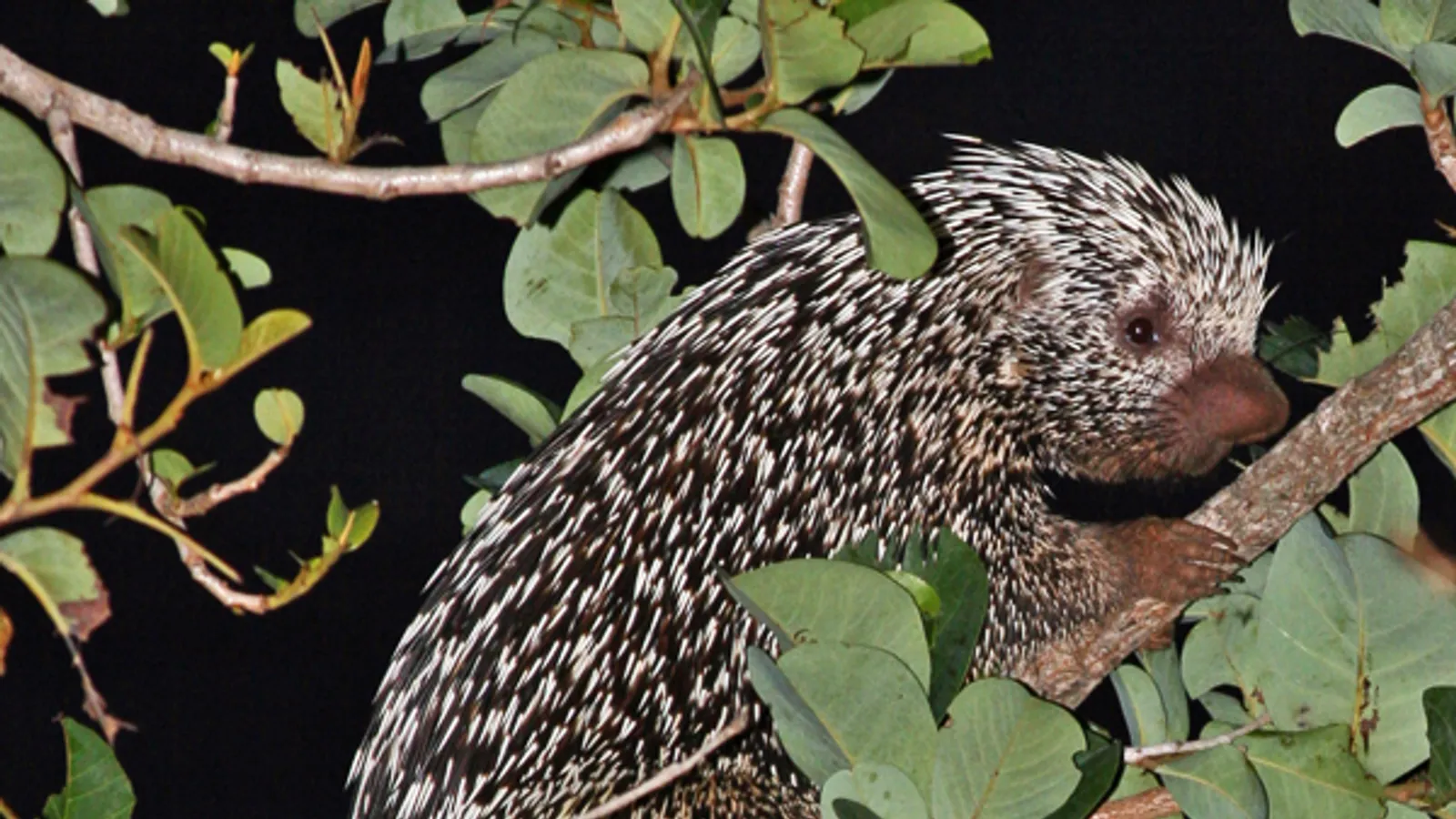
— Where the name comes from
Coendou comes from the Tupi kuandu, the animal’s name in Amazonia, one of the many indigenous loans that nomenclature absorbed from Brazil along with jaguar, tapir and macaw. Prehensilis describes the tail, as long as the body, bare at the tip and able to hold the animal’s whole weight from a branch.
— Facts
- Group
- Mammals · Mammalia
- Order
- Rodents
- Habitat
- Tropical forest and plantations, always in the trees
- Range
- From Venezuela and Colombia to northern Argentina
- Size
- 30–60 cm, tail 33–48 cm, 2–5 kg
- Diet
- Leaves, shoots, unripe fruit, bark
- Lifespan
- 17 years in captivity
— Characteristics
- 01
The tail curls upwards, not downwards as in South American monkeys.
- 02
Its quills are short and hidden in the fur, rising only when it is threatened.
- 03
It moves extremely slowly and is nearly impossible to spot by day.
— What sets it apart
American and Old World porcupines are not close relatives: they belong to two groups that parted tens of millions of years ago and that invented quills twice over, independently. The difference shows in the detail — the American ones have barbed tips like fish hooks, the African ones do not — and it confirms that when a slow rodent has to defend itself against a predator, hardened hair is an answer evolution finds more than once.
