
Brazilian guinea pig
Cavia aperea
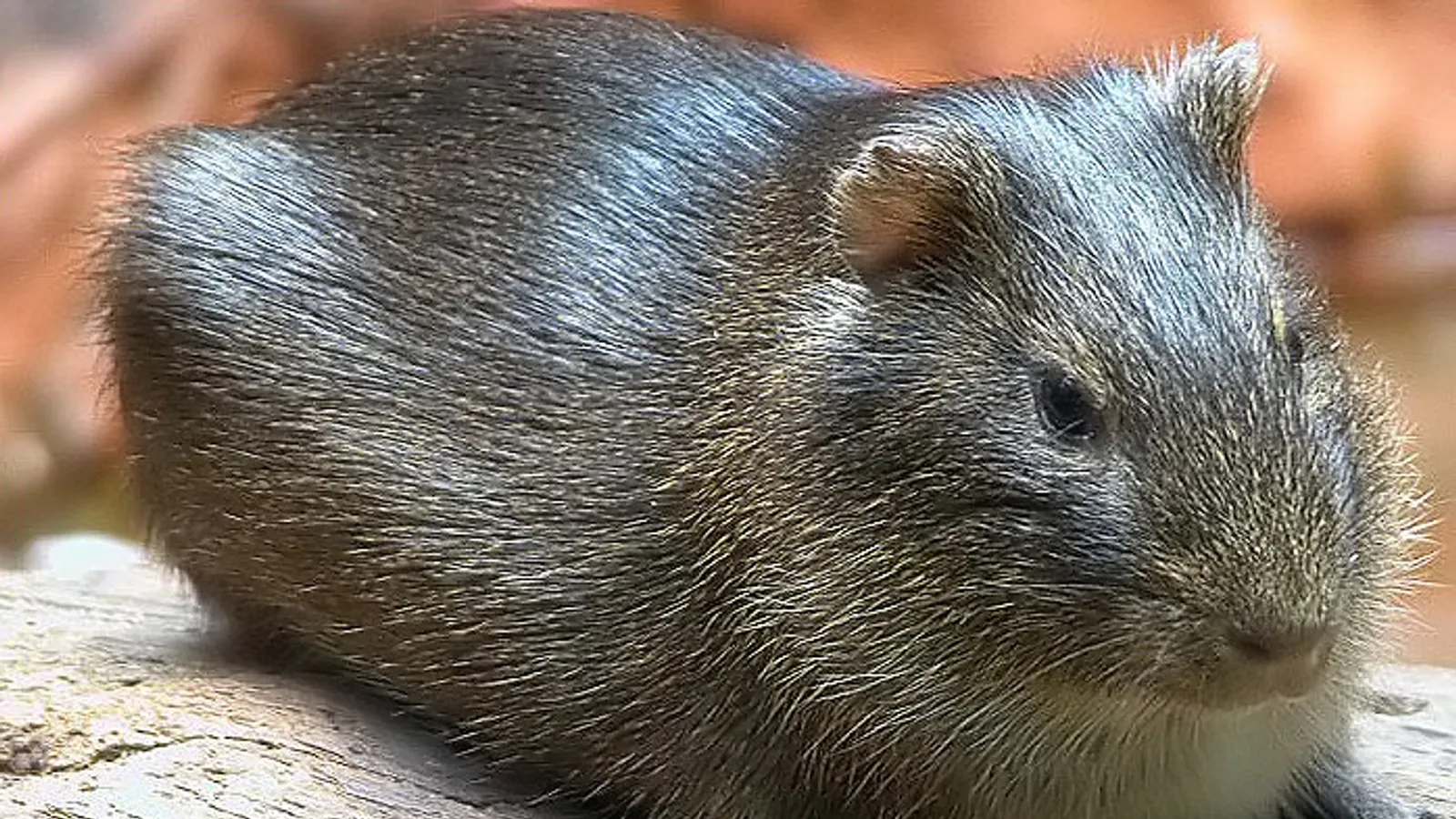
— Where the name comes from
Cavia comes from the Tupi sawiya, the animal’s name in Brazil, by way of Portuguese. Aperea is in turn the Guaraní term for the same rodent: the binomial is therefore made of two indigenous South American words, one Tupi and one Guaraní, without a syllable of Greek or Latin. It is one of the very few wholly American scientific names.
— Facts
- Group
- Mammals · Mammalia
- Order
- Rodents
- Habitat
- Wet grassland, marsh edges, tall grass
- Range
- Eastern South America, from Brazil to northern Argentina
- Size
- 20–30 cm, no tail, 400–700 g
- Diet
- Grasses, leaves, shoots
- Lifespan
- 4 years
— Characteristics
- 01
It lives in groups that open tunnels through tall grass without digging into the ground.
- 02
The young are born furred, with their eyes open, and graze from the first day.
- 03
It is slimmer, darker and far warier than the domestic guinea pig.
— What sets it apart
It is the closest wild relative of the domestic guinea pig, but probably not its ancestor: genetic comparison points rather to Cavia tschudii of the Andes. Domestication took place in Peru at least five thousand years ago and produced a larger, gentler animal able to breed all year round; the wild species, put in a cage, stays nervous for generations. It is one of the cases in which one can see that tameness is not training but genetics.
