
Rock cavy
Kerodon rupestris
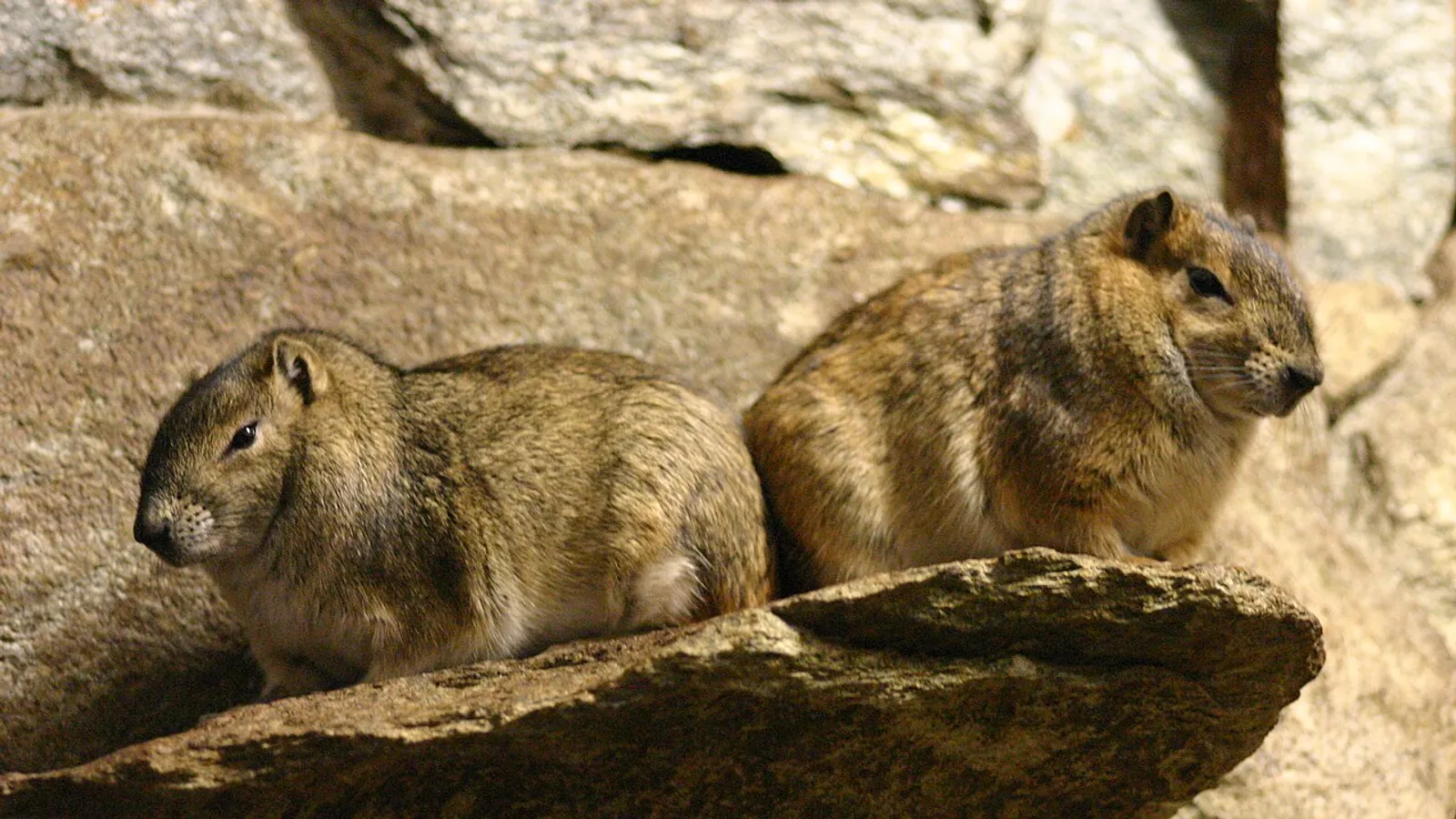
— Where the name comes from
Rupestris is “of the cliffs”, from rupes: it lives among the rock outcrops of the Brazilian caatinga and digs no burrow, slipping instead into crevices. In north-eastern Brazil it is called mocó, an indigenous word taken into the local Portuguese, and its name recurs in the music and cooking of the sertão as that of a familiar animal.
— Facts
- Group
- Mammals · Mammalia
- Order
- Rodents
- Habitat
- Rock outcrops in the caatinga, semi-arid thorn scrub
- Range
- North-eastern Brazil
- Size
- 30–40 cm, 900–1,000 g
- Diet
- Leaves, shoots, bark, seeds
- Lifespan
- 10 years
— Characteristics
- 01
It climbs trees and vertical rock, alone among the cavies.
- 02
Its nails are flattened almost like small human nails, not claws.
- 03
It draws all its water from leaves: in the caatinga it may not rain for months.
— What sets it apart
The caatinga is the only large biome entirely contained within Brazil and it is also the least protected: less than one per cent lies in strict reserves. The rock cavy, endemic to it, is at once a symbol species and a traditional prey, hunted for meat in the droughts when the cattle die. Its fate tells of a problem larger than itself: the difficulty of protecting a landscape regarded as poor country rather than as forest.
