
African brush-tailed porcupine
Atherurus africanus
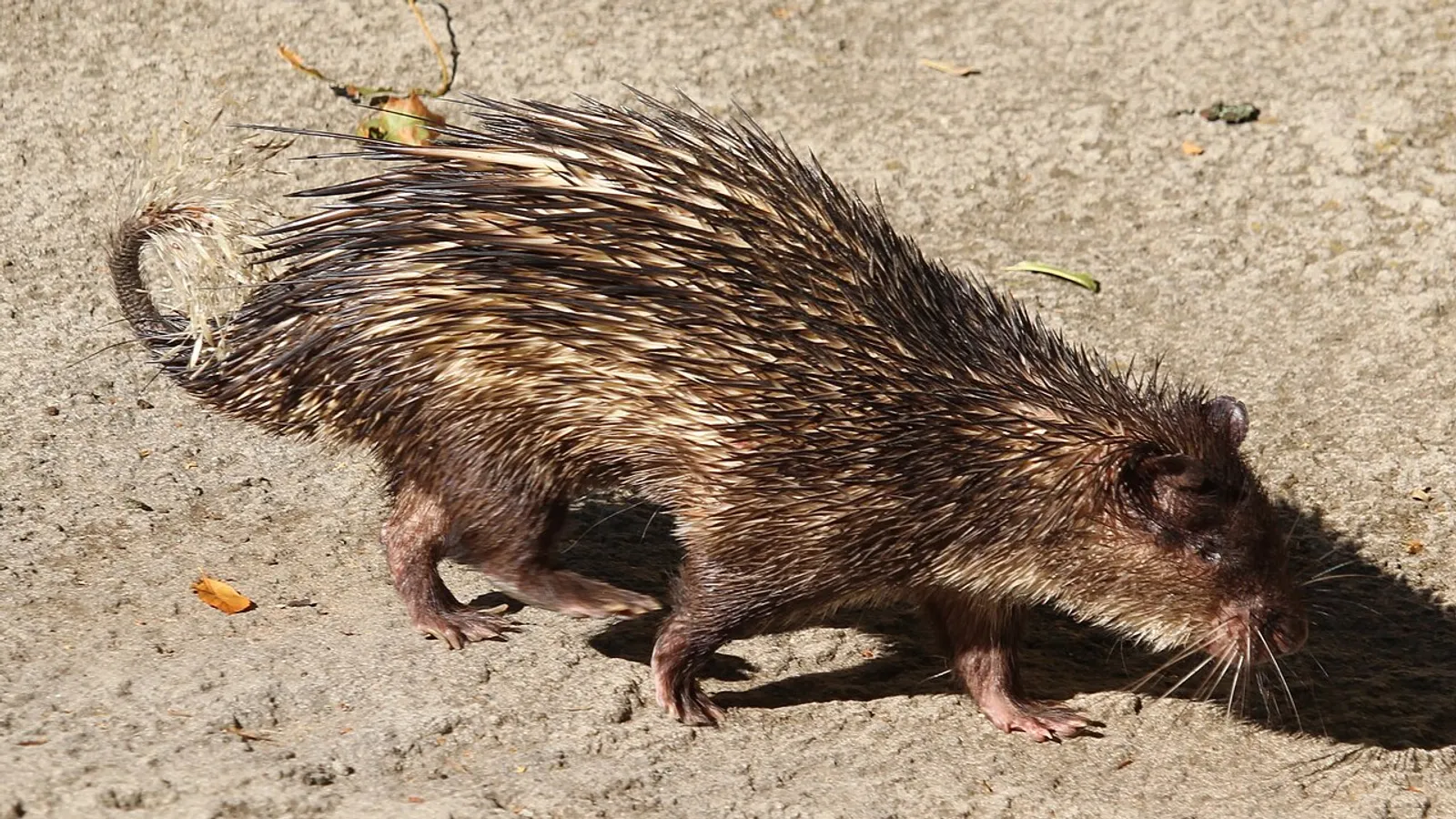
— Where the name comes from
Atherurus is “awn tail”, from the Greek athḗr, the beard of an ear of wheat, and ourá: the tail ends in a tuft of flattened blades that resemble dry ears of corn and that rustle when shaken. Africanus names the continent. It is the slenderest and most agile of the porcupines, the one that climbs and swims.
— Facts
- Group
- Mammals · Mammalia
- Order
- Rodents
- Habitat
- Rainforest, gallery forest, riverbanks
- Range
- Central and West Africa, from Guinea to Uganda
- Size
- 35–60 cm, tail 10–25 cm, 1.5–4 kg
- Diet
- Fallen fruit, roots, tubers, bark, insects
- Lifespan
- 23 years in captivity
— Characteristics
- 01
It swims well and crosses rivers, which other porcupines avoid.
- 02
It lives in groups of about twenty in dens among roots or in cavities.
- 03
The tail can break off if seized, like a lizard’s.
— What sets it apart
It is the most widely sold bushmeat in Central Africa, and that is not entirely bad news. Unlike monkeys and antelope it breeds fast and withstands a hunting pressure other species cannot, so much so that several projects have tried farming it to take the weight off more fragile wildlife. That the bushmeat trade should concentrate on this animal is, in conservation terms, the least bad of the possible outcomes.
