
Crested porcupine
Hystrix cristata
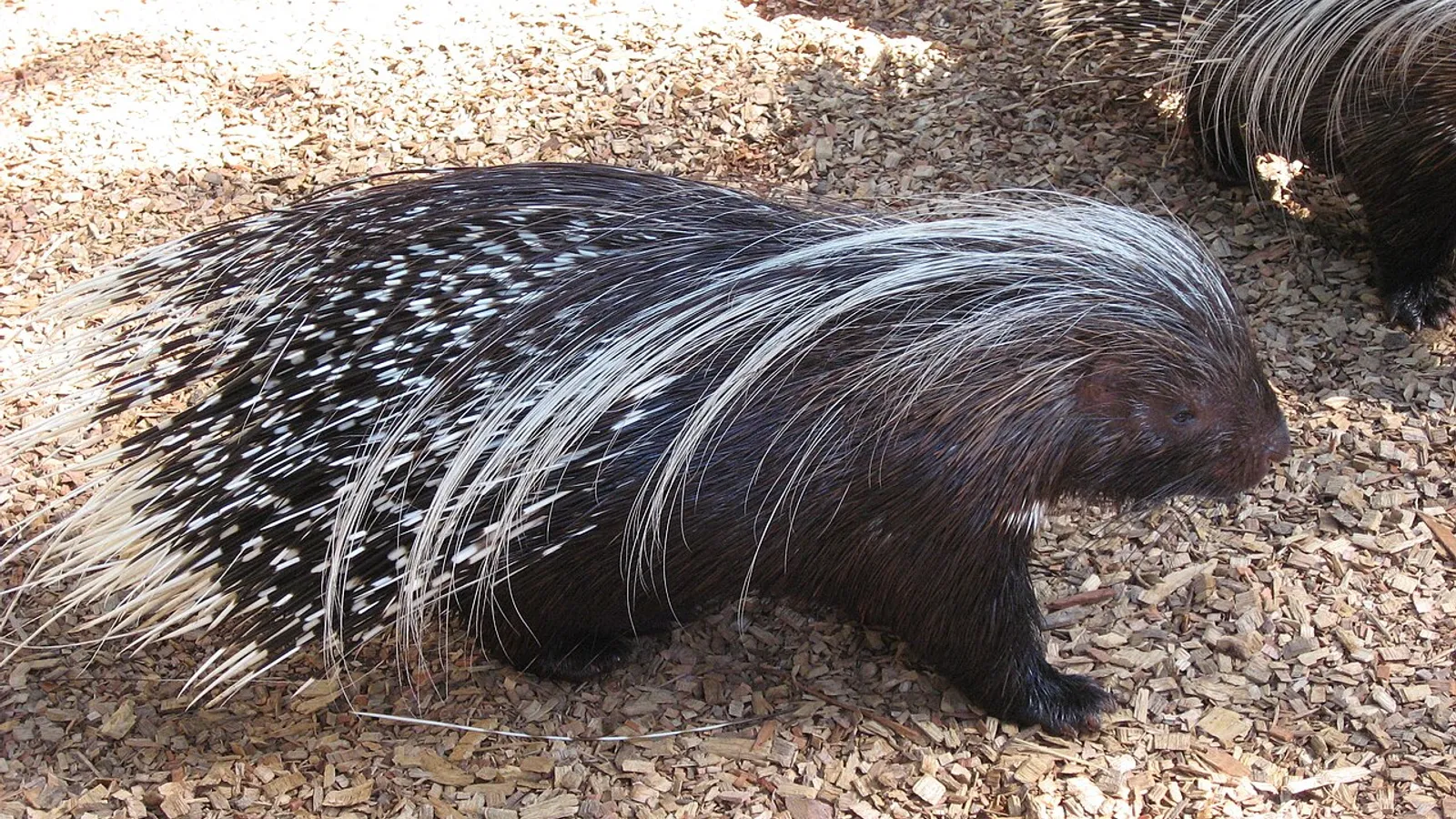
— Where the name comes from
Hystrix is the Greek hýstrix, made of hys, “pig”, and thríx, “hair”: the bristly pig, because the quills are not thorns but hairs modified and hardened with keratin. Latin took it whole from Greek and the Italian istrice descends from it without intermediaries, one of the few European mammal names to reach us intact from antiquity. The epithet cristata points instead to the Latin crista, the crest of long erectile bristles that runs from head to shoulders and which the animal raises when threatened.
— Facts
- Group
- Mammals · Mammalia
- Order
- Rodents
- Habitat
- Mediterranean scrub, hill woodland and farmland
- Range
- North Africa and the Sahel belt, peninsular Italy and Sicily, where it was almost certainly introduced in historical times
- Size
- 60–93 cm long plus 8–15 cm of tail, 10–25 kg
- Diet
- Herbivore — roots, tubers, bulbs, bark and fallen fruit
- Lifespan
- 12–15 years in the wild, up to 20 in captivity
— Characteristics
- 01
The quills reach 35 cm, are not venomous and cannot be thrown, but detach at the slightest contact and stay lodged in the attacker.
- 02
The hollow quills of the tail, rattled quickly, make a dry clatter that serves as a warning before an attack.
- 03
Threatened, it does not flee forwards but charges backwards, driving its bristling rump at the predator.
— What sets it apart
The porcupine gnaws bones. It is a constant habit, not an occasional one: it collects carcasses and fragments of skeleton, drags them into its den and works on them for the calcium and to wear down its ever-growing incisors. The result is that abandoned dens hold accumulations of bone ordered by no human hand, and palaeontologists have learnt to look for them, because they preserve the remains of extinct species gathered by the animal from the surrounding country. At more than one African site, the first fossils studied had been set aside by a nocturnal rodent for quite other purposes.
