
Giant isopod
Bathynomus giganteus
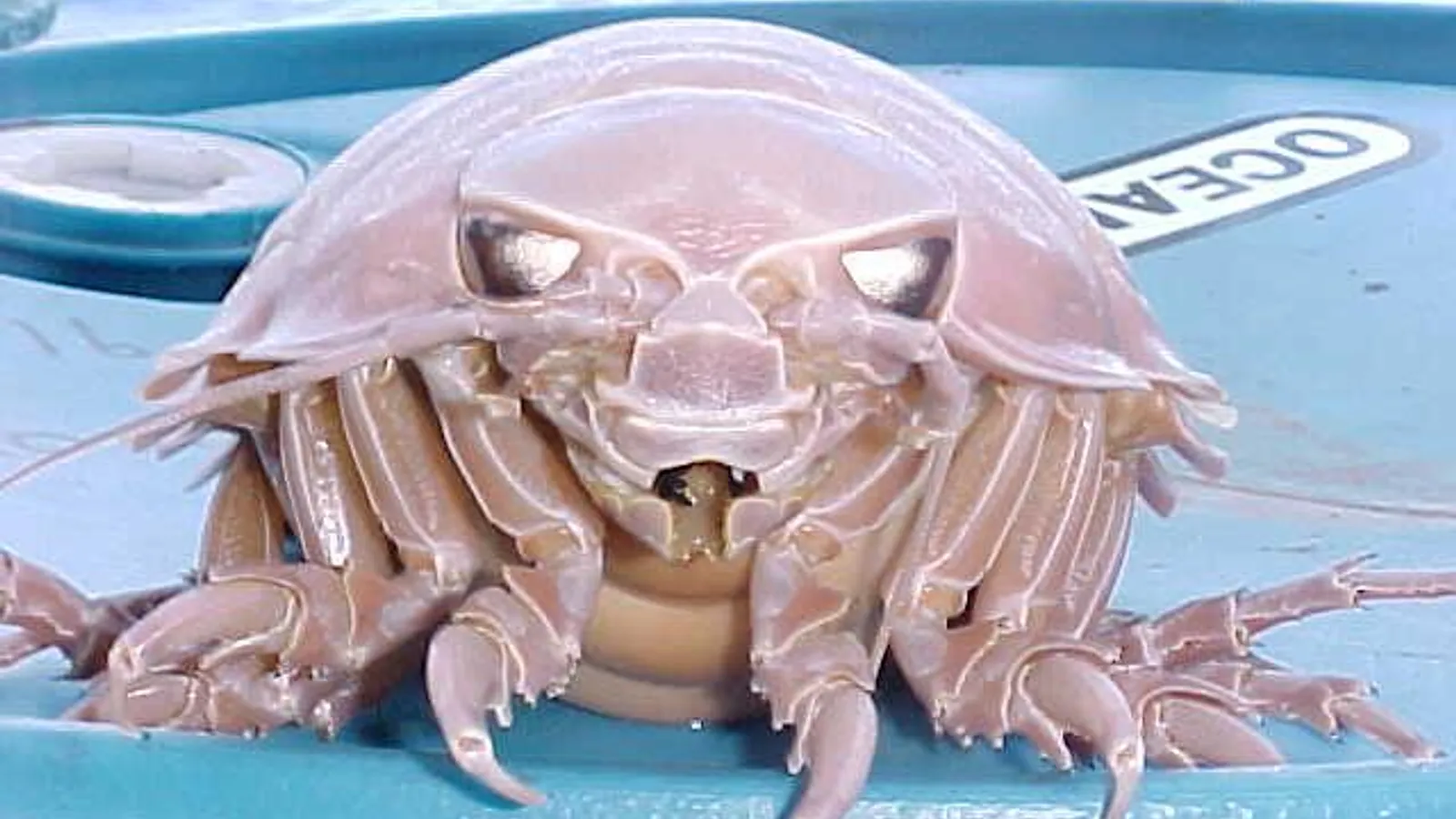
— Where the name comes from
Bathynomus joins the Greek bathýs, deep, to nómos, the law or the sphere of action: “the one whose domain is the deep”. Giganteus says the rest. It is the abyssal relative of the woodlouse found under flowerpots, enlarged thirty times, and the resemblance is such that anyone seeing it for the first time suspects a photomontage.
— Facts
- Group
- Crustaceans · Malacostraca · Maxillopoda
- Order
- Isopods
- Habitat
- Muddy bottoms between 300 and 2,500 metres
- Range
- Western Atlantic and Gulf of Mexico
- Size
- 19–36 cm
- Diet
- Carrion sinking from the surface
- Lifespan
- Estimated over 20 years
— Characteristics
- 01
It rolls into a ball like its terrestrial cousins.
- 02
It can go years without eating.
- 03
It has four thousand facets per eye, yet lives where no light reaches.
— What sets it apart
One individual kept in a Japanese aquarium refused food for five years and two months, and died without ever eating again: it is the longest fast ever documented in an animal. At the depths where it lives a meal comes when it comes — a whale carcass, a dead fish sinking — and then it gorges until it can no longer walk. The rest is waiting. The abyssal gigantism it belongs to remains partly unexplained: cold water, high pressure and scarce food produce, in many animal groups, versions far larger than their surface relatives.
