
Rock hyrax
Procavia capensis
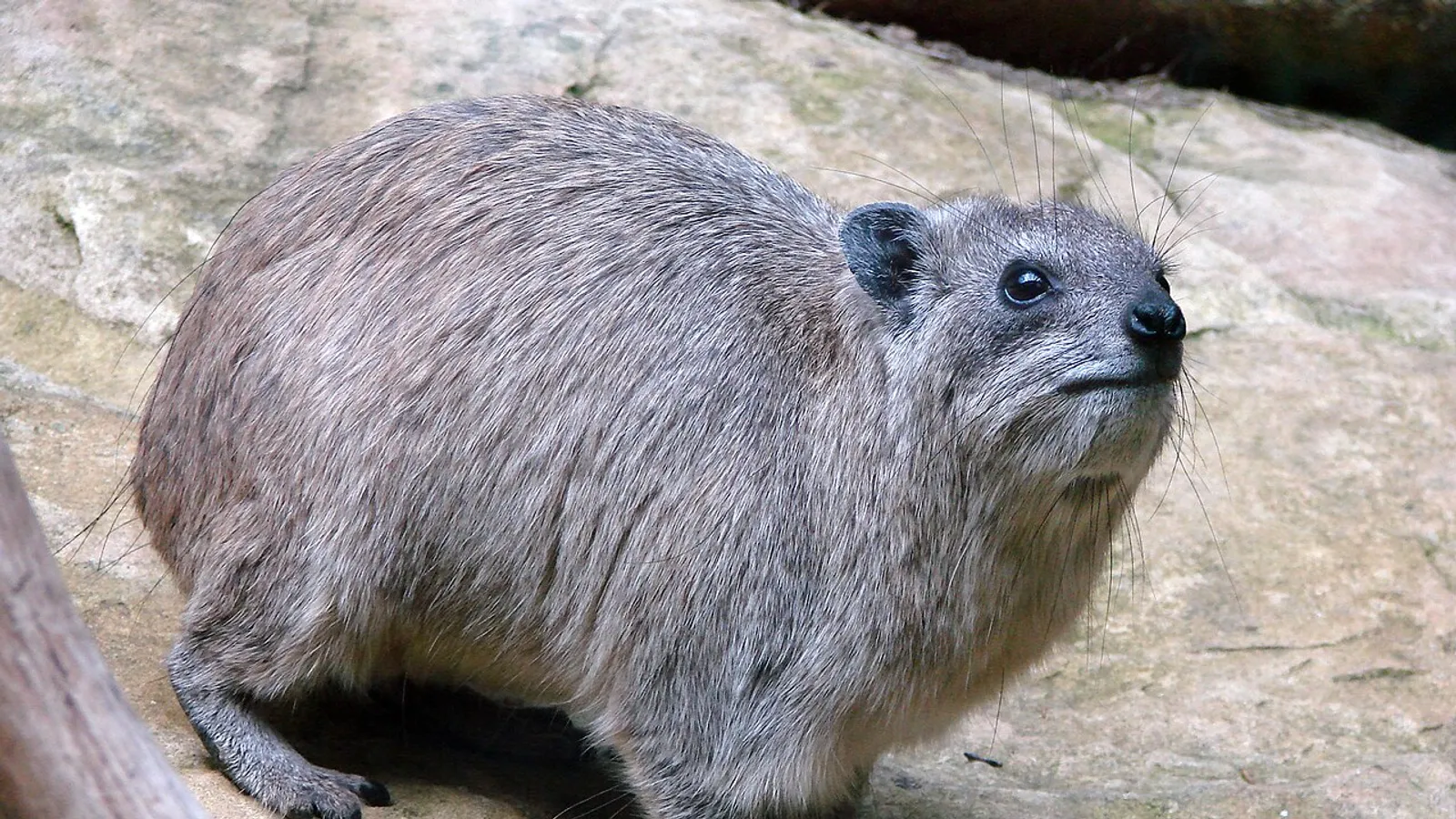
— Where the name comes from
Procavia means “before the guinea pig”, from the genus Cavia: a name that files the animal beside a rodent with which it has nothing in common. The confusion is ancient and has left large traces — the Phoenicians, arriving in Spain, called that land i-shepan-im, “island of hyraxes”, mistaking the Iberian rabbits for the animals they knew at home. From that name, through Latin, came the word Hispania: Spain owes its name to a misunderstanding about this animal.
— Facts
- Group
- Mammals · Mammalia
- Order
- Hyraxes
- Habitat
- Rocky outcrops, boulder fields, cliffs with deep crevices
- Range
- Sub-Saharan Africa, the Horn of Africa and the Middle East as far as Lebanon
- Size
- 40–60 cm long, 2–5 kg
- Diet
- Herbivore — grasses, leaves, bark, fruit
- Lifespan
- 10–12 years
— Characteristics
- 01
The soles of its feet have rubbery pads kept damp by glands, which work as suckers on rock.
- 02
It regulates its body temperature poorly and spends hours motionless, sunbathing in groups.
- 03
Its upper incisors grow continuously and protrude like small tusks.
— What sets it apart
This animal the size of a rabbit is, along with the sirenians, the elephant’s closest living relative. The proof is in the details: the upper incisors are tusks in miniature, the testicles stay inside the abdomen, the foot bones and the structure of the skull repeat in tiny scale those of the proboscideans. They descend from a common African ancestor fifty million years ago, and from that stock came the largest land animal on the planet and a creature curled up on a rock in the sun.
