
Hippopotamus
Hippopotamus amphibius
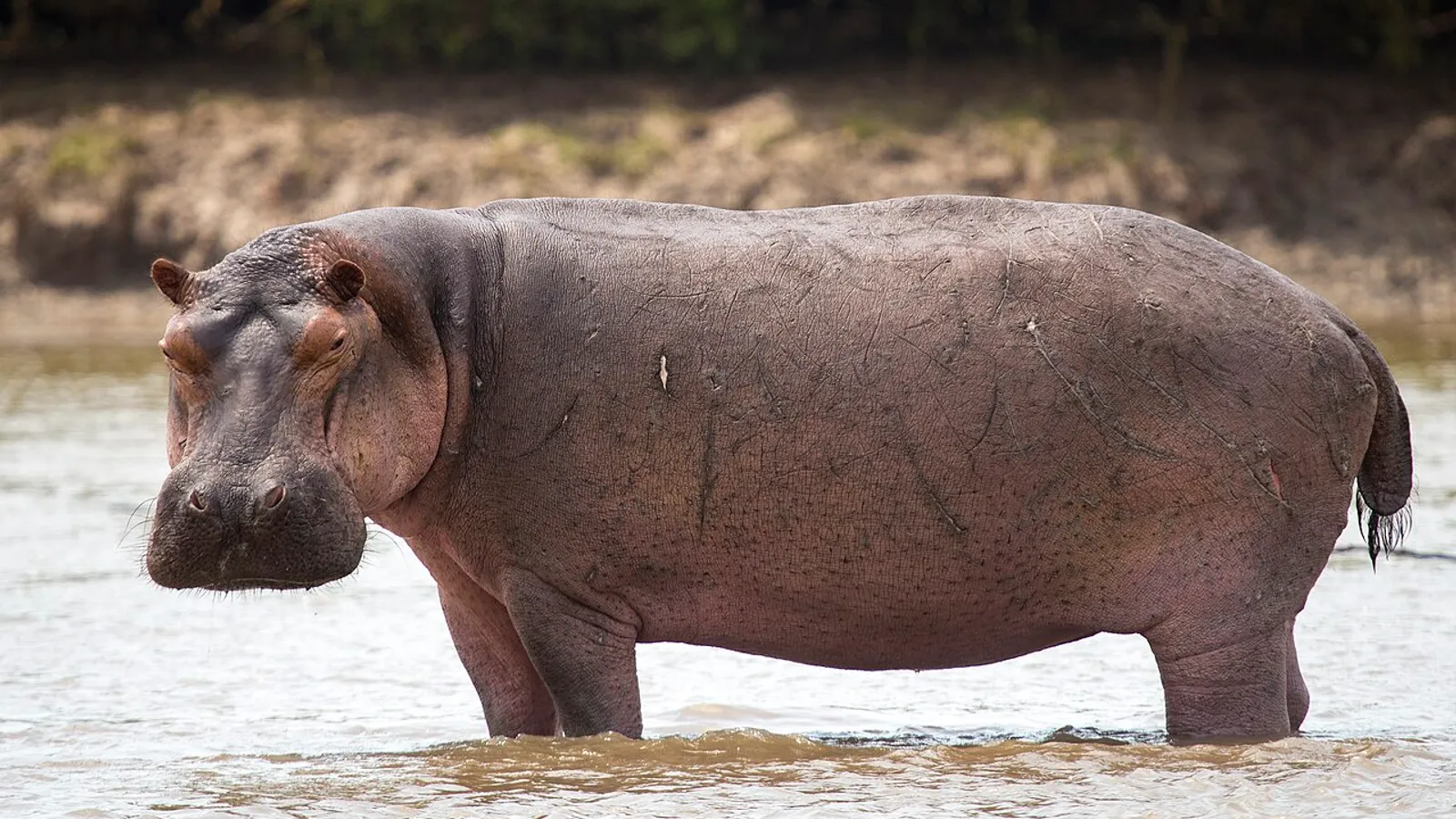
— Where the name comes from
From the Greek hippopótamos: híppos, horse, and potamós, river. The Greeks’ “river horse”, for want of a name of their own for an animal never seen at home. The epithet amphibius, “of the double life”, records an existence split between the water of the day and the land of the night.
— Facts
- Group
- Mammals · Mammalia
- Order
- Even-toed ungulates
- Habitat
- Rivers, lakes and pools of the savannah, with grassland nearby
- Range
- Sub-Saharan Africa
- Size
- 3.3–5 m, 1,500–3,200 kg
- Diet
- Herbivore — grazes grass at night, for kilometres at a time
- Lifespan
- 40–50 years
— Characteristics
- 01
Its closest living relatives are the whales: the lines parted some 55 million years ago.
- 02
Spends the day submerged to keep its skin out of the sun, surfacing to breathe in its sleep.
- 03
For all its bulk it runs at over 30 km/h and is among the most dangerous animals in Africa.
— What sets it apart
Hippo skin secretes a reddish fluid once called “blood sweat”. It is neither blood nor sweat: it is a pigment that works as sunscreen and antibiotic at once, absorbing ultraviolet light and keeping wounds — frequent, given its quarrelsome temper — from turning septic in standing water. It comes out colourless and turns orange, then brown, on exposure to light.
