
Plains zebra
Equus quagga
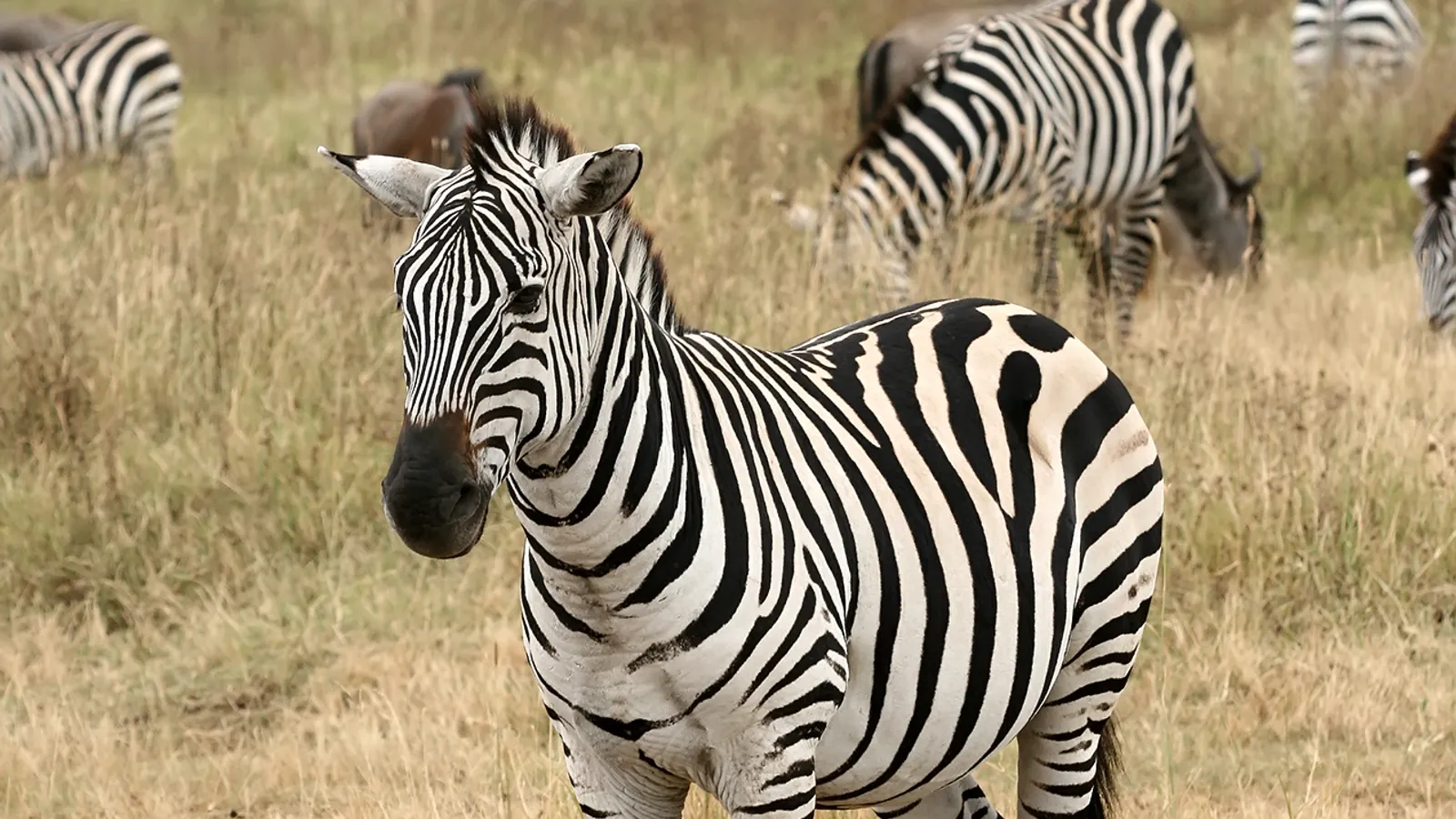
— Where the name comes from
Equus is Latin for horse. The epithet quagga imitates the animal’s call — a nasal barking, “kwa-ha-ha” — in the Khoikhoi language of South Africa. It was the name of a faded-coated subspecies wiped out in the 19th century; today it names the whole species. “Zebra” is of uncertain origin, perhaps from the Portuguese for an old wild equid.
— Facts
- Group
- Mammals · Mammalia
- Order
- Odd-toed ungulates
- Habitat
- Savannah and open grassland
- Range
- Eastern and southern Africa
- Size
- 2–2.5 m long, 200–300 kg
- Diet
- Herbivore — grasses
- Lifespan
- 20–25 years
— Characteristics
- 01
The stripes are as unique as fingerprints: no two zebras are identical.
- 02
Lives in family groups that merge into great herds during the migrations.
- 03
Sleeps standing, in shifts, with at least one animal on watch.
— What sets it apart
What the stripes are for was argued over for a century: camouflage, recognition, thermoregulation. The best-supported answer today is the oddest: the stripes baffle horseflies. These insects, which carry lethal diseases, struggle to land on a striped surface — black and white throws their approach system off. Striped coats painted onto real horses have confirmed the effect.
