
Atlantic halibut
Hippoglossus hippoglossus
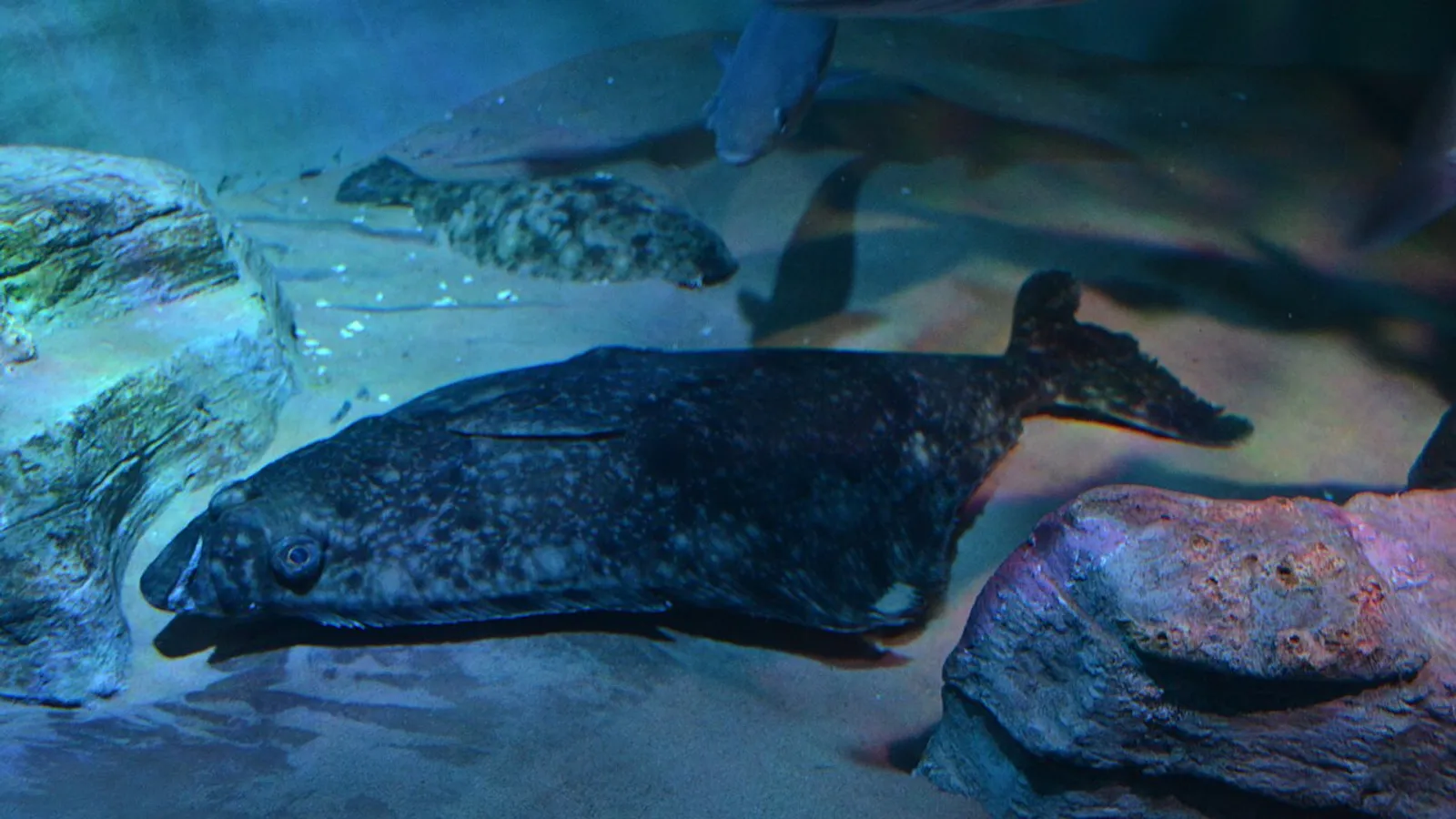
— Where the name comes from
Hippoglossus is “horse tongue”, from híppos and glôssa, for the shape and the size. The English halibut comes instead from the Middle English haly butte, “flatfish of the holy days”: it was the fish eaten on feast days, and the name still carries the medieval church calendar inside it.
— Facts
- Group
- Fish · Actinopterygii · Chondrichthyes
- Order
- Flatfishes
- Habitat
- Sandy and gravelly bottoms between 50 and 2,000 metres
- Range
- The northern Atlantic, from Canada to Norway
- Size
- 100–200 cm, up to 470 cm; 20–100 kg, record 320 kg
- Diet
- Fish, cephalopods, crustaceans
- Lifespan
- 50 years
— Characteristics
- 01
It is the largest flatfish in the world.
- 02
It also swims in mid-water, unusual for a flatfish.
- 03
Females grow much larger than males and live longer.
— What sets it apart
It grows slowly and lives a long time, and that has been its undoing. A female breeds for the first time at around ten and the largest are fifty: which means every fish taken removes decades of future reproduction, and the North Atlantic populations collapsed between the nineteenth and twentieth centuries to a fraction of what they were. In Canada commercial fishing has been closed for decades over vast areas, and the recovery, where there is one, is still measured in individual adults found.
