
Philippine leaf insect
Phyllium philippinicum
— Where the name comes from
Phyllium is “the little leaf”, from the Greek phýllon. But the name of the order says more: Phasmatodea comes from phásma, the apparition, the phantom, the thing that is seen and is not there — the same word behind “phantasm”. For animals that exist only at the moment one notices that the twig or leaf is moving, nothing better could have been chosen.
— Facts
- Group
- Insects · Insecta
- Order
- Stick insects
- Habitat
- Tree canopies in rainforest
- Range
- The Philippines
- Size
- Female 8–9 cm, male 6 cm
- Diet
- Leaves, above all of bramble, oak and guava
- Lifespan
- 6–10 months as an adult
— Characteristics
- 01
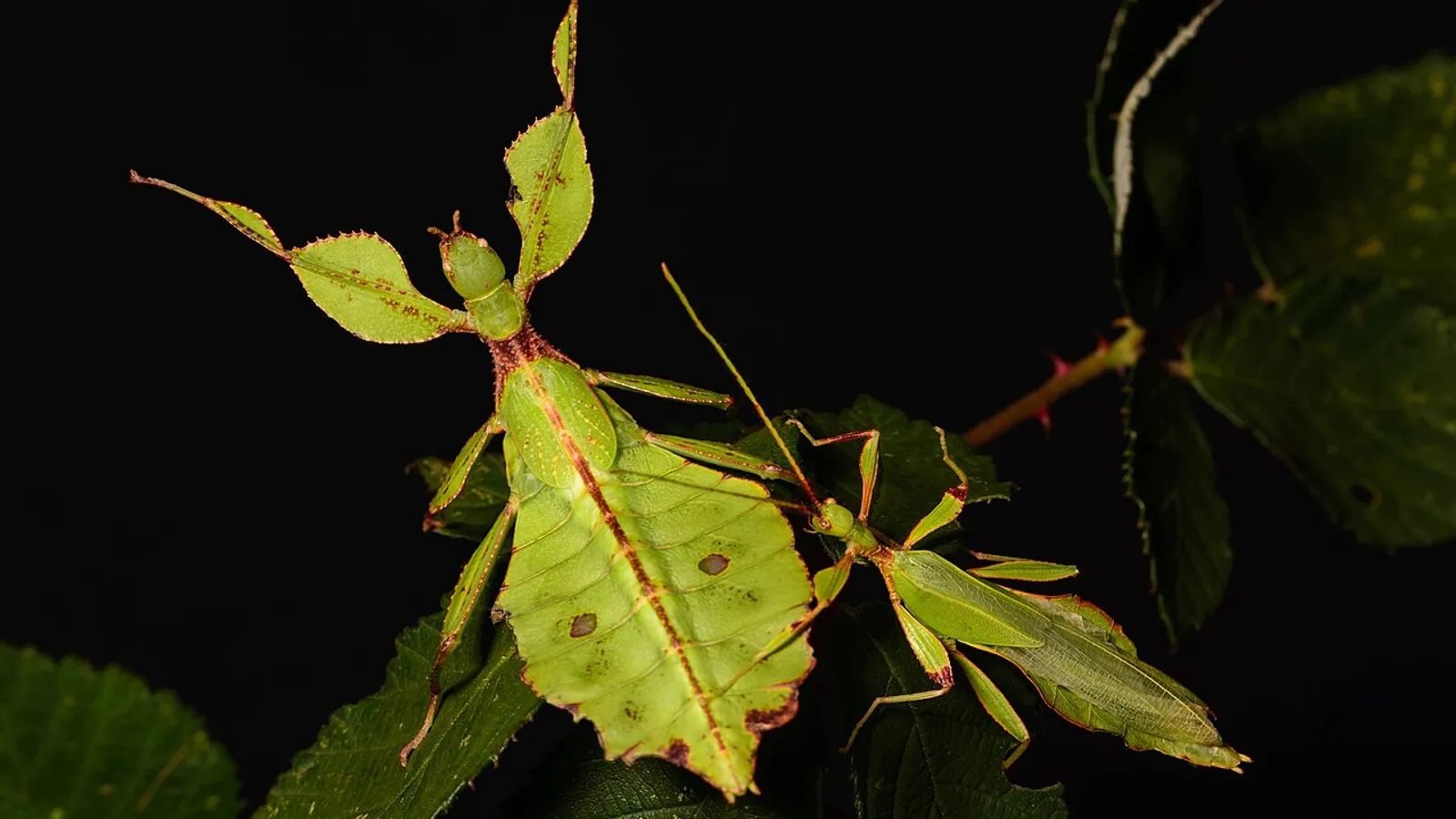
The body mimics a leaf down to the veins and the nibbled edges.
- 02
It walks rocking back and forth, like a leaf in the wind.
- 03
The female drops her eggs to the ground, and they look like seeds.
— What sets it apart
The mimicry does not stop at the shape: it takes in the behaviour and the next generation. The animal walks rocking back and forth, imitating the movement of foliage in a breeze, and its body edges carry notches that simulate the bites of other insects and brown blotches that mimic rotting patches — details useless against a careless predator and decisive against an attentive one. The eggs, in turn, resemble seeds in texture and chemistry: they bear a fatty appendage that attracts ants, which carry them into the nest, eat only that part and leave the egg safe underground — the same bargain many plants have struck with ants to get themselves sown.
