
Greater honeyguide
Indicator indicator
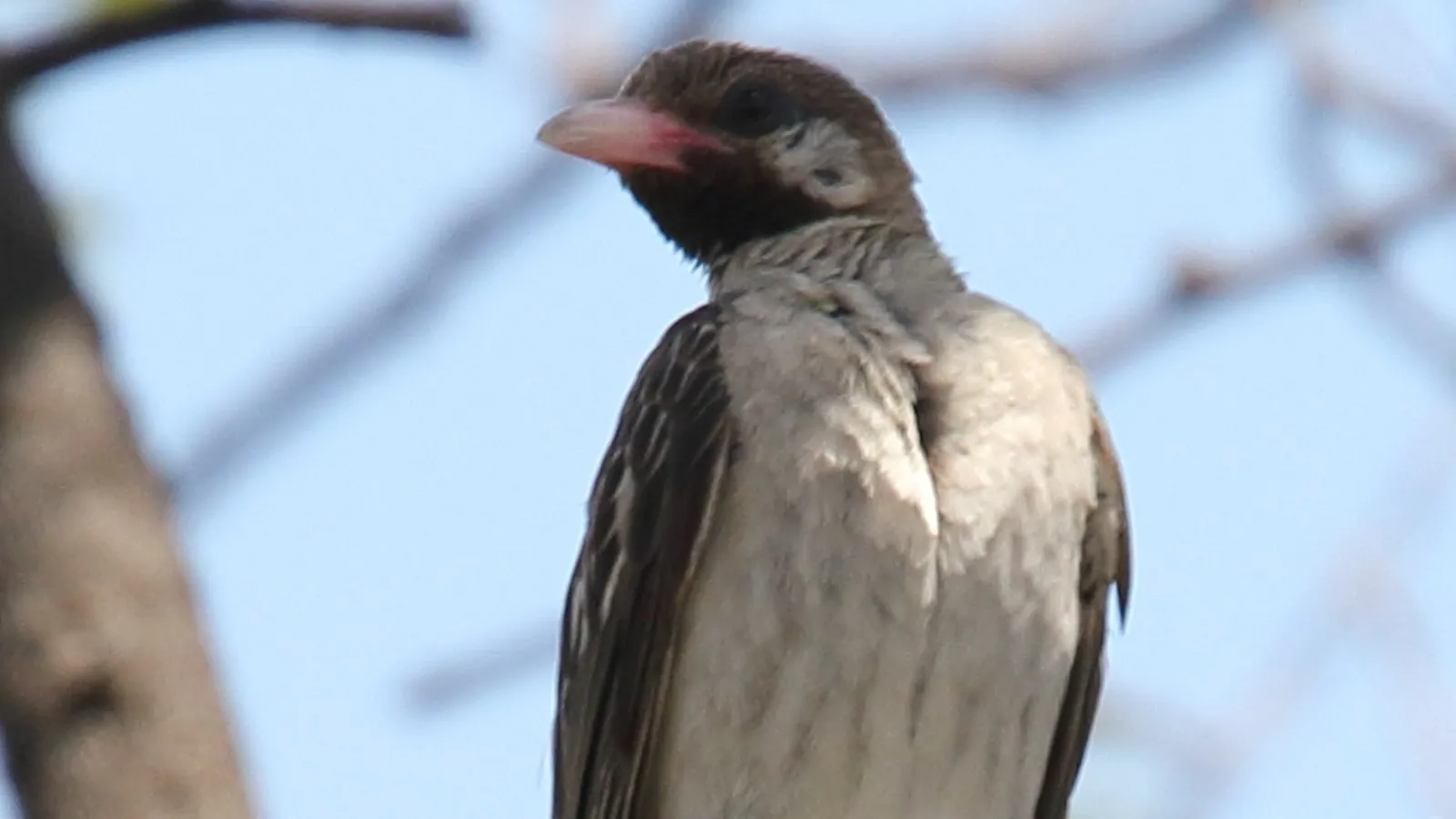
— Where the name comes from
The name, said twice, is a description of the trade: “the one that indicates”. The first Europeans to reach southern Africa collected from local hunters a report that sounded like a fable — there is a bird that leads you to honey — and wrote it down without wholly believing it. The Portuguese missionary João dos Santos was the first to record it, in 1588: he had noticed the bird coming into church to eat the wax of the candles.
— Facts
- Group
- Birds · Aves
- Order
- Woodpeckers and toucans
- Habitat
- Savannah, bush, open woodland
- Range
- Sub-Saharan Africa
- Size
- 19–20 cm, 44–55 g
- Diet
- Beeswax, bee larvae, insects
- Lifespan
- 12 years in the wild
— Characteristics
- 01
It digests wax, which almost no other vertebrate can do.
- 02
It is a brood parasite: the chick kills its foster siblings with a hooked bill.
- 03
It calls, flies ahead, waits, and repeats until the hive is reached.
— What sets it apart
It is the only wild animal in the world that holds a conversation with people. The Yao honey-hunters of Mozambique call honeyguides with a precise sound — a trill followed by a grunt — and in experiments that sound more than doubled the chance that a bird would appear and stay all the way to the hive, while other human noises had almost no effect. Nobody trains these birds: they learn it themselves, and every African people has a different call that the local honeyguides know. It is a partnership between two wild species, and one of them is us.
