
Rhinoceros iguana
Cyclura cornuta
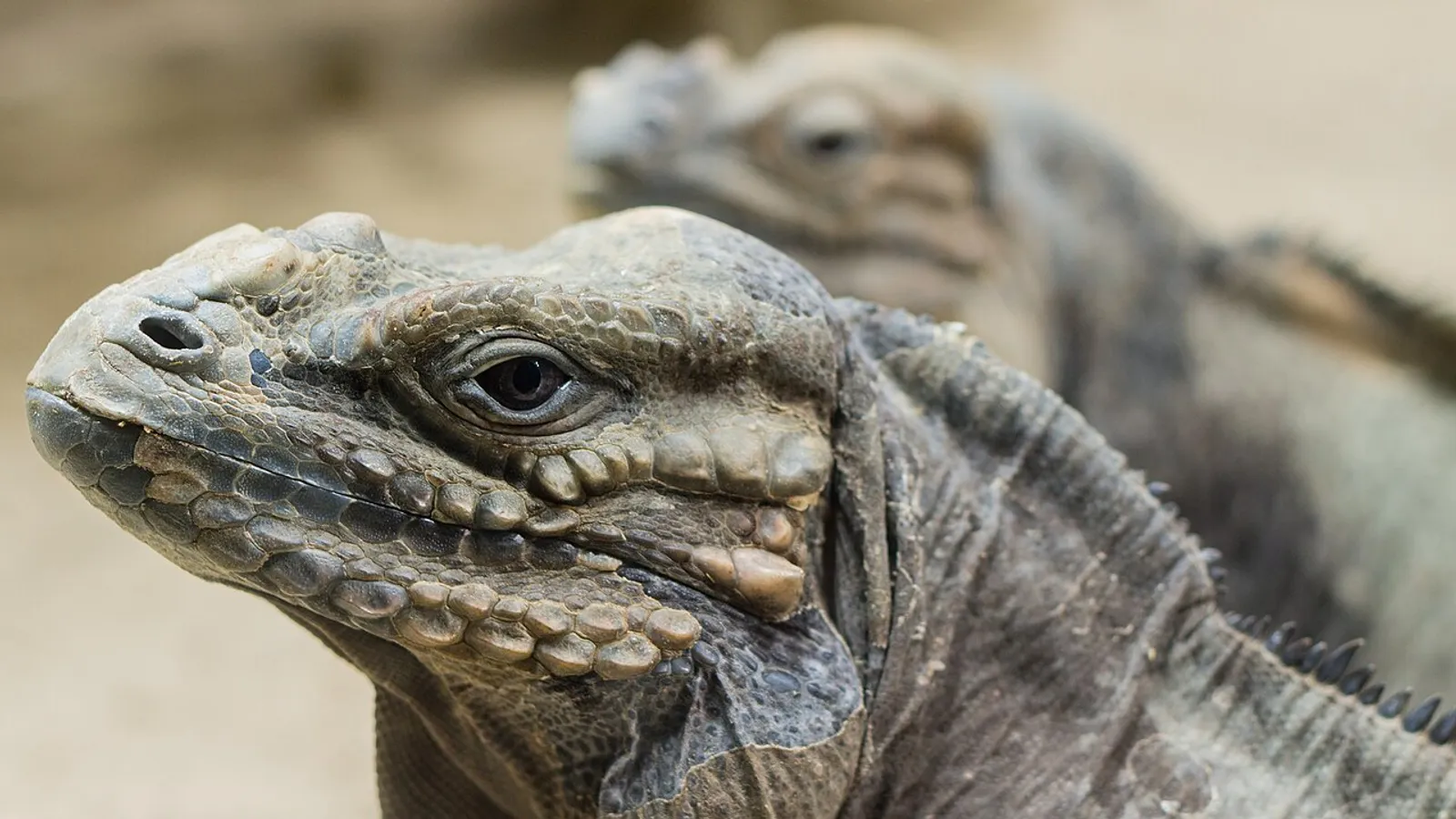
— Where the name comes from
Cyclura is “ring tail”, from kýklos and ourá, for the circular rows of scales running along it; cornuta refers to the conical outgrowths on the snout of adult males, which really do look like a miniature rhinoceros’s horns. Iguana comes from the Arawak iwana, and is one of the first American words to enter the European languages.
— Facts
- Group
- Reptiles · Reptilia
- Order
- Squamates
- Habitat
- Dry thorn scrub, coastal karst ground
- Range
- Hispaniola: the Dominican Republic and Haiti
- Size
- 60–136 cm including the tail, 4.5–9 kg
- Diet
- Leaves, flowers, fruit, the odd insect and carcass
- Lifespan
- over 20 years, up to 50
— Characteristics
- 01
The horns are found only in adult males and grow with age.
- 02
It digs deep burrows among roots and rocks.
- 03
It lays up to twenty eggs, the largest of any iguana.
— What sets it apart
It is a gardener in spite of itself: swallowing whole the fruit of Hispaniola’s dry-country plants, it spreads their stones far and wide, and several of the island’s shrubs germinate far better after passing through its gut. The trouble is that dogs, pigs and mongooses have reached the island and dig up the nests: in many places not a single hatchling has emerged for years, and the populations consist almost entirely of old adults. A species that lives fifty years can look healthy for decades after it has stopped breeding.
