
Mexican beaded lizard
Heloderma horridum
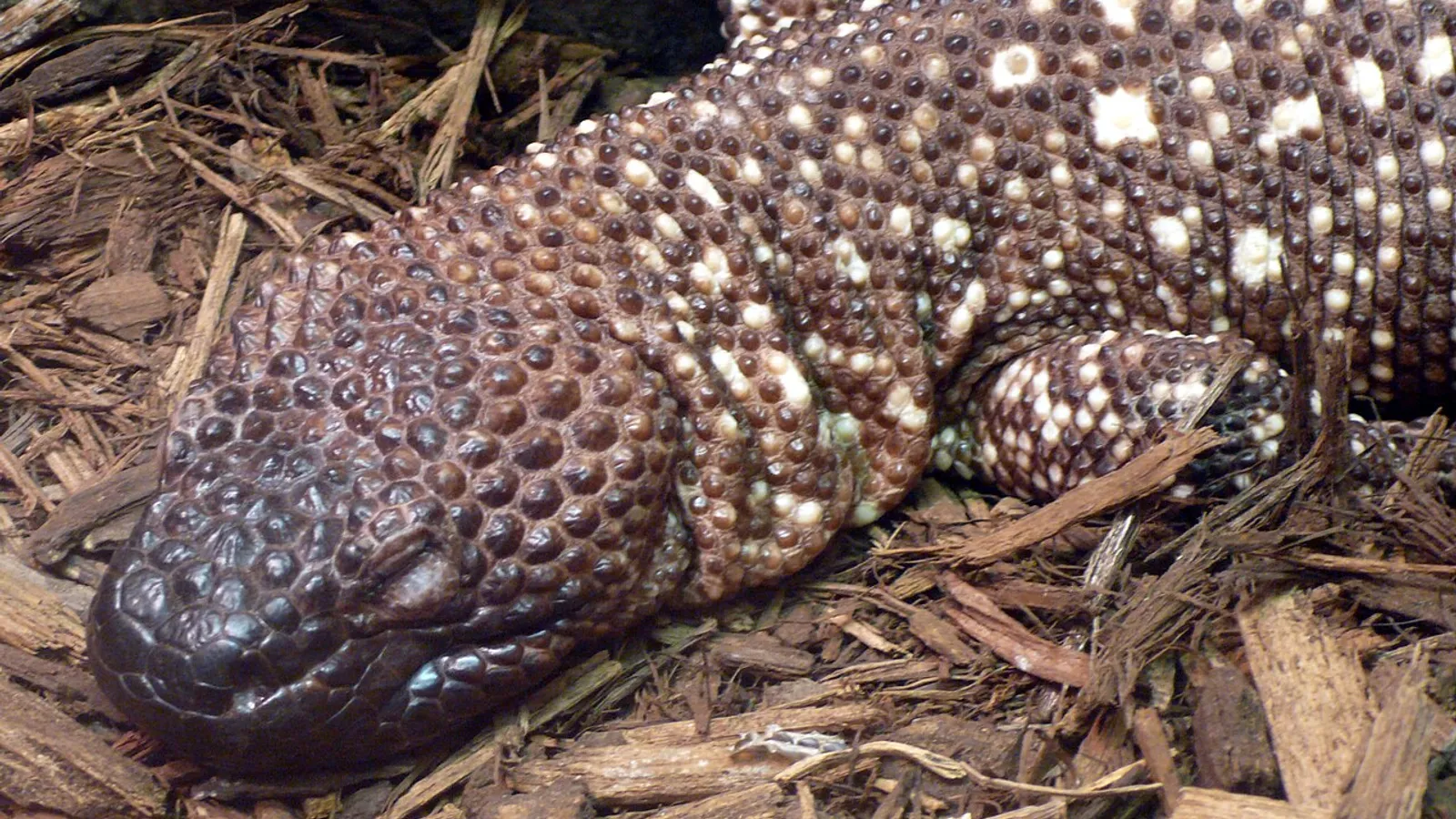
— Where the name comes from
Heloderma is “studded skin”, from hêlos, the stud, and dérma: the body is covered in osteoderms, bony beads set into the skin that make it rough as a file. Horridum in Latin does not mean horrible but “bristling”, referring to precisely that surface. It is one of only two lizard genera long known to be venomous.
— Facts
- Group
- Reptiles · Reptilia
- Order
- Squamates
- Habitat
- Tropical dry forest, thorn scrub, canyons
- Range
- Western Mexico and Guatemala
- Size
- 60–90 cm including the tail, 0.8–2 kg
- Diet
- Bird and reptile eggs, nestlings, small mammals
- Lifespan
- 20 years, over 30 in captivity
— Characteristics
- 01
The venom comes from glands in the lower jaw and rises through grooved teeth.
- 02
It does not inject: it bites and chews, letting the venom run into the wound.
- 03
It spends over ninety per cent of its life hidden underground.
— What sets it apart
In Mexico it has been said for centuries that its breath kills, that it leaps at people and that it will not let go until it thunders. All false, but there is a grain of truth: when it bites it holds on for a long time, and prising it off is hard. The venom of this family contains peptides that regulate insulin, and from one of them a class of diabetes drugs was born: a lizard long beaten to death with sticks has ended up treating millions of people.
