
Grass snake
Natrix natrix
— Where the name comes from
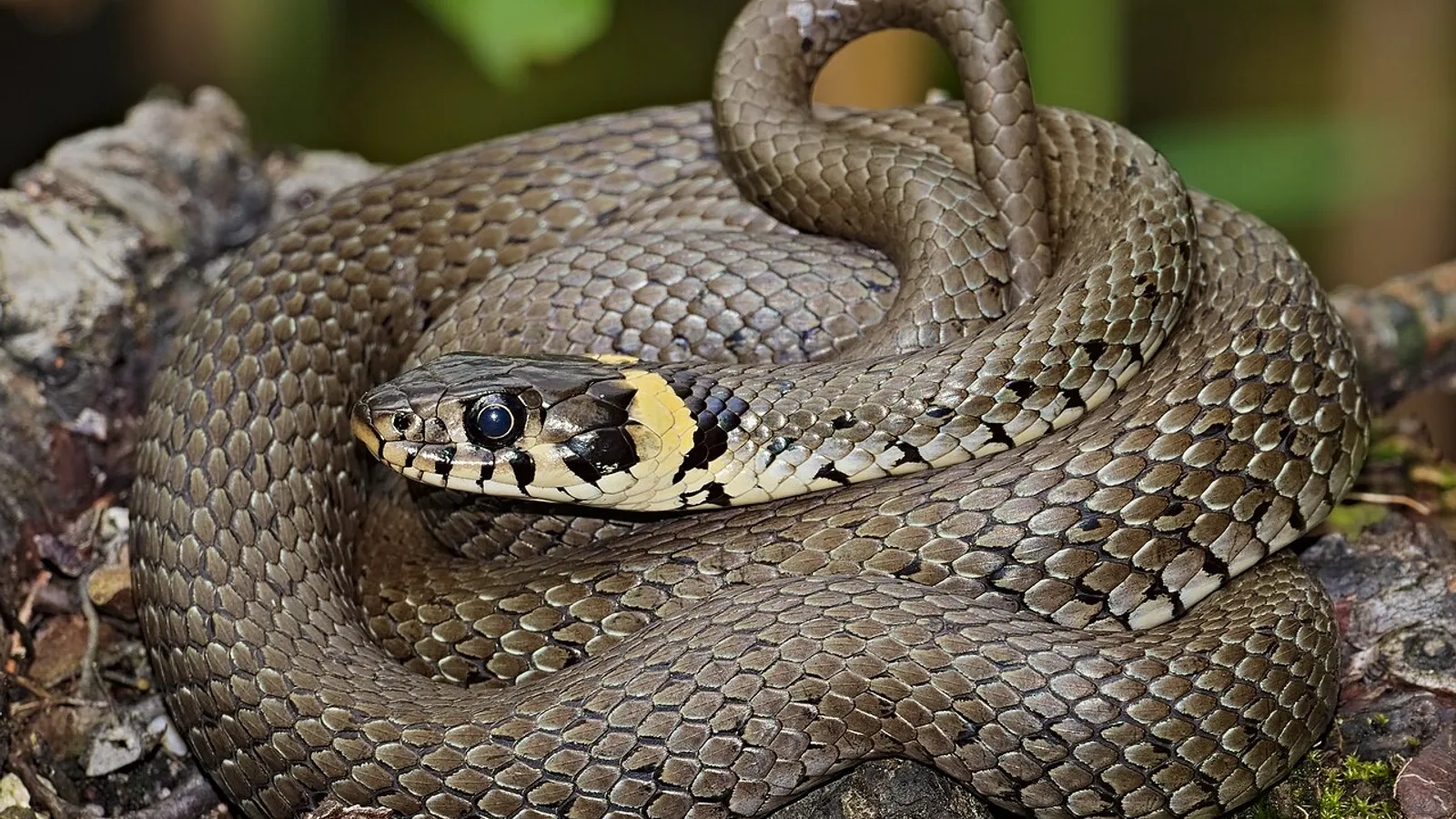
Natrix is the water snake in Latin, from nare, “to swim”: the same root as “natant”. The binomial repeats it twice because Linnaeus took it for the typical species of the genus. The Italian name looks instead at the yellow or white crescent behind the head, the one mark that lets you identify it at a glance in the water.
— Facts
- Group
- Reptiles · Reptilia
- Order
- Squamates
- Habitat
- Ponds, ditches, damp meadows, canals, vegetable plots
- Range
- Europe, North Africa, western Asia
- Size
- 70–120 cm, up to 150 cm; 100–400 g
- Diet
- Frogs, toads, tadpoles, fish, earthworms
- Lifespan
- 15 years
— Characteristics
- 01
It swims with its head out of the water and hunts mainly amphibians.
- 02
It is entirely harmless and has neither venom nor fangs.
- 03
It lays its eggs in heaps of manure and compost, which keep them warm.
— What sets it apart
When everything else fails, it dies. If hissing and closed-mouth head-butting will not make a predator back off, the grass snake rolls onto its back, goes rigid, lets its tongue loll from a gaping mouth and empties its anal glands, releasing a liquid of unbearable smell: the performance is convincing enough that if you turn it belly-down it will roll over again to stay in the dead position. Many predators will not touch carrion, and the trick works.
