
Striped hyena
Hyaena hyaena
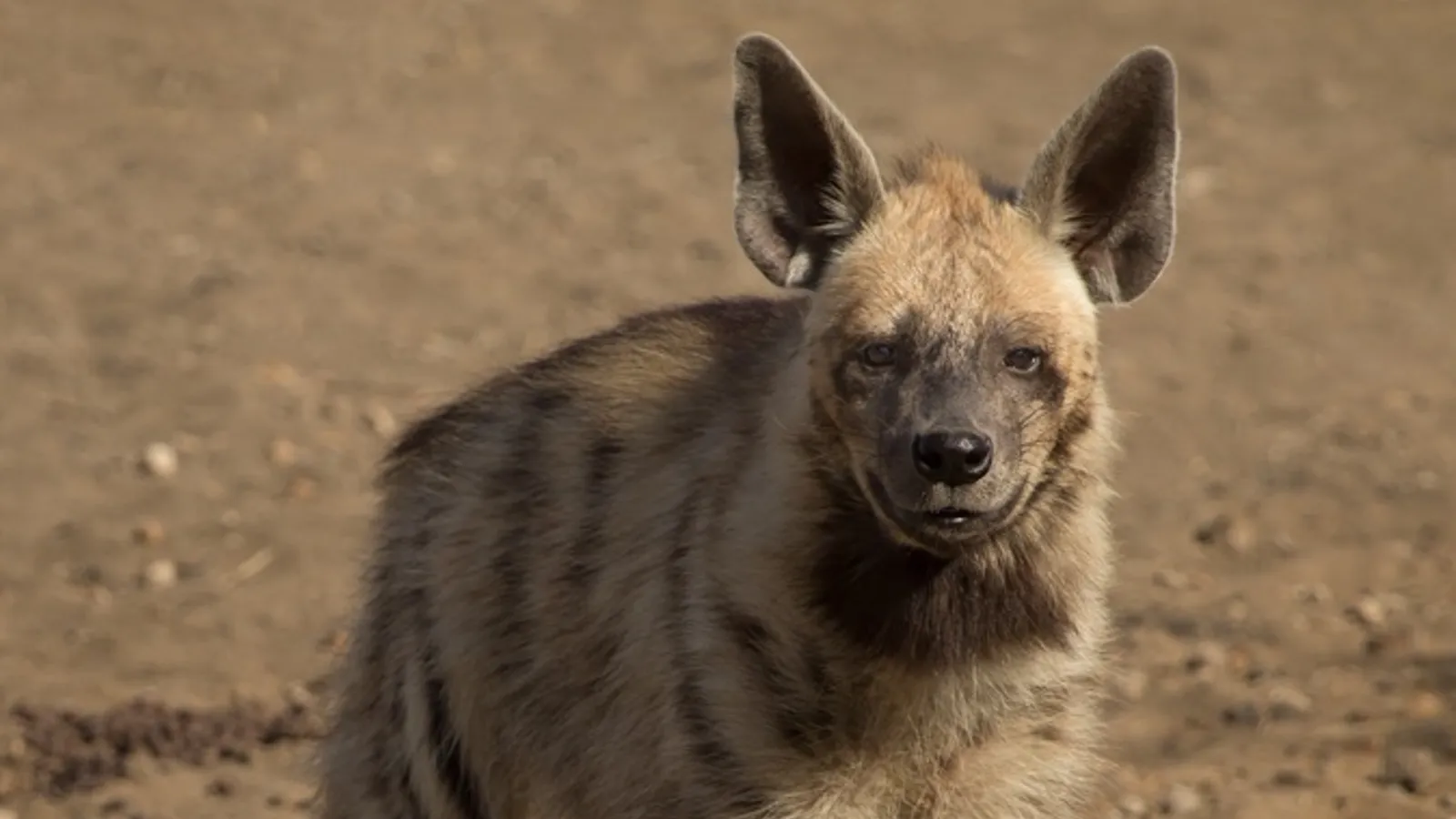
— Where the name comes from
Hyaena comes from the Greek hýaina, formed on hŷs, “pig”, with the feminine suffix -aina: to the ancients it was “the sow”, on account of the bristly mane along the back that recalls a pig’s. The feminine is no accident — Pliny and others held that the animal changed sex every year, a legend born from observing the ambiguous genitals of spotted hyenas and then pinned on the whole family.
— Facts
- Group
- Mammals · Mammalia
- Order
- Carnivores
- Habitat
- Arid savannah, steppe, semi-desert, rocky scrub
- Range
- North and East Africa, the Middle East, the Caucasus, Central Asia, India
- Size
- 100–115 cm of body, 25–45 kg
- Diet
- Scavenger and omnivore — carrion, bone, fruit, insects, small vertebrates
- Lifespan
- 12 years in the wild, up to 24 in captivity
— Characteristics
- 01
It is the only hyena found in both Africa and Asia.
- 02
It digests bone and extracts the marrow: its droppings are white with calcium.
- 03
It raises its dorsal mane until it looks 30–40% larger.
— What sets it apart
It is the great scavenger that has lived alongside us longer than any other carnivore, and its dens are archives. In Israel, Jordan and India palaeontologists excavate striped hyena dens to collect bones: the animal drags remains from kilometres away and heaps them underground, where they keep. Some deposits hold the bones of extinct species, and there are prehistoric sites whose fauna we know almost solely because a hyena, tens of thousands of years ago, was a collector.
