
Weddell seal
Leptonychotes weddellii
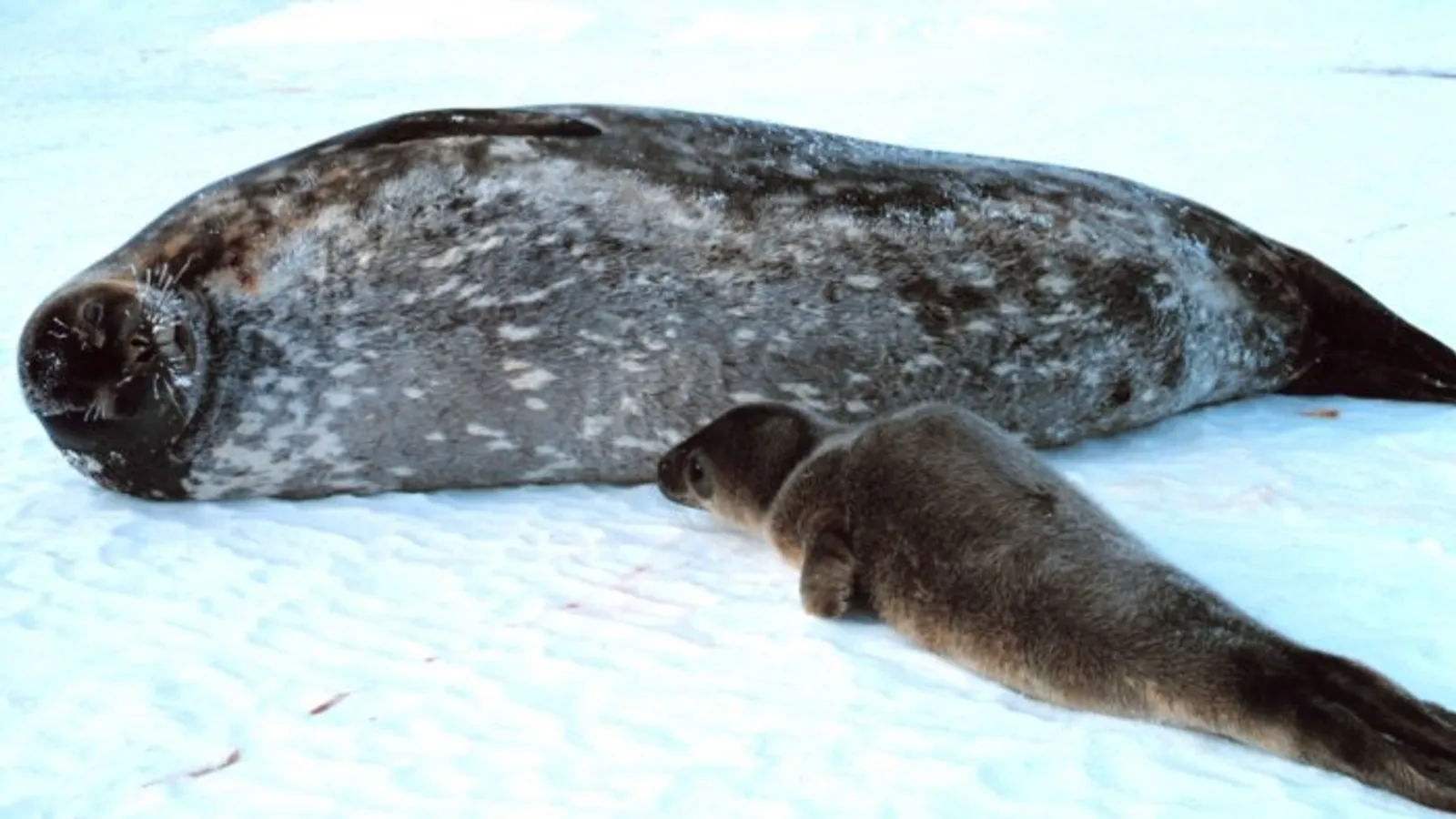
— Where the name comes from
Leptonychotes is “slender-clawed”, from the Greek leptós and ónyx: the claws of the forelimbs are reduced, and serve to rasp ice rather than to grip. Weddellii honours James Weddell, the Scottish whaling captain who in 1823 pushed his ship further south than anyone before him, into the sea that now bears his name.
— Facts
- Group
- Mammals · Mammalia
- Order
- Carnivores
- Habitat
- Antarctic coastal sea ice, always near cracks and breathing holes
- Range
- Circum-Antarctic, the southernmost mammal population on the planet
- Size
- 2.5–3.5 m, 400–600 kg
- Diet
- Carnivore — Antarctic fish, squid, crustaceans
- Lifespan
- 20–25 years
— Characteristics
- 01
It dives to 600 m and stays under for over an hour.
- 02
It keeps holes in the ice open by sawing at them with its incisors and canines.
- 03
It is the mammal that breeds further south than any other.
— What sets it apart
It spends the Antarctic winter under the ice, and to avoid drowning it keeps its breathing holes open by filing them with its teeth. It is a solution that works and that kills it: the teeth wear down, break and become infected, and when it can no longer keep a hole open the animal dies, often still in its prime. The lifespan of this species is decided not by heart or lungs but by enamel — they die of worn teeth.
