
Harp seal
Pagophilus groenlandicus
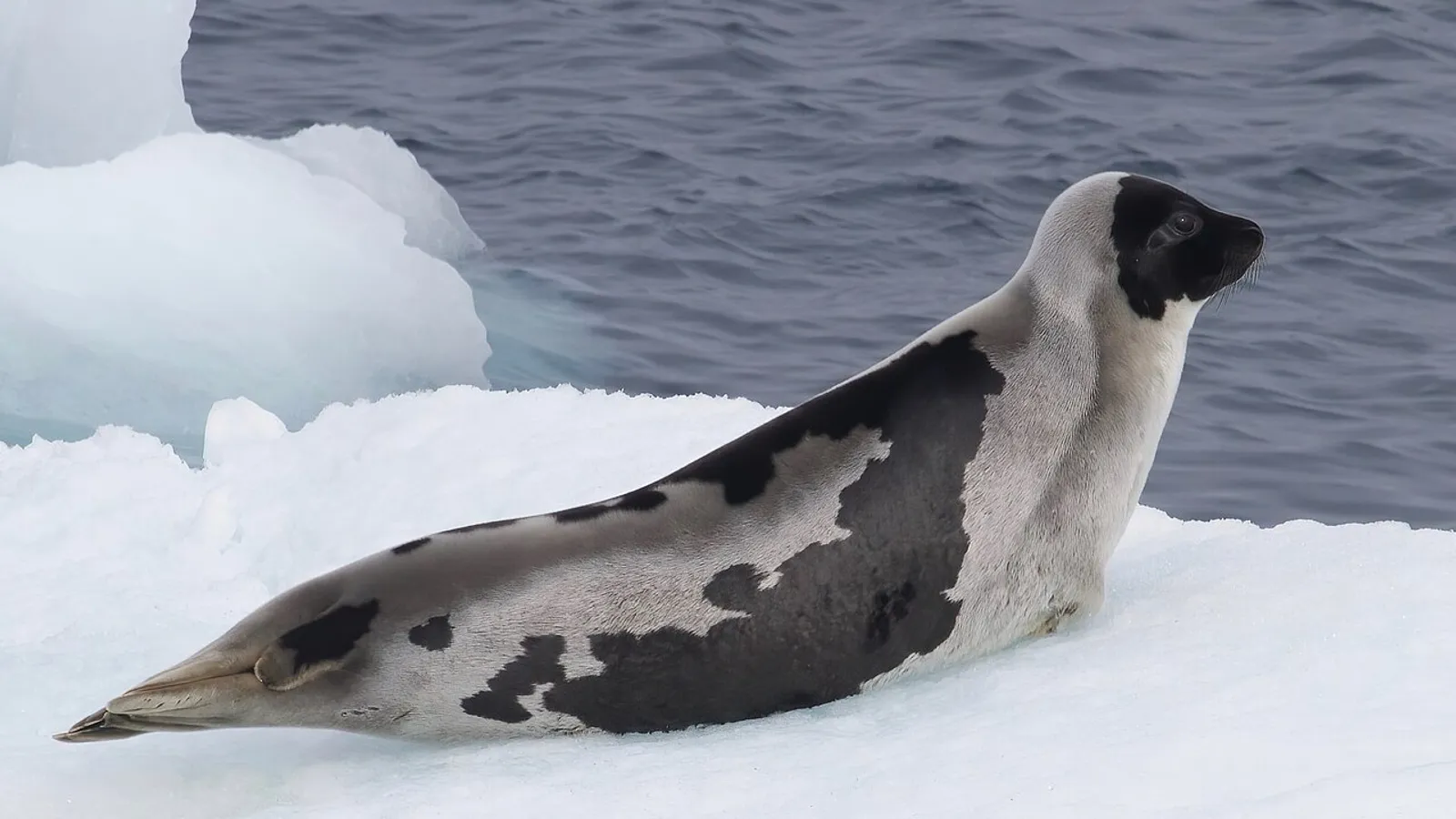
— Where the name comes from
Pagophilus is “ice lover”, from the Greek págos and phílos, and it is an honest name: this seal depends on seasonal sea ice to give birth, and without it has no alternative. Groenlandicus points to Greenland. In English it is the harp seal, for the black horseshoe on the adult’s back that recalls a harp.
— Facts
- Group
- Mammals · Mammalia
- Order
- Carnivores
- Habitat
- Seasonal pack ice and open water of the North Atlantic and the Arctic
- Range
- From eastern Canada to Greenland, the White Sea and the Barents Sea
- Size
- 1.7–2 m, 115–140 kg
- Diet
- Carnivore — capelin, polar cod, pelagic crustaceans
- Lifespan
- 30–35 years
— Characteristics
- 01
The pups are born with a woolly white coat which they lose in two or three weeks.
- 02
The mother’s milk reaches 48% fat: the pup doubles its weight in twelve days.
- 03
It makes annual migrations of over 4,000 kilometres.
— What sets it apart
Suckling lasts twelve days, and then the mother leaves. The pup, born weighing ten kilos or so, reaches thirty-five in those two weeks on milk that is half pure fat; then it is left alone on the ice, without eating, and for six weeks lives by burning what it has stored while it teaches itself to swim. It is one of the shortest periods of dependence of any mammal, and the reason is the ice: the platform it was born on will melt, and the deadline is not negotiable.
