
Long-eared owl
Asio otus
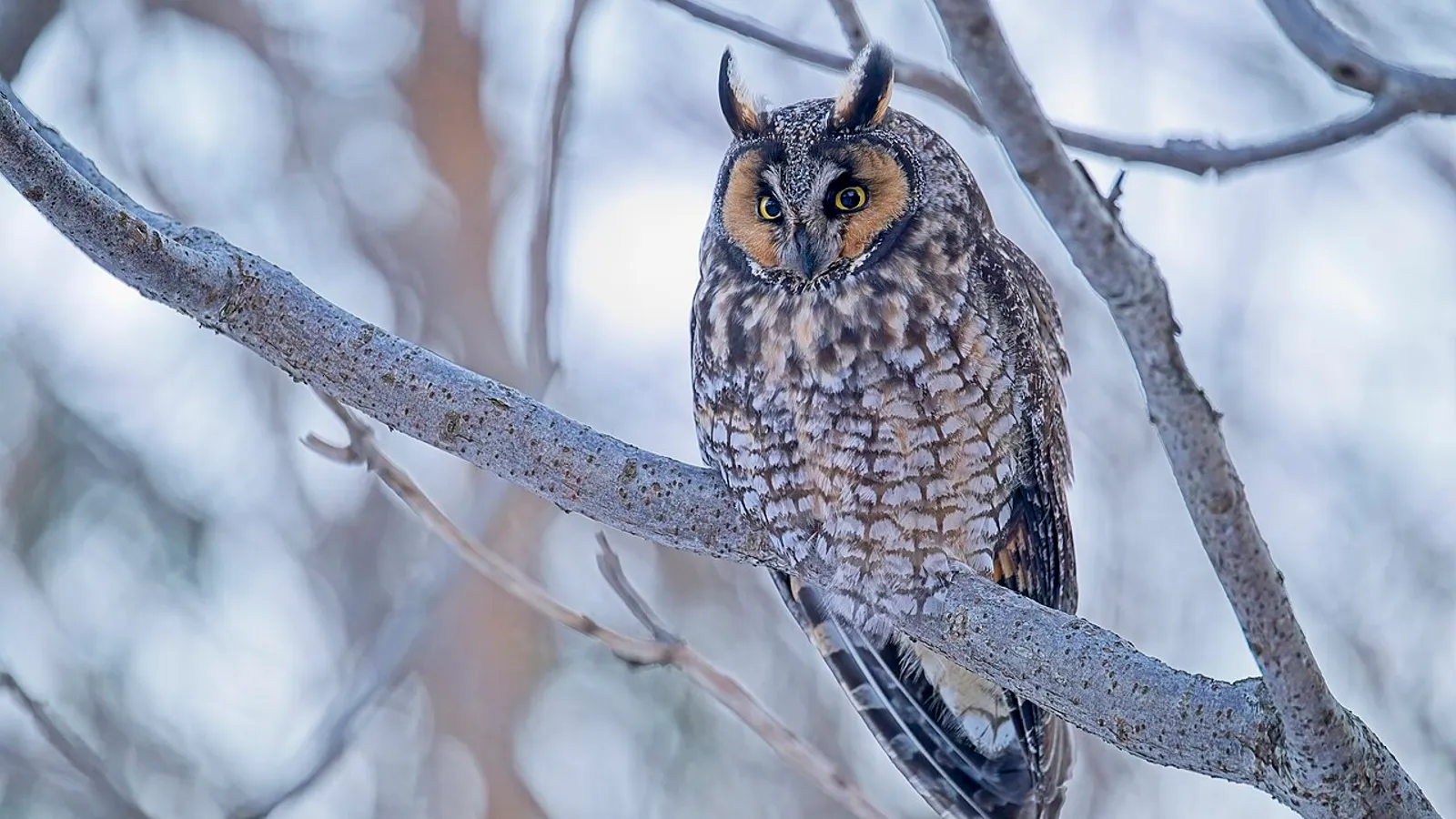
— Where the name comes from
The Italian gufo is onomatopoeic, from the call “goo-goo”. Asio is the Latin name of a horned owl; otus comes from the Greek ōtós, “ear”, for the ear tufts — which are not ears at all, but feathers.
— Facts
- Group
- Birds · Aves
- Order
- Owls
- Habitat
- Open woodland bordering on open country
- Range
- Eurasia and North America
- Size
- 31–37 cm, 86–98 cm wingspan
- Diet
- Carnivore — voles, mice
- Lifespan
- about 10 years
— Characteristics
- 01
The real ears are asymmetrical: one set higher than the other.
- 02
The facial disc funnels sound towards the ear openings like a dish.
- 03
It coughs up pellets: undigested bone and fur.
— What sets it apart
The asymmetry of the ears is the key. A sound arriving from below reaches the lower ear an instant sooner: the owl reads that minute lag as a vertical coordinate, and the difference between the two sides as a horizontal one. It builds an auditory map of space that way, and can strike a mouse in absolute darkness, under snow, without ever seeing it.
