
Greater flamingo
Phoenicopterus roseus
Conservation status IUCN: Least concern· LC
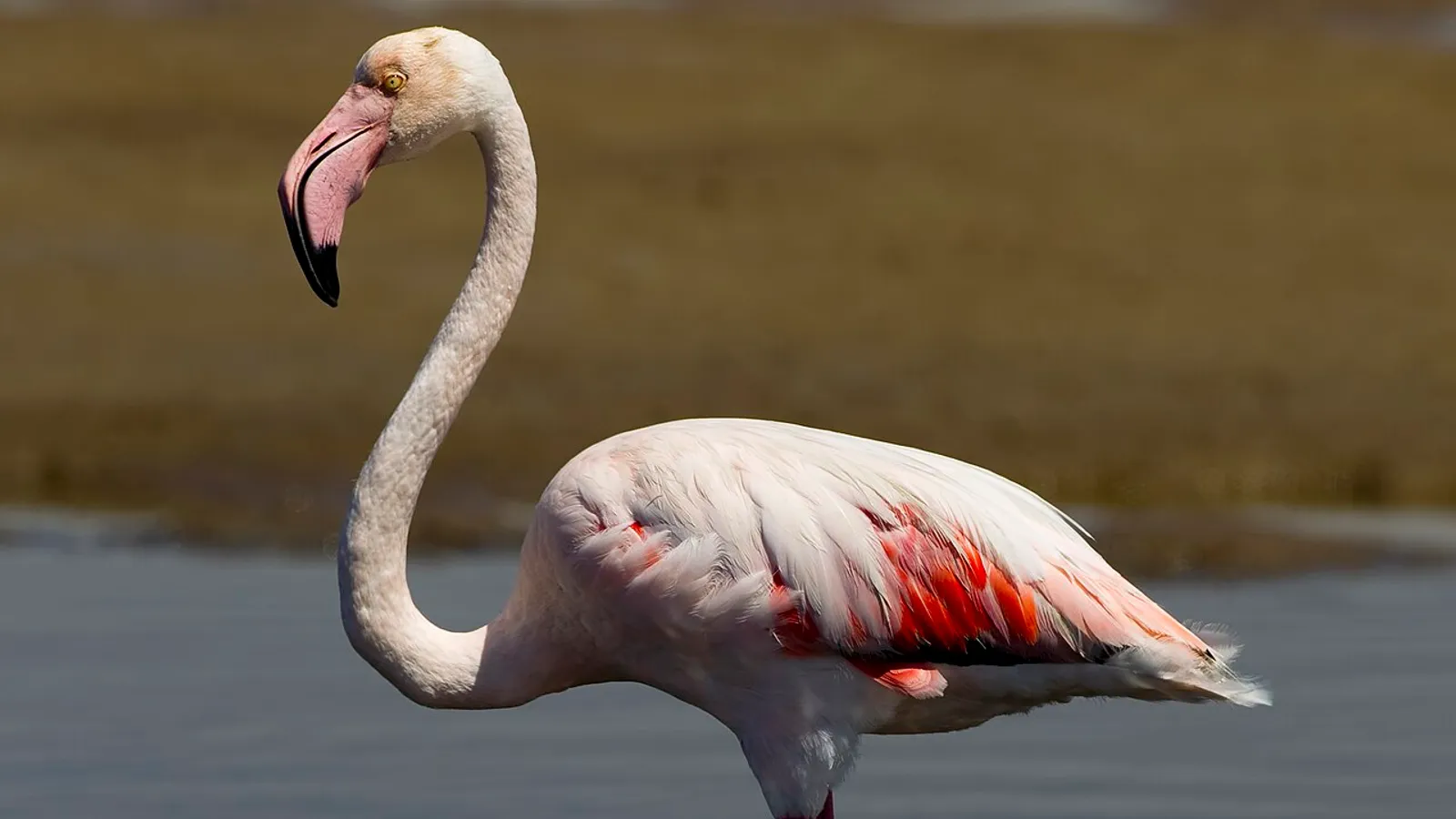
— Where the name comes from
From the Greek phoinikópteros, “purple-winged” (phoînix, the red of Tyre + pterón, wing). The Italian fenicottero keeps the word intact. Roseus, in Latin, says the colour again.
— Facts
- Group
- Birds · Aves
- Order
- Flamingos
- Habitat
- Brackish lagoons, salt pans, alkaline lakes
- Range
- The Mediterranean, Africa, southern Asia; in Italy it breeds in Sardinia and the Italian Camargue
- Size
- 110–150 cm, 2–4 kg
- Diet
- Filter feeder — algae, crustaceans, diatoms
- Lifespan
- 30–40 years
— Characteristics
- 01
Filters mud with the bill held upside down, under water.
- 02
The tongue pumps water through lamellae, like the baleen of a whale.
- 03
Nests in colonies on cones of mud.
— What sets it apart
A flamingo is born grey. The pink comes from carotenoids — canthaxanthin — in the crustaceans and algae it filters, which the liver lays down in the feathers. A pale flamingo is a flamingo that is feeding badly, and the females know it: the colour is a certificate of foraging competence, and impossible to forge.
