
Emperor penguin
Aptenodytes forsteri
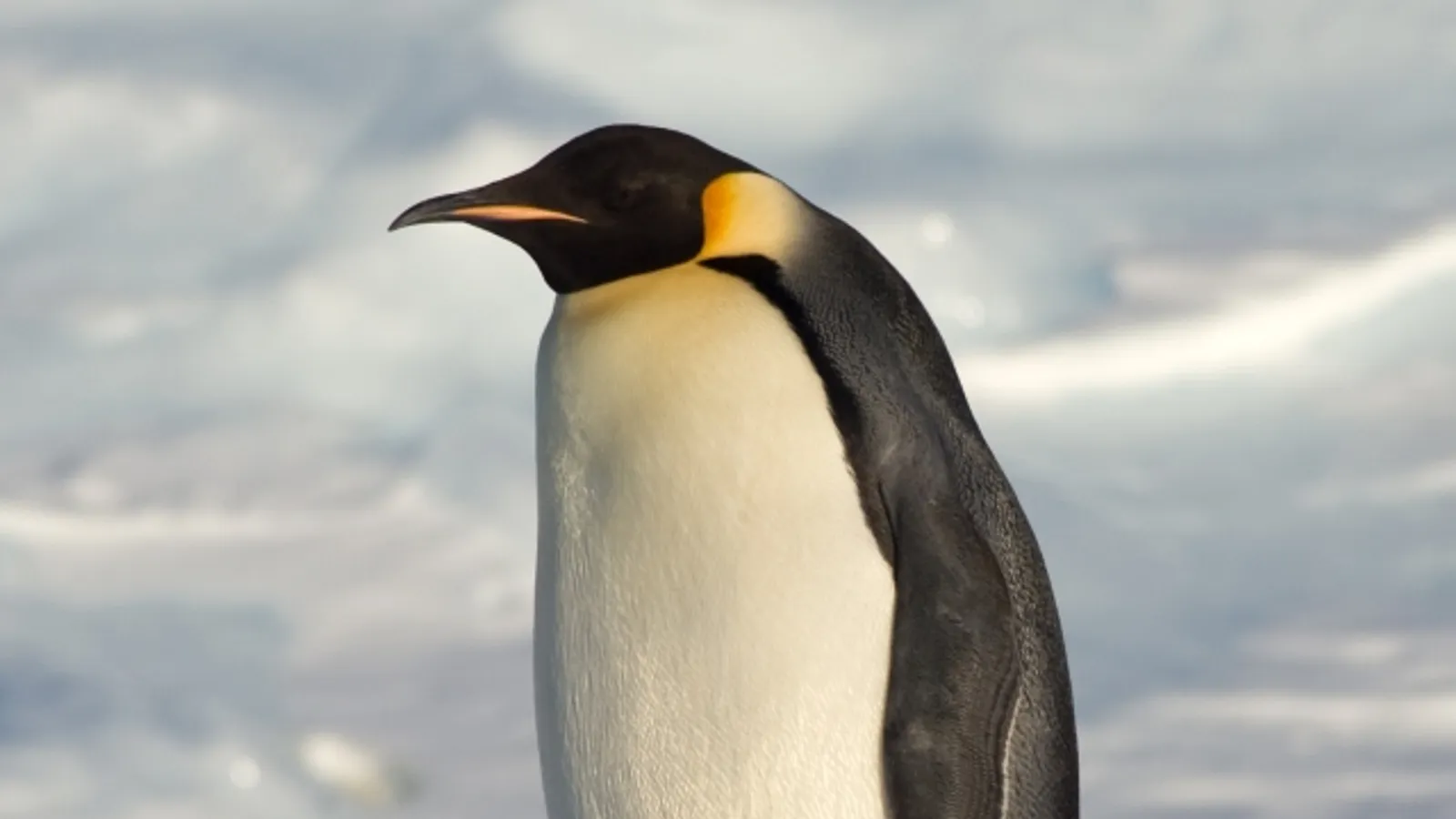
— Where the name comes from
Aptenodytes means “wingless diver” (a-, without + pterón, wing + dýtes, diver); forsteri honours the naturalist Johann Reinhold Forster, who sailed with Cook. Penguin is of uncertain origin: perhaps from the Welsh pen gwyn, “white head”, a name first given to an Arctic bird now extinct, the great auk.
— Facts
- Group
- Birds · Aves
- Order
- Penguins
- Habitat
- Antarctic pack ice
- Range
- Antarctica, in colonies on the sea ice
- Size
- 110–130 cm, 22–45 kg
- Diet
- Carnivore — fish, squid, krill
- Lifespan
- about 20 years
— Characteristics
- 01
The largest living penguin.
- 02
Dives past 500 m and stays under for up to 20 minutes.
- 03
It is the only bird that breeds through the Antarctic winter.
— What sets it apart
The male incubates the single egg on a flap of skin above his feet, standing, for some 65 days of polar night, at −40 °C and in winds of 150 km/h, without eating. He loses almost half his body weight. The thousands of males rotate slowly in a spiral: whoever is at the centre, where it approaches 35 °C, drifts outwards to let in whoever is at the edge. It is an algorithm of fairness, executed by a body that is starving.
