
Grey crowned crane
Balearica regulorum
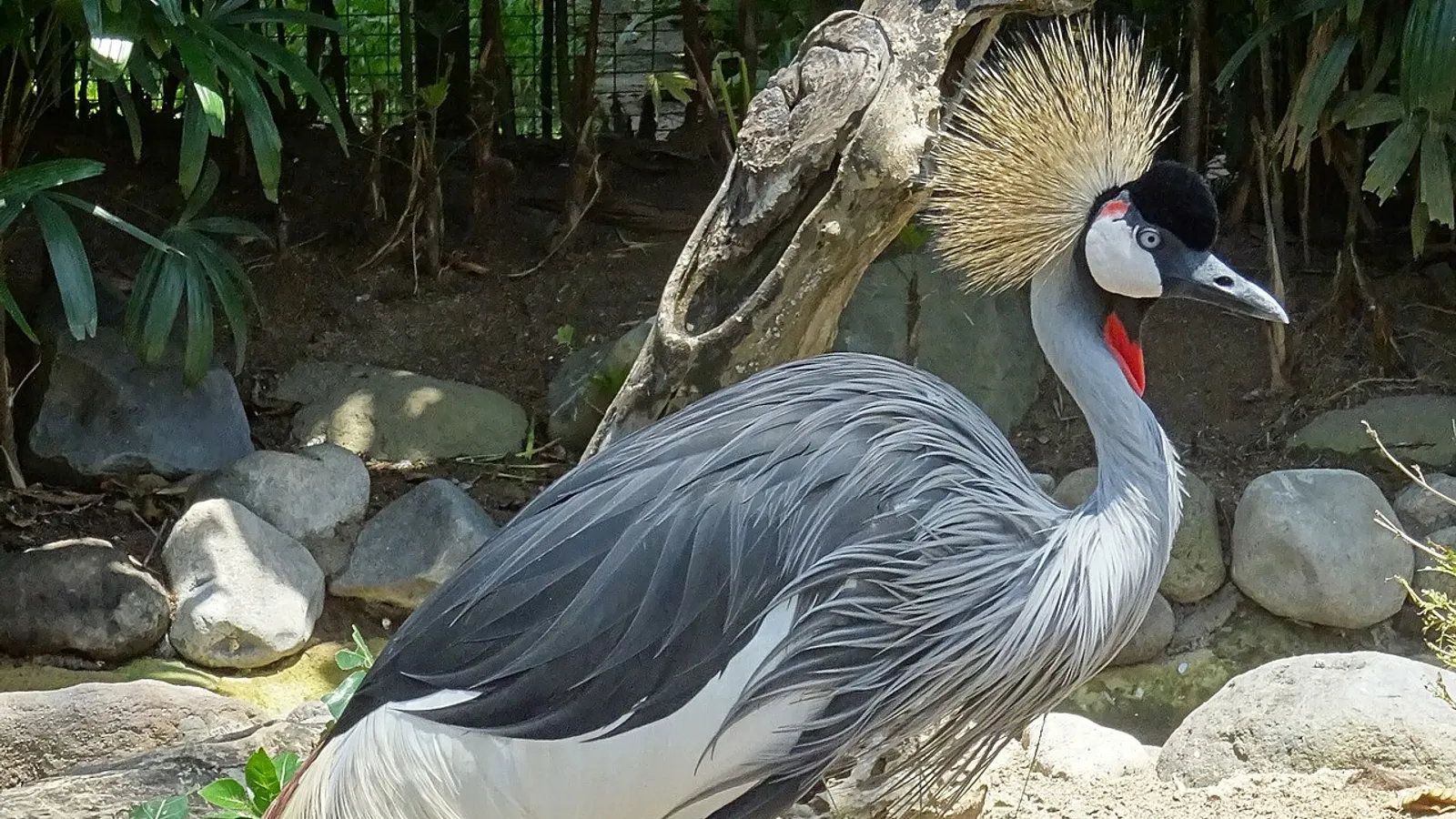
— Where the name comes from
Balearica means “of the Balearics”, and this bird has never been in the Balearics: the name comes from a passage in Pliny about a “Balearic crane” which Linnaeus applied to the African animal. Regulorum means “of the little kings”, for the crown of golden bristles on the nape. A name half geographical and wrong, half heraldic and right.
— Facts
- Group
- Birds · Aves
- Order
- Cranes and allies
- Habitat
- Wet grassland, marshes, farmland, lake margins
- Range
- Eastern and southern Africa, from Uganda to South Africa
- Size
- 100–110 cm tall, wingspan 180–200 cm, 3–4 kg
- Diet
- Seeds, shoots, insects, frogs, small reptiles
- Lifespan
- 22 years in the wild
— Characteristics
- 01
It is the only crane in the world that roosts in trees: its hind toe grips.
- 02
It stamps on the grass to flush insects and catches them as they jump.
- 03
The courtship dance — bows, leaps, open wings — is performed all year.
— What sets it apart
It stands on the flag of Uganda and is protected by a strict law, and yet it is among the worst off of all the cranes: the populations have fallen by over seventy per cent in three generations, through the draining of wetlands and the trade in live birds for the gardens of villas. It is a pattern that repeats often — an animal can be a country’s national symbol, appear on its documents and its coins, and meanwhile vanish from the marshes where that country first met it.
