
Eurasian coot
Fulica atra
— Where the name comes from
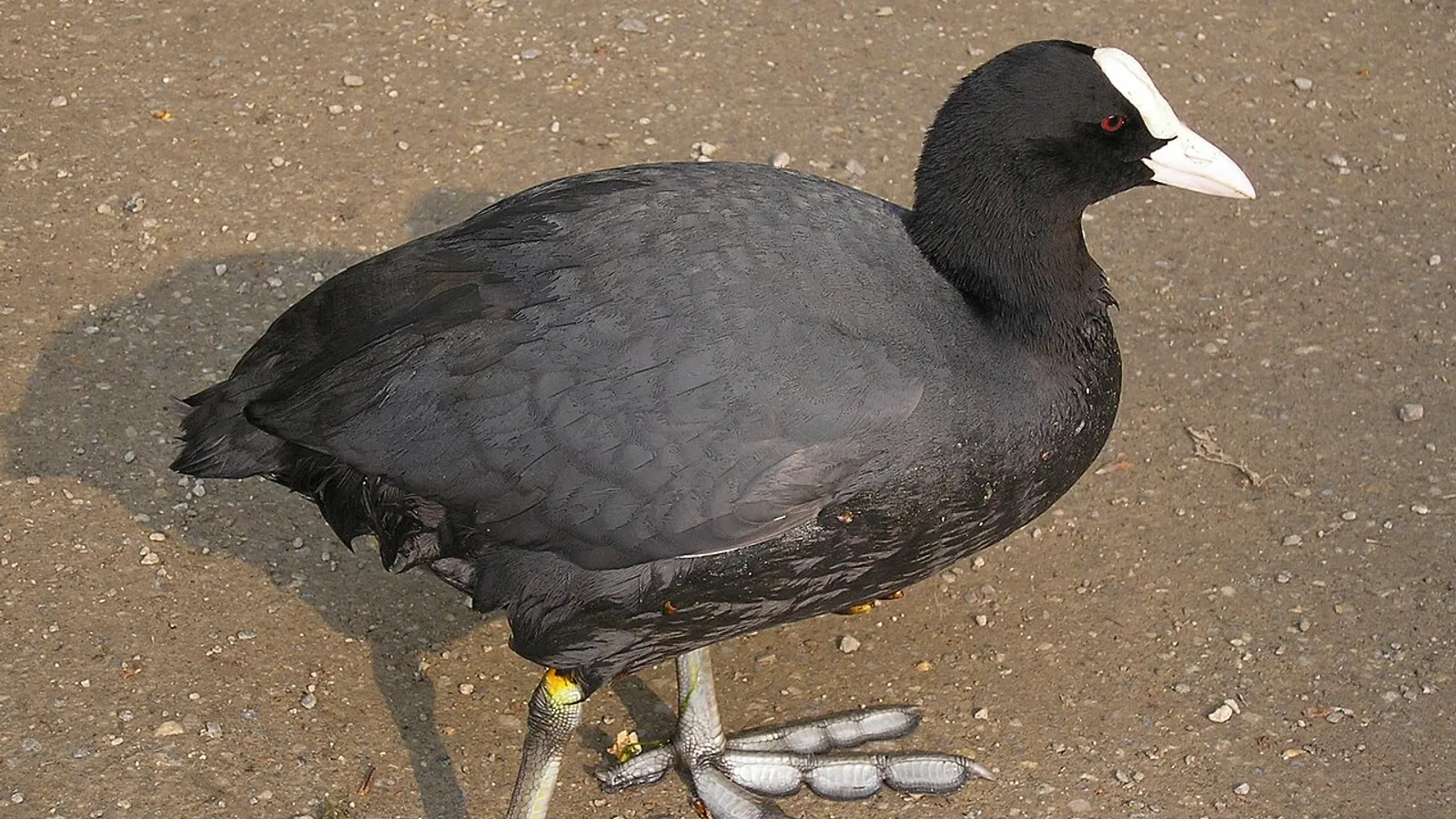
Fulica is the Latin name of the bird, perhaps related to fuligo, soot, for the colour; atra repeats the same idea, “black”. The Italian name comes from the same Latin by way of the vernacular. The white patch on its forehead — the frontal shield — gave English the phrase “bald as a coot”, coined when bald still meant “with a white patch”.
— Facts
- Group
- Birds · Aves
- Order
- Cranes and allies
- Habitat
- Lakes, ponds, canals, lagoons, urban reservoirs
- Range
- Europe, Asia, North Africa, Australia and New Zealand
- Size
- 36–42 cm, wingspan 70–80 cm, 600–900 g
- Diet
- Water plants, algae, insects, molluscs
- Lifespan
- 18 years in the wild
— Characteristics
- 01
Its feet are not webbed but lobed, the flaps opening with each stroke.
- 02
To take off it runs across the water for several metres, beating its wings.
- 03
It defends its territory in violent fights, breast to breast with claws forward.
— What sets it apart
The chicks hatch black with a flaming orange head and a fringe of golden down around the neck, which is odd in a species that as an adult stakes everything on being invisible. Those ornaments exist to ask for food: parents feed the most colourful chicks first. When the brood is too large and food is short, the adult seizes the chick that pesters it by the nape and shakes it, over and over, until it stops asking — and the weakest, within a few days, starve. It is a selection carried out inside the family, without euphemism.
