
European mole cricket
Gryllotalpa gryllotalpa
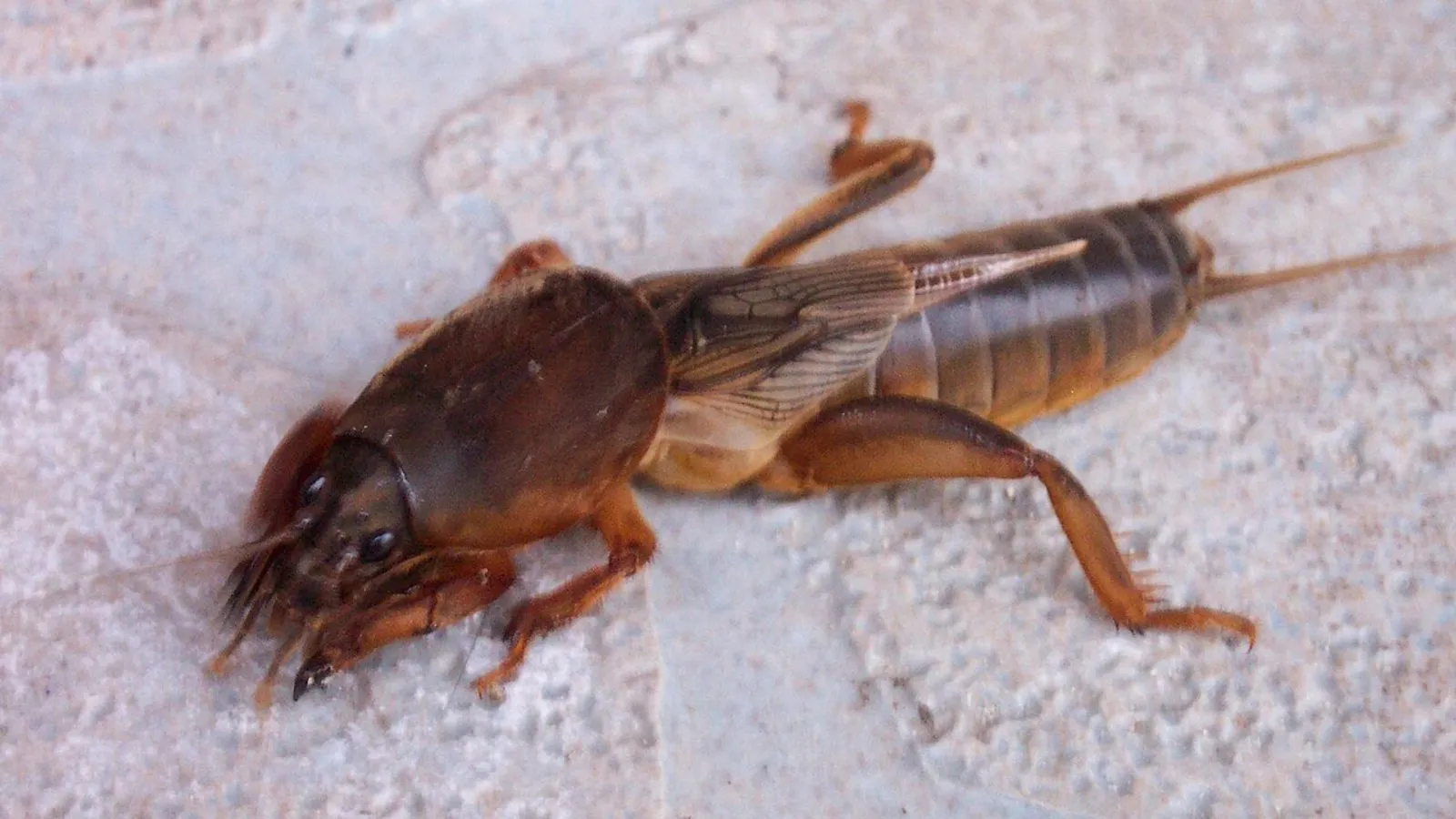
— Where the name comes from
The Italian name is the sum of two animals: the cricket and the mole, and the English mole cricket does the same. It is a rare case in which the compromise works, because the insect really is both — it sings like a cricket, and its forelegs are turned into two toothed shovels identical to a mole’s, with which it digs underground. The binomial repeats the word twice, genus and species, as if to confirm there was nothing more to say.
— Facts
- Group
- Insects · Insecta
- Order
- Grasshoppers and crickets
- Habitat
- Damp soil, vegetable plots, irrigated meadows, embankments
- Range
- Europe and western Asia
- Size
- 35–50 mm
- Diet
- Roots, tubers, larvae and earthworms
- Lifespan
- 2–3 years
— Characteristics
- 01
The forelegs are toothed shovels, the same as a mole’s.
- 02
It digs, swims and flies: it does all three passably.
- 03
The night trill carries six hundred metres.
— What sets it apart
It builds a loudspeaker. Before singing, the male excavates at the mouth of his burrow a chamber shaped like a double exponential horn, with two flared openings at the surface, and positions himself at the point from which sound is radiated best: the structure can increase acoustic power twentyfold, and the trill carries more than half a kilometre. Acoustic engineers have studied it because, by digging in the earth with two legs, it solves a problem of impedance matching that loudspeaker design addresses with calculations and materials. If the chamber is damaged, the insect rebuilds it before resuming its song.
