
Field cricket
Gryllus campestris
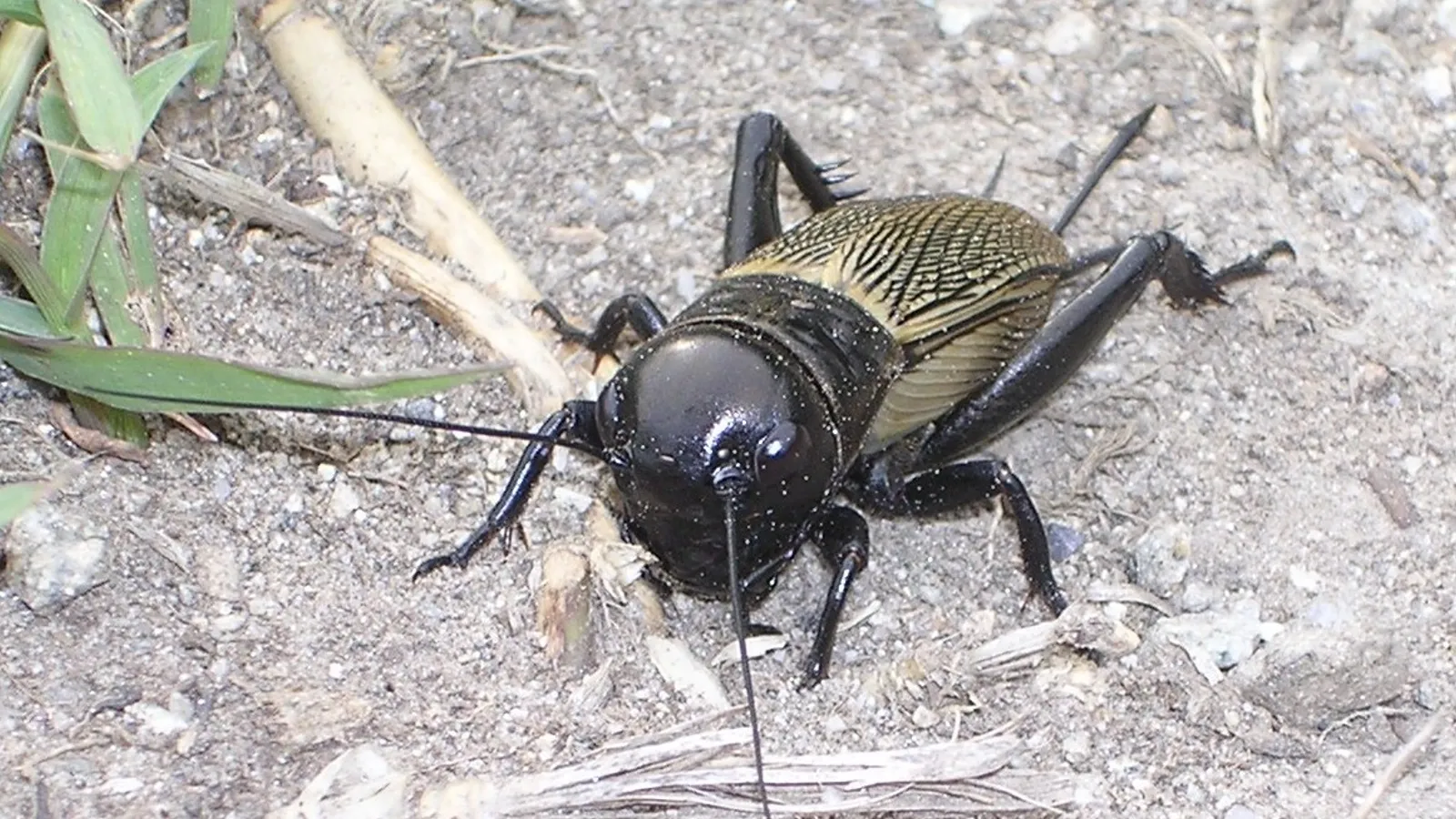
— Where the name comes from
Gryllus is Latin and before that Greek, grýllos, and in both languages the word was born in imitation of the sound. Campestris names the fields. From the insect Italian has drawn a set of idioms all concerning the head: to have crickets in one’s head, to hop like a cricket, and Collodi’s Talking Cricket — which is conscience and nuisance at once, exactly like a chirp that never stops.
— Facts
- Group
- Insects · Insecta
- Order
- Grasshoppers and crickets
- Habitat
- Dry meadows and sunny pastures, in burrows dug in the ground
- Range
- Europe and North Africa
- Size
- 20–26 mm
- Diet
- Grass, roots and occasionally insects
- Lifespan
- 1 year; it overwinters as a nymph in its own burrow
— Characteristics
- 01
Only the male sings, rubbing the right wing against the left.
- 02
He sings sitting at the mouth of the burrow, which acts as a sound box.
- 03
Its ears are on the forelegs, just below the knee.
— What sets it apart
The song does not come from the mouth: it is made by a scraper on the right wing running over a file of teeth on the left, and is amplified by a membrane the wings themselves carry. The male stations himself at the burrow mouth because the tunnel works as a horn, and depending on the moment he produces three different songs — a calling song audible fifty metres away, a courtship song sung under his breath when the female is near, and a rival’s challenge. The ears are on the forelegs, and the female walks towards the sound by comparing what reaches the right leg with what reaches the left.
