
Lesser kestrel
Falco naumanni
— Where the name comes from
The Italian name, grillaio, tells its diet: crickets (grilli), grasshoppers and other large insects taken on the ground. Naumanni honours Johann Andreas Naumann, the German naturalist who in the nineteenth century wrote the great natural history of the birds of Germany; Fleischer dedicated the name to him in 1818. In English it is the lesser kestrel, and it resembles the common kestrel so closely that telling them apart in flight is an exam for birdwatchers.
— Facts
- Group
- Birds · Aves
- Order
- Falcons
- Habitat
- Steppe, cereal fields, dry pasture; nests in old town centres
- Range
- Southern Europe, North Africa, Central Asia to China; winters in sub-Saharan Africa
- Size
- 29–32 cm, wingspan 62–73 cm, 90–200 g
- Diet
- Grasshoppers, crickets, beetles; rarely small rodents
- Lifespan
- Up to 10 years and more
— Characteristics
- 01
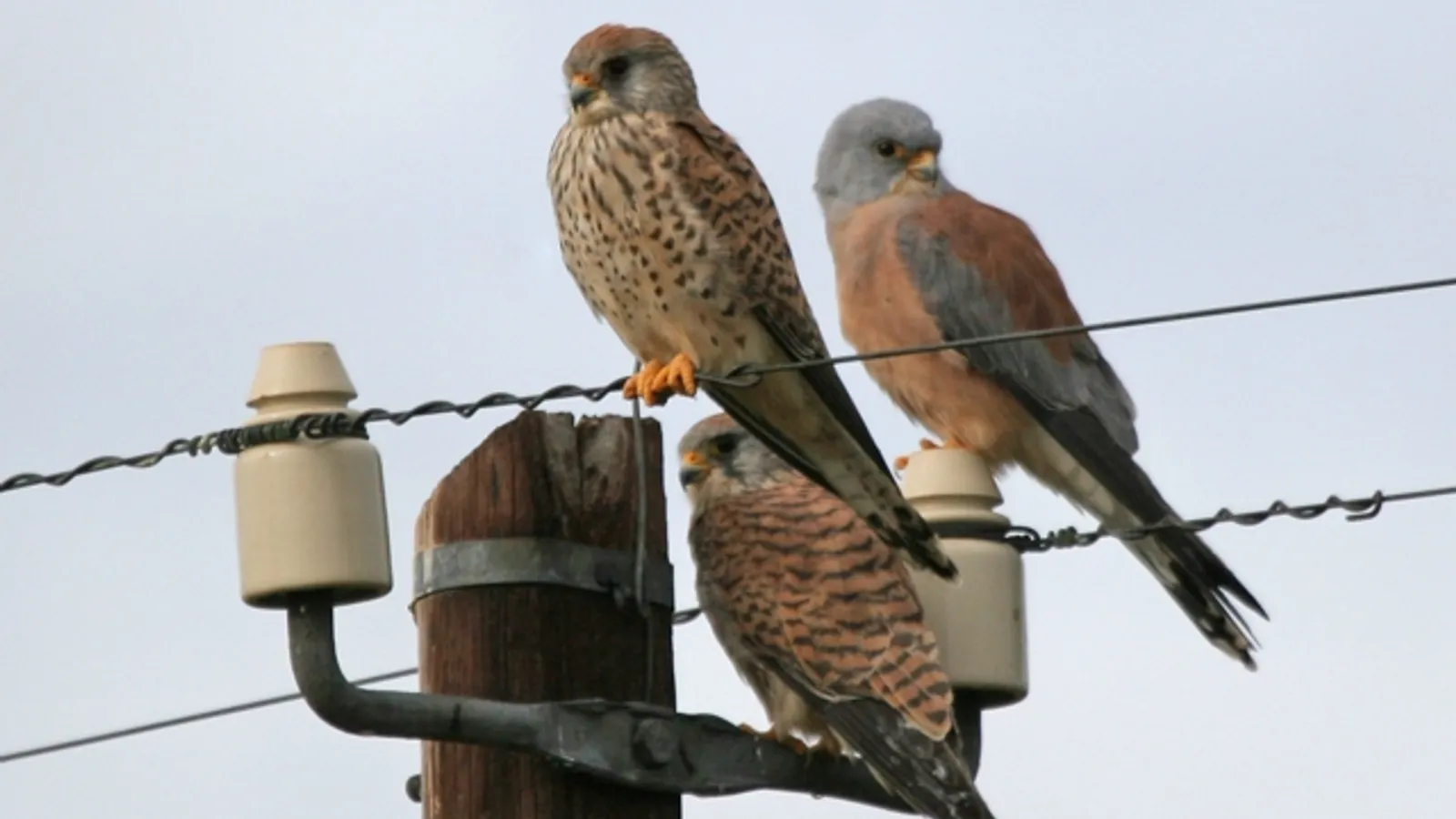
The male has an unspotted rufous back and a blue-grey head.
- 02
It lives in colonies, sometimes dozens of pairs under the same roofs.
- 03
In winter it gathers in African roosts of tens of thousands of birds.
— What sets it apart
In Italy its stronghold is the town. In Matera, Altamura and Gravina it nests among the roof tiles and in the cavities of historic buildings, and Matera holds one of the largest urban colonies in Europe: there, roofs are restored leaving gaps on purpose and laying tiles made to hold a nest. In the 1990s it was considered vulnerable worldwide, after intensive farming had wiped out the insects it lives on; protecting the colonies and fields farmed without pesticides took it off the list of threatened species in 2011.